Dry air is a heating problem, not a weather problem.
Cold outside air holds almost no moisture, and your furnace warms it without adding any. A whole home unit fixes that at the ductwork instead of one room at a time.


 Licensed technicians
Quick answer
Humidifier installation puts a unit on the furnace plenum so it adds moisture to the air the ducts already carry. Carrier describes the mounting plainly: “The humidifier housing is securely attached to the plenum to ensure a proper fit and seal.” Therefore the job needs a water line, a drain and a control, and Carrier recommends professional installation.
Key takeaways
- Firstly, the unit mounts on the plenum, not in a room.
- Bypass, fan-powered and steam differ in what they need connected.
- The humidistat goes on the return duct or an interior wall.
- Health Canada puts the target band at 30 to 50 percent.
- Above all, too much humidity causes the damage, not too little.
Why winter air goes dry indoors
First, the physics. Your house creates the dryness, not the weather outside.
Cold air holds very little water vapour. When that air comes indoors and warms up, its relative humidity falls through the floor.
Consequently the furnace dries nothing out by burning. It simply warms air that arrived with nothing in it.
Then the symptoms follow. Static shocks, splitting woodwork, cracked instruments and dry throats all cluster in the same months.
Meanwhile the tighter the house, the more stable the result. Our guide to draft proofing covers the sealing that reduces how much dry air arrives in the first place.
In other words, sealing comes first and moisture second. A leaky house will not hold whatever you add.
What humidifier installation involves
Secondly, the job itself. Four connections decide how involved it is.
The unit goes on the ductwork. Carrier says “The humidifier housing is securely attached to the plenum to ensure a proper fit and seal.”
Then the water. You need a tap into the plumbing, and Carrier describes it: “A saddle valve or tee fitting is installed to connect the humidifier to the home’s cold water line.”
Next, drainage. The instruction is that “A drain line is routed from the humidifier to a nearby floor drain to handle excess water safely.”
Finally the control. Carrier notes that “The humidistat is installed on the return duct or interior wall to monitor and regulate humidity levels.”
Consequently this is a duct, plumbing and controls job at once. That is why Carrier states that “professional installation is strongly recommended for whole-home humidifiers.”
Bypass, fan-powered or steam
Thirdly, the type. They differ mainly in the number of connections.
A bypass unit is the simplest. Carrier lists its needs as “Requires ductwork, water connection and humidity controls.”
Moreover it needs a duct of its own. For bypass models, Carrier notes that “a duct is connected between the supply and return plenums.”
A fan-powered unit adds electricity. Its requirements are “ductwork, water connection, electrical connection and controls.”
Then steam sits at the top. That type “Requires water, drain, electrical and control connections.”
In practice the choice follows the house and the ductwork you already have, which is a survey question rather than a catalogue one.
| Type | What it needs connected |
|---|---|
| Bypass | Ductwork, water, humidity controls |
| Bypass, extra | A duct between supply and return plenums |
| Fan-powered | Ductwork, water, electrical, controls |
| Steam | Water, drain, electrical, controls |
| All types | A humidistat on return duct or interior wall |
| All types | A floor drain within reach |
The number to aim at
Next, the setting. More is not better, and this is where people get into trouble.
Health Canada gives a band rather than a figure. The target sits “between 30% and 50%” relative humidity.
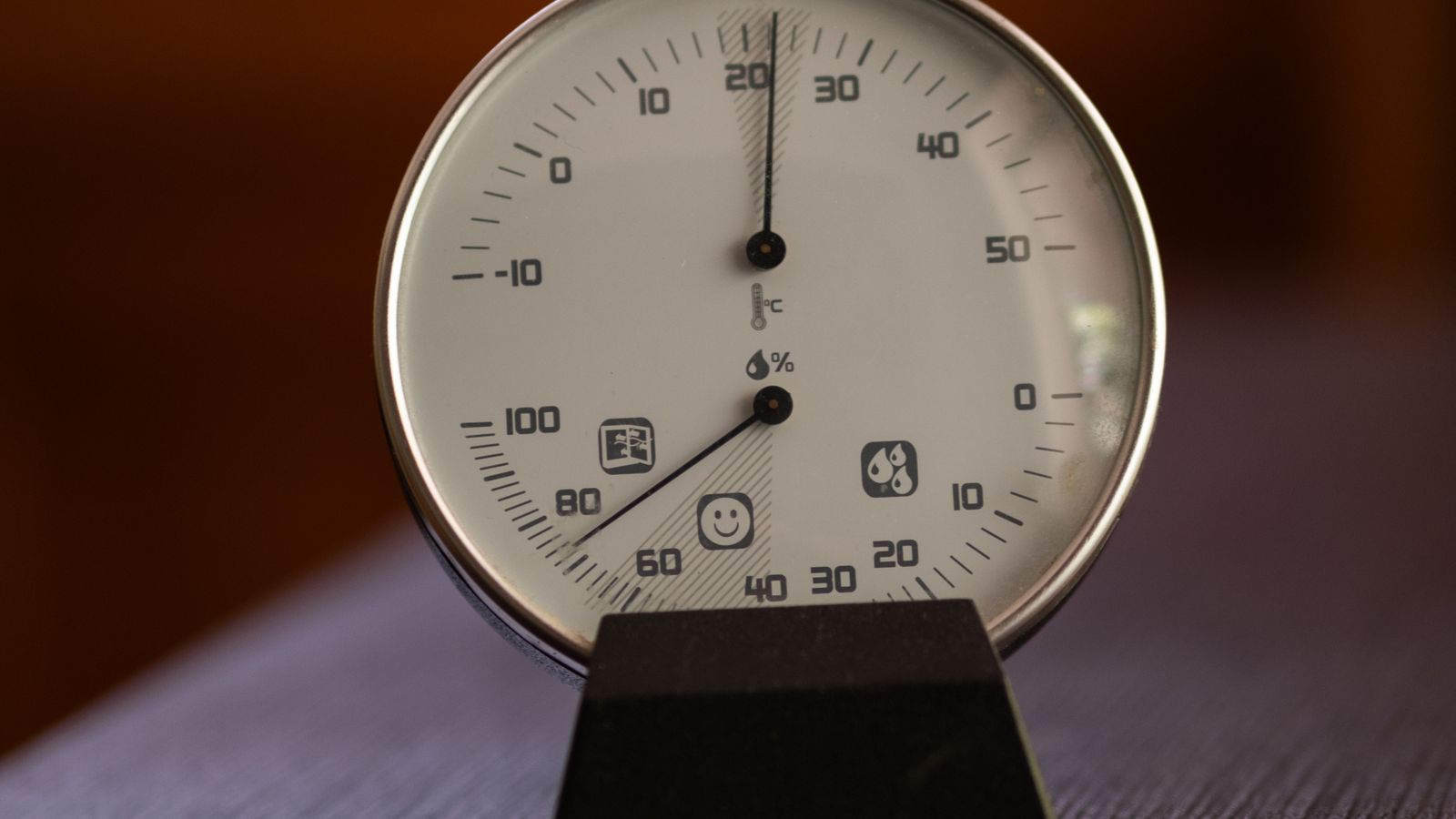
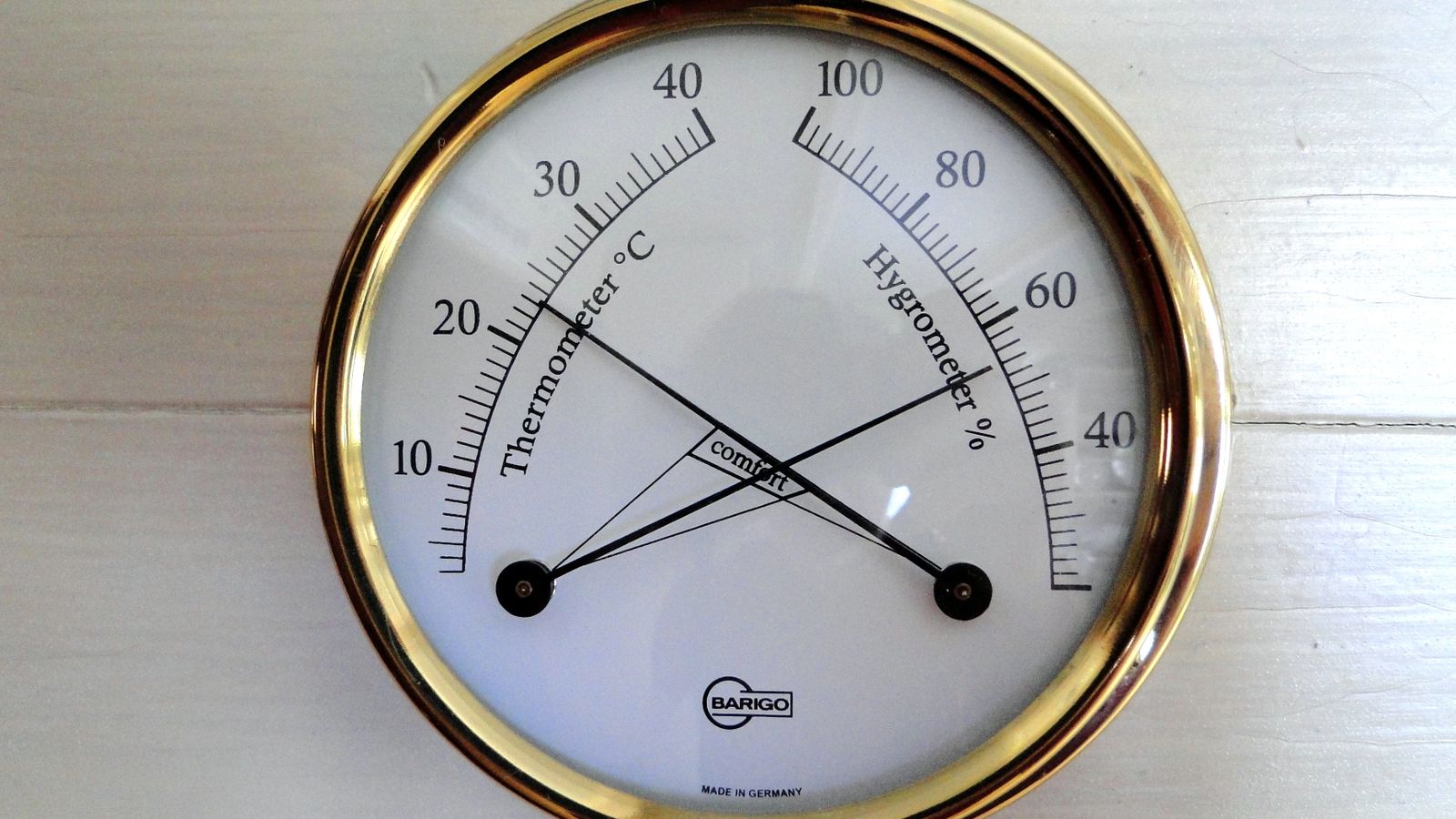
Then the measuring tool is cheap. Health Canada suggests “a hygrometer (an inexpensive tool available at most hardware stores).”
However, the upper limit is the one that matters in an Ontario winter. Push past it and the moisture lands on the coldest surface in the house.
Our guide to window condensation in winter covers exactly that failure and how to read it.
Above all, Health Canada is blunt about the risk at the top end: “Since some people are more sensitive than others, there is no ‘safe’ limit for mould.”
Living with one afterwards
Meanwhile the maintenance is small but not optional. A humidifier is a wet appliance in a warm duct.
The pad is the main item. Carrier advises to “replace the filter pad every 1 to 3 months to keep the humidified air clean and efficient.”
Then hard water shortens that interval. Our guide to the water heater anode rod covers why the local water runs hard and what scale does to equipment.
Besides the pad, the setting changes through the season. Leave a unit at one number all winter and it will overshoot during a cold snap.
In practice the best habit is simple. Watch the windows, and drop the setting when condensation appears in the corners.
Finally, the whole system wants a yearly look. Our guide to the annual furnace inspection covers the visit that includes it.

What humidifier installation means around Tottenham
Firstly, the setting. Tottenham sits in New Tecumseth, in the south of Simcoe County.
In practice the housing there leans newer than the county average, with a lot of subdivision building over recent decades. Those homes are tighter, which helps.
Consequently a tight house holds moisture well, and it also traps it. The sealing that keeps humidity indoors also pushes it onto the glass.
Besides the newer stock, older village homes nearby behave the opposite way. They leak, so they stay dry and need more input to move the number.
We serve Tottenham, New Tecumseth and the wider Simcoe County area from our Burton Avenue shop.
When a humidifier is the wrong answer
Finally, the honest limit. Not every comfort complaint is a moisture complaint.
So check airflow first. Our guide to why one room is always cold covers the uneven house, which humidity will not fix.
Then consider ventilation instead. Where a house runs humid rather than dry, our guide to a heat recovery ventilator covers the opposite machine.
Similarly, a dusty house is a filtration question. Our guide to duct cleaning covers that side.
If the reading sits below the band and the house already feels tight, a quote for installation makes sense.
Talk to Aire One Barrie
We size the unit to the house and confirm there is water and a drain within reach before quoting anything. We serve Tottenham and the rest of Simcoe County.
- 24/7 emergency service, including weekends and holidays
- Bypass, fan-powered and steam units installed and commissioned
- Humidistat set and the target band explained before we leave
- Bonded, factory trained and licensed technicians
Frequently asked questions
Where does a whole home humidifier go?
On the furnace plenum. Carrier says the housing attaches securely to the plenum for a proper fit and seal, while the humidistat goes on the return duct or an interior wall.
What does humidifier installation need in the house?
Four things: ductwork, a cold water connection through a saddle valve or tee fitting, a drain line running to a nearby floor drain, and a control. Fan-powered and steam units also need an electrical connection.
Can I install one myself?
Carrier recommends professional installation, and repeats that advice specifically for whole-home humidifiers. The job combines duct work, a plumbing tap, a drain and low voltage controls in one install.
What humidity should I set it to?
Health Canada puts the band at between 30 and 50 percent and suggests measuring with an inexpensive hygrometer. In a cold snap, drop the setting if condensation appears at the window corners.
How much maintenance does it need?
Carrier advises replacing the filter pad every one to three months to keep the humidified air clean and efficient. Hard water shortens that interval, so check the pad rather than the calendar.
Sources
- Carrier, Whole House Humidifier Installation Guide and Tips — the housing securely attached to the plenum, the humidistat installed on the return duct or interior wall, a saddle valve or tee fitting connecting to the cold water line, a drain line routed to a nearby floor drain, the bypass requirement for ductwork, water connection and humidity controls, a duct connected between the supply and return plenums on bypass models, fan-powered requiring ductwork, water, electrical and controls, steam requiring water, drain, electrical and control connections, professional installation being recommended and strongly recommended for whole-home humidifiers, and replacing the filter pad every one to three months.
- Health Canada, Reduce humidity, moisture and mould — the 30 to 50 percent relative humidity target, using an inexpensive hygrometer available at most hardware stores, and there being no safe limit for mould because some people are more sensitive than others.