Water does not compress. Something has to give.
Heat the water in a sealed loop and it expands. One small tank absorbs that, and when it fails the relief valve starts dripping.


 Licensed technicians
Quick answer
A boiler expansion tank gives heated water somewhere to go as it expands in a sealed heating loop. Amtrol describes the sealed air pre-charge that “prevents water from entering the tank until the system pressure begins to rise.” Therefore a dripping relief valve usually points here, because the manufacturer notes that a dripping valve can mean the tank is improperly charged or undersized.
Key takeaways
- Firstly, heat makes water expand, and the loop has no outlet.
- The tank holds an air charge on one side of a diaphragm.
- A dripping relief valve points at charge or sizing.
- Manufacturer instructions say mount it vertically only.
- Above all, a pressure vessel can corrode and burst over time.
What a boiler expansion tank is for
First, the physics. Water expands as it warms, and a hydronic loop has no outlet.
Consequently that extra volume has nowhere to go. Pressure then rises until the relief valve opens.
The tank solves that with air. Amtrol explains that its “sealed-in air pre-charge prevents water from entering the tank until the system pressure begins to rise.”
Then the tank takes over. The instructions describe how “As the water temperature rises, water enters the EXTROL.”
In short, the air compresses and the water gains room. Amtrol puts it as the tank being “operational and will absorb expanded water during boiler operation.”
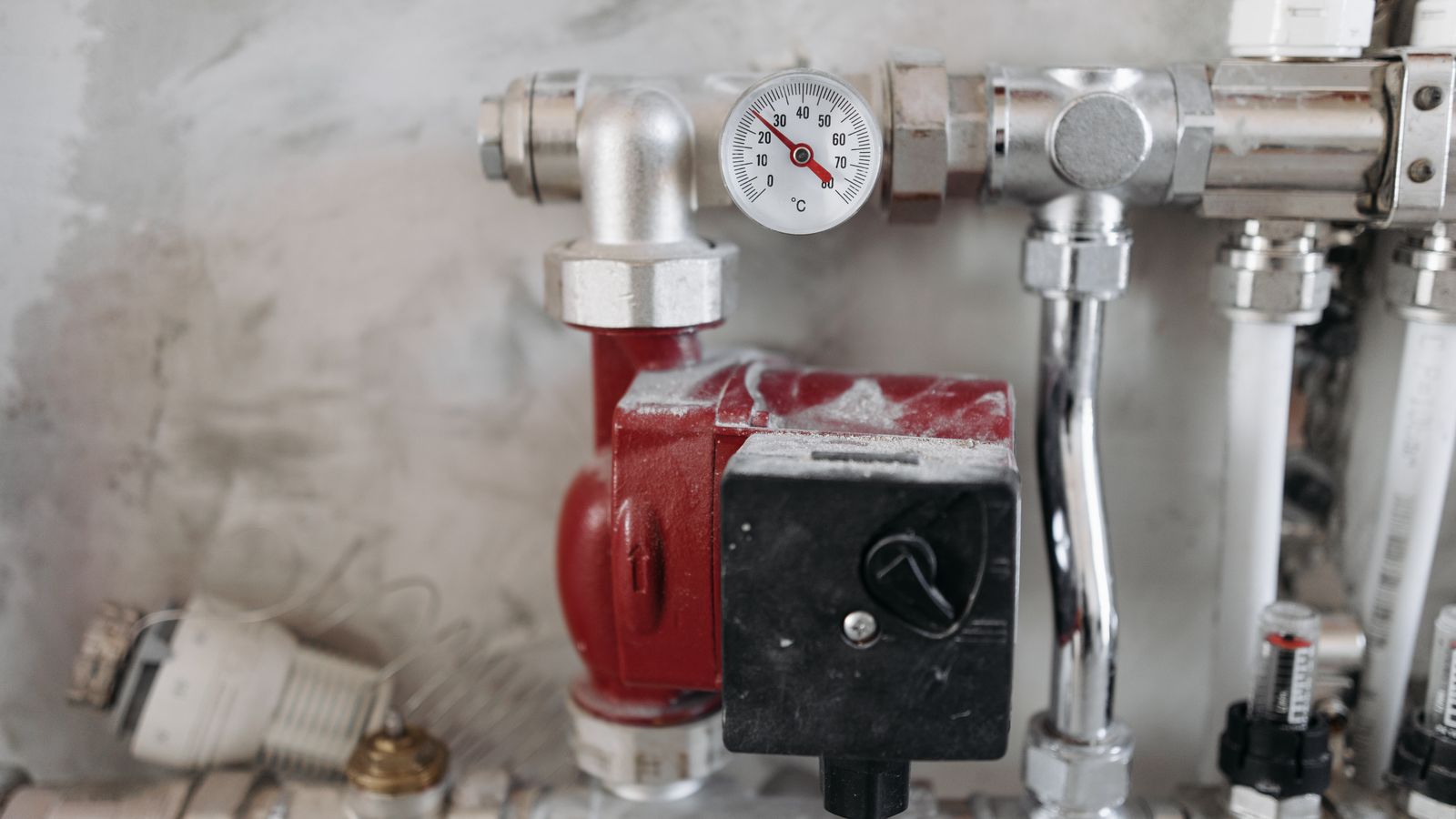
Besides pressure control, this protects the rest of the loop. Our guide to boiler pressure covers the gauge reading this part is quietly managing.
How to tell it has failed
Secondly, the symptoms. A failed tank announces itself through the relief valve.
Amtrol names that link directly. Its manual says, “If the relief valve drips, the tank may be improperly charged or undersized.”
So the sequence is predictable. The boiler fires and the water expands. With no cushion left, pressure climbs past the valve setting.
Then the valve does its job and dumps water. Consequently homeowners see a damp floor and blame the valve itself.
Meanwhile the other failure mode is slower. Amtrol warns that “Air can collect in the EXTROL, causing internal corrosion and possible leakage.”
In practice the tank also feels different. A healthy one is light with air on top, while a flooded one is heavy throughout.
| What you see | What it suggests |
|---|---|
| Relief valve dripping when hot | Charge lost, or tank undersized |
| Pressure climbing as the boiler runs | No cushion left in the tank |
| Tank heavy and cold all over | Diaphragm failed, tank waterlogged |
| Rust streaks at the air fitting | Internal corrosion |
| Missing cap on the air valve | Pre-charge lost over time |
| Tank mounted horizontally | Installed against instructions |
Charge, caps and the rules that get ignored
Thirdly, the detail. Several instructions on the label get skipped routinely.
In practice you match the charge rather than guess it. Amtrol’s instruction is to “Adjust pre-charge to equal system fill pressure.”
Then the timing of that adjustment matters. The manual says “Adjustments to pre-charge must be done at ambient temperature only.”
Moreover, the plastic cap is not cosmetic. The warning is blunt: “FAILURE TO PROPERLY SEAL VALVE CAP WILL RESULT IN LOSS OF PRECHARGE CAUSING PRODUCT TO FAIL.”
Therefore the instruction after any adjustment is simple. Amtrol says to “Replace and tighten plastic cap on air fitting.”
In practice that one missing cap explains plenty of tanks that failed early. Air leaks out slowly and nothing looks wrong until the valve drips.
Mounting, and where it must not go
Next, position. This is the instruction most often broken on older installations.
Amtrol is explicit about orientation. The warning reads: “Mount vertically only. Do not mount on dead-end pipe.”
Then one location is ruled out entirely. Amtrol says the tank “must not be placed overhead in the floor joist space.”
Besides orientation, the application is narrow. The label says “FOR USE IN CLOSED HYDRONIC SYSTEMS ONLY. Do not install on domestic water systems, or in open heating systems.”
Temperature limits apply too. Amtrol says not to expose the product “to freezing temperatures or temperatures in excess of 240 F.”
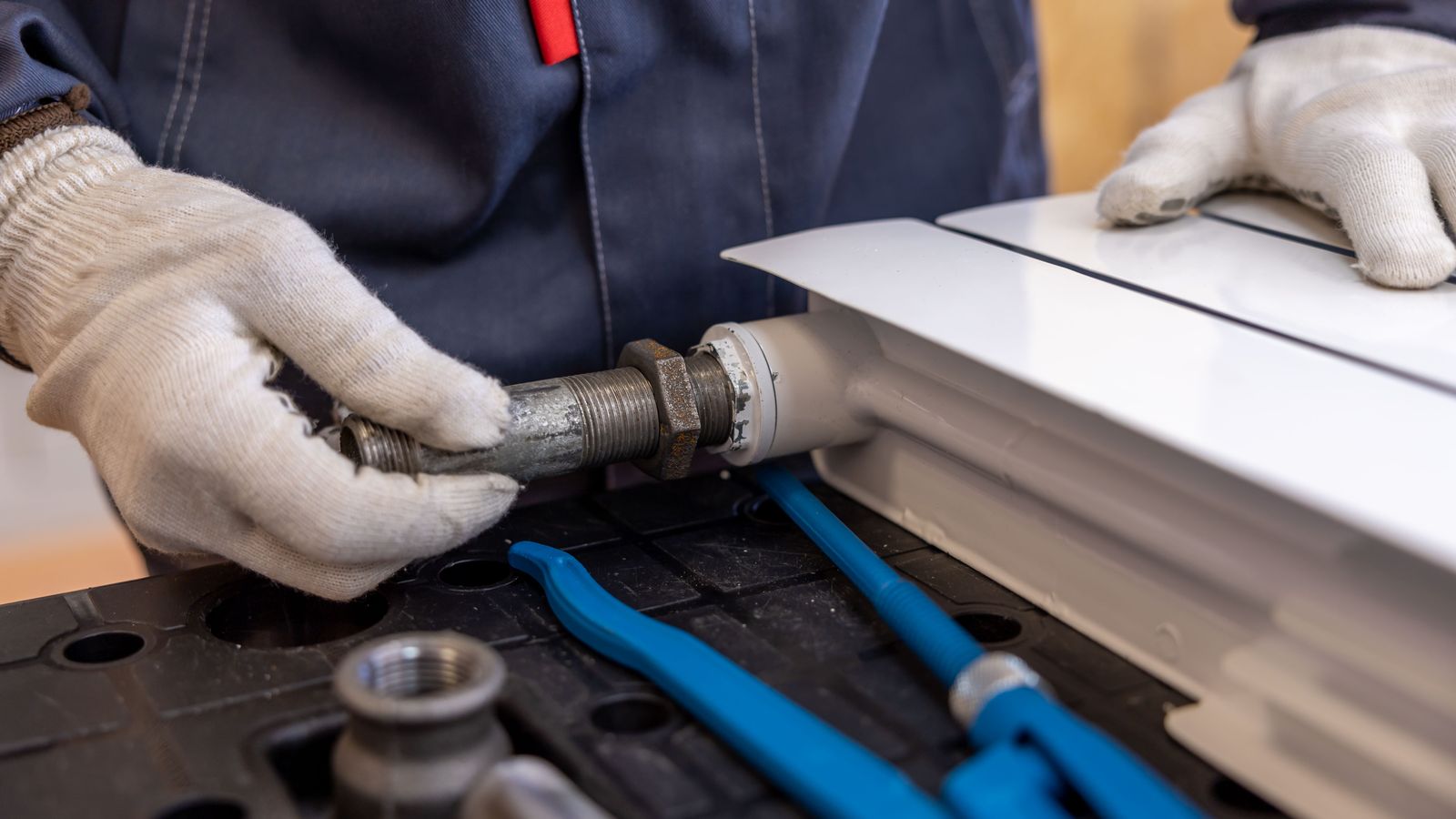
Our guide to bleeding a radiator covers the air side of the same loop, which is a related but separate job.
Why this is not a casual job
However, this is a pressure vessel on a fuel-fired appliance. Two sets of risk meet at the same spot.
Amtrol states the long-term risk plainly. The product, “like most products under pressure, may over time corrode, weaken and burst or explode.”
Then there is the protection around it. Amtrol’s manual calls for a relief valve, “to prevent pressure in excess of local code requirement.”
Meanwhile the boiler itself falls under Ontario’s regulator. The Technical Standards and Safety Authority advises having “all fuel-burning appliances inspected annually through the services of a TSSA registered fuel contractor.”
Consequently the annual visit covers more than the tank. TSSA notes that a typical home has “roughly 4-6 fuel-burning appliances that produce Carbon Monoxide (CO).”
Above all, that hazard is preventable. The regulator adds that “Most, if not all of these incidents, are preventable.”
What a boiler expansion tank means around Oro Station
Oro Station sits on the Lake Simcoe shore in Oro-Medonte, east of Barrie.
In practice the housing there is a mix of older shoreline homes and newer rural builds. Consequently hydronic heating turns up more often than it does in a city subdivision.
Besides the boilers, some of those systems are old. A tank fitted in the eighties has usually lost its charge at least once since.
Meanwhile the seasonal pattern matters here too. A cottage property that sits cold for months is exactly where the freezing warning applies.
We serve Oro Station, Oro-Medonte and the wider Simcoe County area from our Burton Avenue shop.
Where it fits in the service visit
Finally, the order of work. The tank is one item on a longer list.
So pressure comes first. A gauge reading that moves with temperature tells a technician more than the tank alone does.
Next, the air separator and the vents. Our guide to boilers and furnaces compared covers how the two systems differ in what needs attention.
Similarly, the venting side wants checking. A boiler is a fuel appliance, and the flue matters as much as the water.
If the system has not had a look in a year or more, an annual maintenance visit is the right place to start.
Talk to Aire One Barrie
We check charge, sizing and mounting together, rather than swapping a tank and hoping the drip stops. We serve Oro-Medonte and the rest of Simcoe County.
- 24/7 emergency service, including weekends and holidays
- Pre-charge set to system fill pressure at ambient temperature
- Relief valve, air separator and venting checked on the same visit
- Bonded, factory trained and licensed technicians
Frequently asked questions
What does a boiler expansion tank do?
It gives heated water room to expand in a sealed loop. Amtrol describes a sealed air pre-charge that keeps water out of the tank until system pressure starts to rise, after which the tank absorbs the expanded water while the boiler runs.
Why is my relief valve dripping?
Often because the tank lost its charge, or never had the capacity. Amtrol states that a dripping relief valve may mean the tank is improperly charged or undersized. Therefore the valve is usually reporting a problem rather than causing one.
What pressure does the tank need?
Amtrol says to adjust the pre-charge to equal system fill pressure, and to make that adjustment at ambient temperature only. Checking it while the system is hot gives a reading you cannot act on.
Can the tank go in sideways?
No. The instruction is to mount vertically only, and not on a dead-end pipe. The manual also rules out placing the tank overhead in the floor joist space.
Is this something to leave alone?
The tank is a pressure vessel, and Amtrol warns that products under pressure may corrode, weaken and burst over time. TSSA also advises having all fuel-burning appliances inspected annually by a registered fuel contractor, which is the sensible time to have the tank looked at.
Sources
- Amtrol, Extrol expansion tank installation instructions — the sealed air pre-charge keeping water out until pressure rises, water entering the tank as temperature rises, the tank absorbing expanded water during boiler operation, adjusting pre-charge to equal system fill pressure, adjustments at ambient temperature only, replacing and tightening the plastic cap, loss of pre-charge causing failure, mounting vertically only and not on dead-end pipe, not placing the tank overhead in the floor joist space, air collecting and causing internal corrosion and leakage, a dripping relief valve indicating improper charge or undersizing, closed hydronic systems only, the freezing and 240 F limits, the relief valve requirement, and products under pressure corroding, weakening and bursting over time.
- Technical Standards and Safety Authority, It’s Not Just Your Furnace: Be in the Know When it Comes to CO — having all fuel-burning appliances inspected annually through a TSSA registered fuel contractor, Ontario homes having roughly four to six fuel-burning appliances that produce carbon monoxide, and most or all such incidents being preventable.