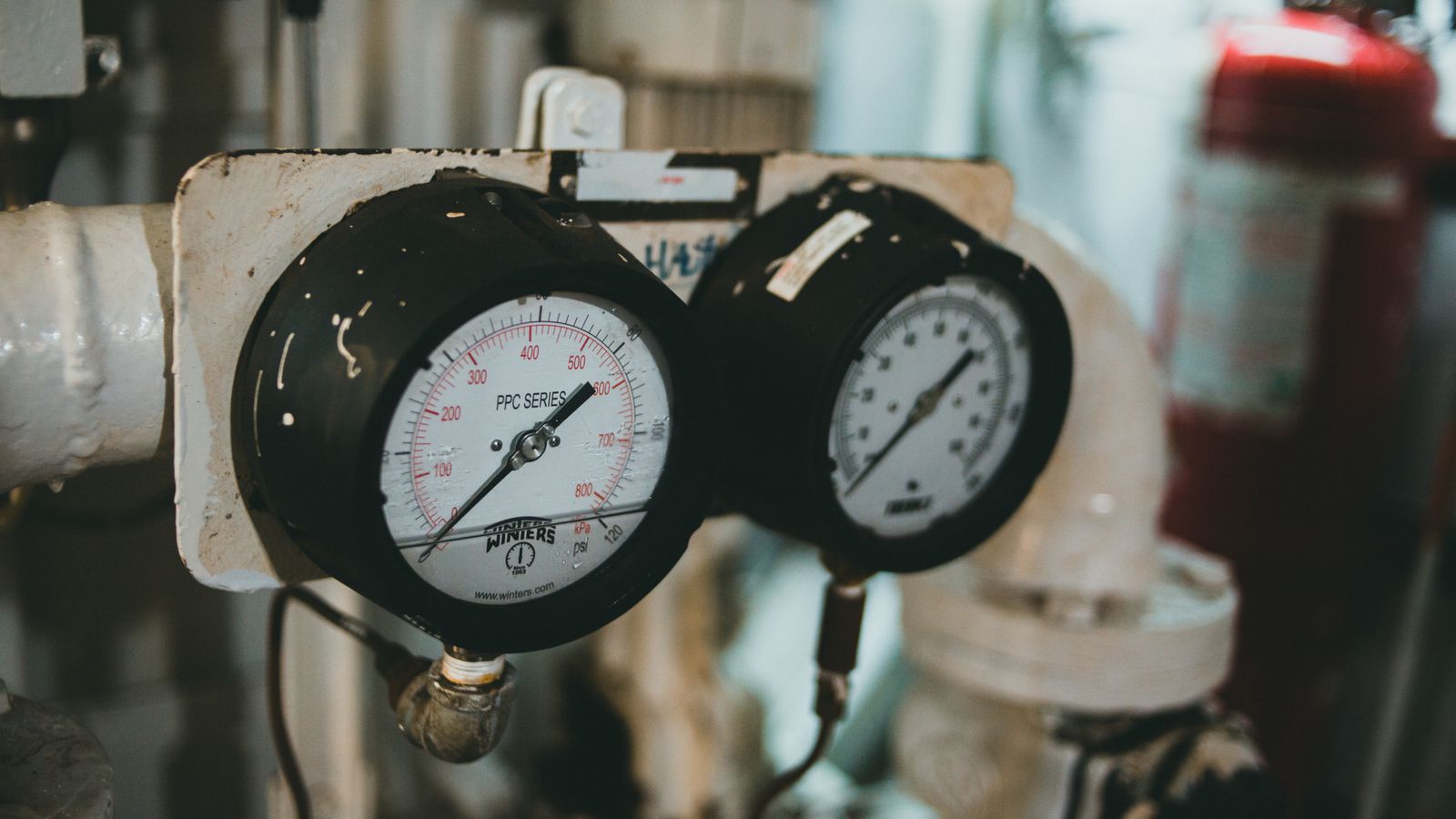
One gauge explains a lot.
A sealed heating system needs water at the right pressure to reach every radiator. When the needle drops, the heat usually drops with it.


 Licensed technicians
Quick answer
Low boiler pressure means the sealed loop no longer holds enough water to push heat around the house. Read the gauge when the system is cold, and compare it against the range your manual marks. Natural Resources Canada says hydronic systems work best with radiators “free of air bubbles and operating at correct pressures.” A slow, repeated fall points to a leak rather than normal loss.
Key takeaways
- Read the gauge cold, because heat raises the needle on its own.
- Bleeding radiators lowers pressure, so expect a drop afterwards.
- A fall every few weeks is a leak until proven otherwise.
- Never guess at the filling valve, since over-pressurising causes its own faults.
- Above all, repeated top-ups hide a problem rather than fix it.
What boiler pressure actually measures
First, the basic idea. A sealed system is a closed loop of water, and that water has to be under slight pressure.
Pressure pushes water up through pipes and into every radiator. Without it, the upper floor simply never gets a supply.
Natural Resources Canada ties performance to this directly. Hydronic systems “perform best when radiators are relatively free of air bubbles and operating at correct pressures.”
Therefore the gauge is not decoration. It is the quickest honest reading of whether the system can do its job.
Why boiler pressure falls in the first place
Secondly, the causes. Some are ordinary and some are not.
Bleeding radiators is the most common innocent reason. Every pocket of air you release leaves space that water must fill.
Next comes a genuine leak. A weeping joint, a pinhole in a pipe or a failing seal all let water escape slowly.
Meanwhile the expansion vessel can lose its charge. When that happens, pressure swings widely between cold and hot instead of settling.
Furthermore, a pressure relief valve that passes will drip outside. In fact, the puddle is often the first thing anyone notices.
Recent work on the system matters too. After a drain down, pressure settles for several days before it stabilises.
| What you see | What it usually points to |
|---|---|
| Drop right after bleeding | Normal, so top up once |
| Slow fall every few weeks | A leak somewhere in the loop |
| Big swing between cold and hot | Expansion vessel losing charge |
| Water dripping outside the house | Relief valve passing |
| Damp patch or stained ceiling | A pipe leak, so call now |
| Pressure high and rising | Overfilled or a filling valve left open |
Reading the gauge properly
Thirdly, read it the same way every time. Otherwise the numbers tell you nothing useful.
Wait until the heating has been off for a few hours. Water expands as it warms, so a hot system always reads higher.
Then note the number and the date. A single reading is a snapshot, while a short log shows a trend.
Most sealed systems sit around one to one and a half bar cold. However, your manual sets the real target, and some designs differ.
Many gauges also carry a marked band or coloured zone. Where yours does, treat that marking as the answer rather than a general rule.
Topping up, and when to stop
Next, the refill itself. Systems are topped up through a filling loop, usually a braided hose with a valve at each end.
The principle is simple. You open it briefly, watch the needle climb into range, then close it fully.
Still, two cautions matter more than the method. Firstly, closing both valves afterwards is essential, because a loop left open keeps raising pressure.
Secondly, stop if you cannot identify the loop with certainty. Guessing at valves on a heating system is how small problems become expensive ones.
Besides, a system needing a top-up more than once or twice a year is telling you something. Treat that frequency as the symptom.
When low boiler pressure means a leak
However, the pattern matters more than the number. Repetition is the signal worth acting on.
A one-off drop after bleeding is expected. By contrast, a system that sinks again within a fortnight is losing water somewhere.
Look for the obvious evidence first. Damp carpet near a radiator, a stained ceiling below a pipe run, or green crust on a joint all count.
Meanwhile buried pipework hides the rest. Under floors and inside walls, a slow leak shows up only on the gauge.
Consequently a technician with the right equipment finds it faster than guesswork does. Natural Resources Canada advises finding “a competent contractor” for system work of this kind.
What this means around Churchill
Churchill is a small Innisfil community along the 9th Line, and the housing stock is mixed.
Older homes here often run systems that have been extended more than once. Each addition adds joints, and joints are where loops lose water.
Moreover, unheated crawlspaces are common. A pipe running cold under the floor can weep for months before anyone sees a mark.
Because of that, a steady loss in this area deserves a proper search rather than another top-up. Finding it in autumn costs far less than finding it in February.
Keep the system in shape
Firstly, book the service interval. Natural Resources Canada states that gas and propane boilers “should be serviced at least every two years,” while oil-fired equipment “require annual cleaning and tuning.”
Secondly, clear the air before judging the pressure. Our guide to bleeding a radiator covers the order to work in.
Thirdly, keep your own log. Two dated readings tell a technician more than a long description does.
Finally, treat anything you cannot explain as worth a call. A boiler is a fuel-burning appliance, and Natural Resources Canada recommends getting help from “a qualified professional” with these.
When pressure climbs every time the boiler fires, the tank is usually why. Our guide to the boiler expansion tank covers the air charge and the dripping relief valve it causes.
Talk to Aire One Barrie
We trace the leak rather than topping the system up and leaving. We serve Innisfil and the rest of Simcoe County from our Barrie shop.
- 24/7 emergency service, including weekends and holidays
- Boiler servicing, leak tracing and expansion vessel work
- Written findings, not just a refilled system
- Bonded, factory trained and licensed technicians
Frequently asked questions
What should boiler pressure be?
Most sealed systems sit around one to one and a half bar when cold, but the manual for your specific boiler sets the real target. Many gauges also carry a marked band, and that marking is the answer for your system.
Why does the gauge read higher when the heating is on?
Water expands as it warms, so a hot system always shows a higher number. Read the gauge after the heating has been off for a few hours, and compare cold readings against cold readings.
Is it normal for pressure to drop after bleeding radiators?
Yes. Releasing trapped air leaves space that water has to fill, so the pressure falls. Check the gauge once you finish bleeding and top the system back into range if it has fallen below the marking.
How often should I need to top up?
Rarely. Once or twice a year is unremarkable, but a system needing a refill every few weeks is losing water somewhere and should be investigated rather than repeatedly topped up.
Can I top it up myself?
Only if you can identify the filling loop with certainty and close both valves afterwards. A loop left open keeps raising pressure, which causes its own faults. If you are not sure which valve is which, stop and call a technician.
Sources
- Natural Resources Canada, Keeping the Heat In, Chapter 9: Operating your house — radiators free of air bubbles and operating at correct pressures, balancing by a competent contractor, and boiler servicing intervals for gas, propane and oil equipment.
- Natural Resources Canada, Combustion gases in your home — annual maintenance for combustion appliances and getting help from a qualified professional.