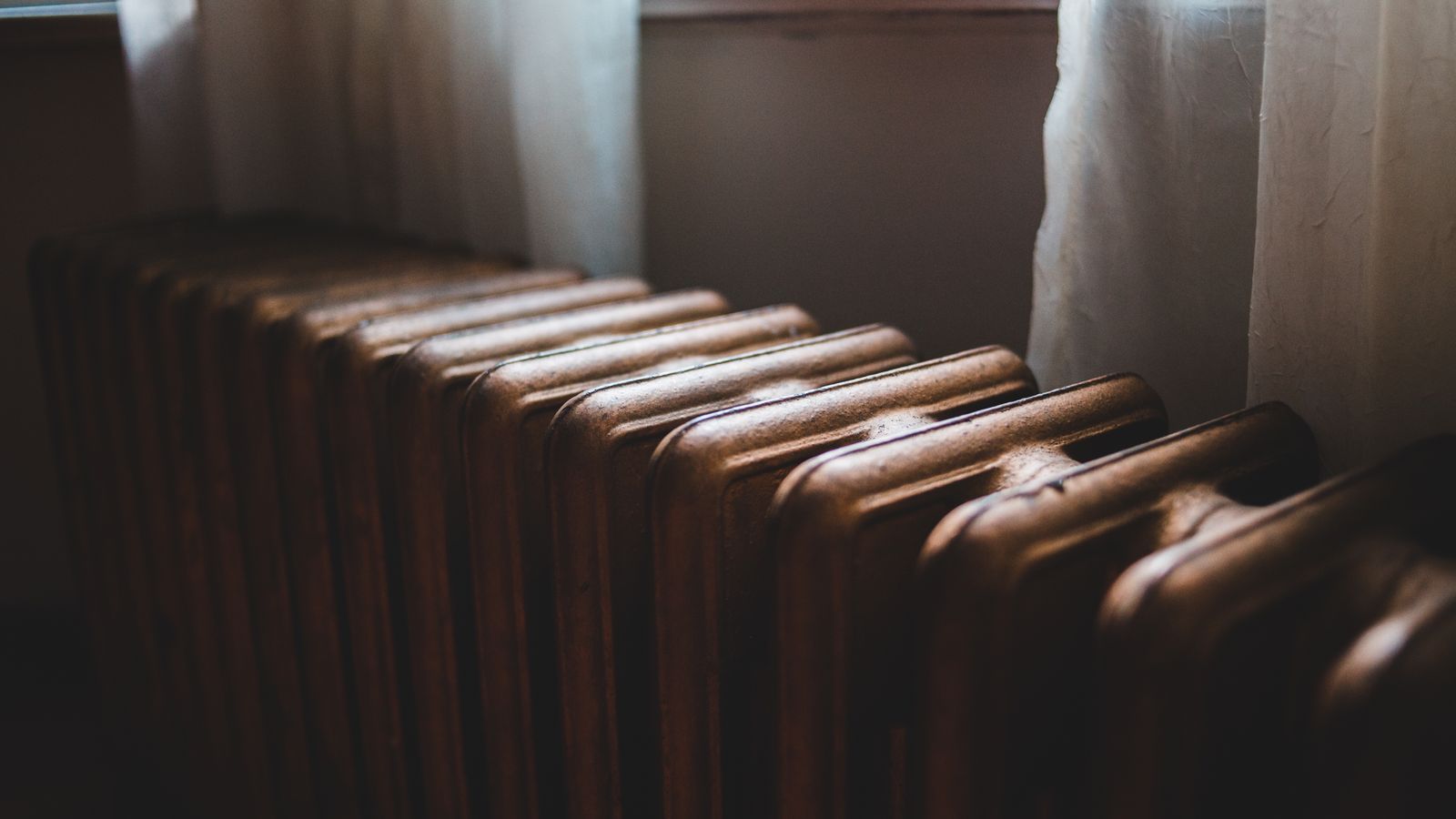
Cold at the top, warm at the bottom.
That one pattern means trapped air, and it is the only pattern bleeding fixes. Natural Resources Canada says hydronic systems work best when radiators stay free of air bubbles.


 Licensed technicians
Quick answer
Bleeding a radiator releases trapped air so hot water can fill the whole panel again. Do it when the top stays cold while the bottom runs warm. Natural Resources Canada puts it plainly: hydronic systems “perform best when radiators are relatively free of air bubbles and operating at correct pressures.” Check the boiler pressure afterwards, because bleeding lowers it.
Key takeaways
- Cold top with a warm bottom is the signature of trapped air.
- A radiator cold all over points elsewhere, so bleeding will not help.
- Work with the heating off and the water cooled down.
- Pressure drops as air leaves, so check the gauge afterwards.
- Above all, repeated air means a fault worth investigating.
What bleeding a radiator actually does
First, picture the problem. Hot water should fill the radiator completely, top to bottom.
Air is lighter than water, so it collects along the top. Consequently the upper section never heats while the lower half feels fine.
Bleeding opens a small valve and lets that pocket escape. Water then rises to fill the space it leaves.
Natural Resources Canada treats the task as routine maintenance. It advises “bleeding radiators regularly unless the system has an automatic bleeding capability.”
The signs that bleeding a radiator will help
Secondly, confirm the symptom before touching anything. One pattern qualifies, and the others do not.
Run the heating for twenty minutes. Then feel the radiator at the top, the middle and the bottom.
A cold top over a warm bottom means air. That is the case bleeding solves.
However, a radiator cold all over suggests a closed valve, a circulation problem or sludge. Meanwhile a cold bottom with a hot top usually means sediment has settled inside.
Gurgling as the system fires is another clue. In fact, many households hear the air before they feel the cold patch.
| What you feel | What it usually means |
|---|---|
| Cold top, warm bottom | Trapped air, so bleed it |
| Hot top, cold bottom | Sludge or sediment inside |
| Cold all over, others fine | A closed or seized valve |
| Every radiator cold | Boiler, pump or pressure fault |
| Gurgling during a cycle | Air moving through the loop |
| Air returns within weeks | A leak or a fault, so call |
The order to work in
Thirdly, the sequence. Turn the heating off first and let the water cool for an hour.
Next, gather a radiator key and a cloth or small container. Older valves take a flat screwdriver instead.
Then start downstairs and work upward, since air rises through the system. In addition, begin with the radiator furthest from the boiler on each floor.
Open the valve roughly a quarter turn. You will hear a hiss as air escapes.
Close it the moment water appears. A steady dribble means the air has gone.
Finally, repeat on each radiator in turn, then run the heating again and feel for cold patches.
After bleeding, check the boiler pressure
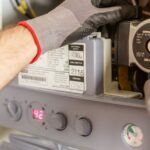
Next, the step most guides skip. Every pocket of air you remove lowers the pressure in a sealed system.
That matters because Natural Resources Canada links the two directly. Radiators should stay “free of air bubbles and operating at correct pressures.”
Therefore read the gauge on the boiler after you finish. Most systems sit between one and one and a half bar when cold, although your manual is the authority.
If it has dropped below the marked range, the system needs topping up. Where you are unsure which valve does that, stop and ask rather than guess.
When bleeding a radiator is not the answer
However, some situations need a technician rather than a key. Treat repetition as the clearest signal.
Air that returns every few weeks is not normal. Something is drawing it in, and that usually means a leak or a failing part.
Likewise, a radiator that stays cold after bleeding has a different fault. Balancing may be the issue instead.
Natural Resources Canada suggests the practical fix. “Adjusting valves in a hot water system may help,” and otherwise you should “find a competent contractor to upgrade or balance your system.”
Besides, never bleed a radiator while the system runs hot. Scalding water under pressure is the risk you are avoiding.
What this means around Lefroy
Lefroy sits on the Innisfil shore of Lake Simcoe, and the housing runs from older cottages to newer year-round builds.
Converted seasonal properties behave differently. A system drained for winters long ago often carries air that never fully cleared.
Moreover, two storey additions change the picture. Radiators added above the original loop collect air faster than the rest.
Because of that, the upstairs rooms here are usually the ones worth checking first. Start there before assuming the boiler is at fault.
Keep the rest of the system in shape
Firstly, vacuum the fins each autumn. The federal guide recommends you “vacuum the radiators of electric or hydronic baseboard systems each autumn to prevent dust buildup.”
Secondly, book the service interval. Natural Resources Canada states that gas and propane boilers “should be serviced at least every two years,” while oil-fired equipment “require annual cleaning and tuning.”
Thirdly, note what you find. A pattern across several radiators tells a technician more than a single cold panel does.
If the whole system underperforms rather than one radiator, our comparison of a boiler against a furnace covers how hydronic heat behaves.
Air in the radiators is one problem, and water with nowhere to expand is another. Our guide to the boiler expansion tank covers the part that absorbs that expansion.
Talk to Aire One Barrie
We service boilers and hydronic systems, and we tell you when a cold radiator is simply air. We serve Innisfil and the rest of Simcoe County from our Barrie shop.
- 24/7 emergency service, including weekends and holidays
- Boiler servicing and hydronic balancing
- We find the reason air keeps coming back
- Bonded, factory trained and licensed technicians
Frequently asked questions
How do I know a radiator needs bleeding?
Run the heating for twenty minutes, then feel the panel. A cold top over a warm bottom means trapped air. If the radiator is cold all over, or cold at the bottom instead, the cause is something other than air.
Should the heating be on or off when bleeding a radiator?
Off, with the water cooled for about an hour. Bleeding a hot system risks scalding water escaping under pressure, and the air has not settled at the top yet.
Which radiator do I start with?
Start on the lowest floor and work upward, and on each floor begin with the radiator furthest from the boiler. Air rises through the loop, so this order clears it in the direction it travels.
Why does the boiler pressure drop afterwards?
Because the air you released was taking up space in a sealed system. Natural Resources Canada notes that radiators need to be free of air bubbles and at correct pressures, so check the gauge once you finish and top the system up if it has fallen below the marked range.
What if the air keeps coming back?
That is worth investigating rather than repeating. Air returning within weeks usually points to a leak or a failing component, and Natural Resources Canada advises finding a competent contractor to upgrade or balance the system.
Sources
- Natural Resources Canada, Keeping the Heat In, Chapter 9: Operating your house — hydronic systems performing best free of air bubbles and at correct pressures, bleeding radiators regularly, vacuuming radiators each autumn, adjusting valves and balancing by a competent contractor, and boiler servicing intervals.