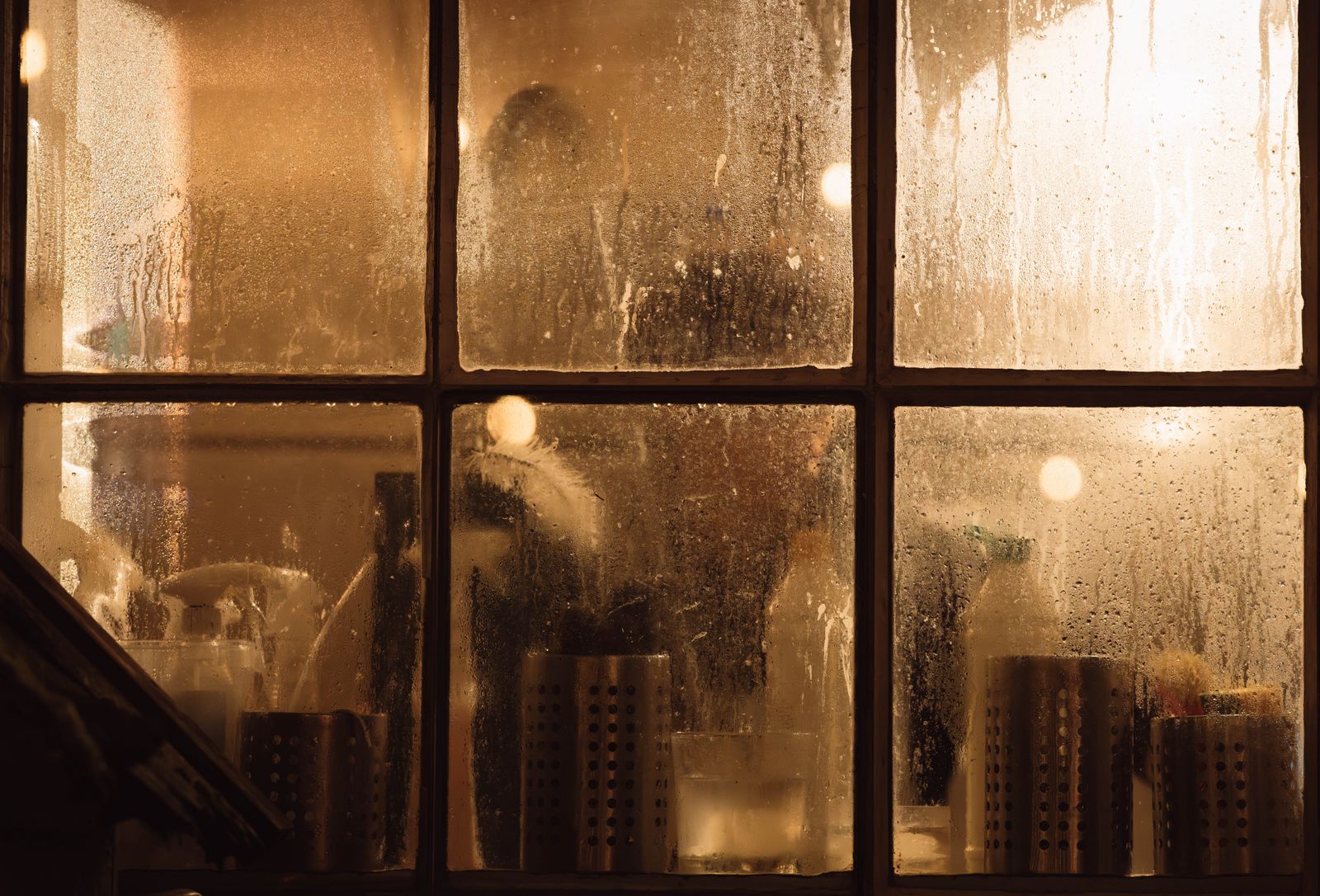
Your windows are not leaking. They are reporting.
Wet glass in January is a humidity reading, not a window fault. Health Canada gives a range, and there is one fix almost nobody has heard of.


 Licensed technicians
Quick answer
Window condensation in winter means the air in the house holds more moisture than the cold glass can tolerate. Health Canada asks homeowners to “maintain relative humidity levels between 30% and 50%.” Buy a hygrometer and find your actual number. Then lower it with ventilation, a dehumidifier or a turned-down humidifier. One more thing helps and costs nothing: open the curtains.
Key takeaways
- Health Canada: “Maintain your home’s relative humidity level between 30% and 50%.”
- It names the exact symptom, “moisture condensation on cold surfaces, such as windows.”
- It advises a dehumidifier “if moisture is condensing on cold surfaces such as window panes or relative humidity is > 50%.”
- Closed curtains make it worse: they “trap the cold and moisture and cause condensation on your windows.”
- Fog between the panes is a different problem, and no humidity setting fixes it.
Why window condensation in winter happens at all
Air holds moisture, and warm air holds more of it than cold air. That is the whole mechanism behind window condensation in winter.
On a January night in Barrie, the inside face of your window is the coldest surface in the room. Warm, moist room air touches it, cools, and can no longer carry what it was holding. The water comes out on the glass.
So the window is not failing. It is the first surface cold enough to show you a number you were not measuring.
That is also why the problem arrives with the cold snap and leaves in March. Nothing about the house changed. The glass got colder.

Find your actual number first
Everything else is guessing until you measure. Health Canada says so plainly, and recommends the tool.
Its guidance is to use “a hygrometer (an inexpensive tool available at most hardware stores) to measure humidity.” The target is to “maintain relative humidity levels between 30% and 50%.”
Put one in the main living area, not the bathroom and not next to the kettle. Read it in the evening, when the house has been lived in all day.
If the reading sits above 50%, you have your answer. Health Canada’s own trigger for reaching for a dehumidifier is “if moisture is condensing on cold surfaces such as window panes or relative humidity is > 50%.”
If the reading is already in the thirties and the windows still stream, the moisture is local rather than general, and the next section is where to look.
Where the water is coming from
A family of four puts a surprising amount of water into the air without trying.
Showers, cooking, the kettle, laundry drying on a rack, a lot of houseplants, an aquarium. In a tightly built house none of it leaves on its own.
Run the bathroom fan during every shower and leave it running afterwards. Health Canada’s advice is to “let the fan run for a few minutes after you are done.” Use the range hood when you cook. Check that it vents outside, rather than through a charcoal filter back into the kitchen.
Then look lower. An unfinished basement with a damp floor feeds the whole house. That air does not stay in the basement.
The attic is the other half of that story. Our guide to attic insulation in Big Bay Point explains why sealing comes before adding depth.

The curtain fix nobody mentions
This one is free, takes a second, and is in Health Canada’s own guide.
“Heavy curtains or blinds can trap the cold and moisture and cause condensation on your windows.”
The remedy is the obvious other half of that sentence. “Keep window coverings open to allow warm air to reach the windows.”
Think about what a closed curtain does. It makes a narrow pocket of still air against the glass, cut off from the heat in the room. That pocket runs colder than the rest of the house, so it reaches the point where water condenses sooner.
Open the curtains in the morning. Lift the blinds off the sill rather than letting them rest on it. On the worst nights, leave the bedroom curtains slightly parted.
When the humidifier is the cause
Plenty of Barrie homes run a whole-house humidifier on the furnace. In a dry winter it earns its keep.
The trouble is that most of them are set once and never looked at again. A setting that felt right in November is too high in January, because the glass is colder.
If your windows started sweating when the real cold arrived, turn the humidifier down a step and wait two days. Repeat until the glass stays clear overnight.
Health Canada’s moisture checklist is blunter still. Where condensation is already a problem, it lists “unplug and remove humidifiers.”
A humidifier that cannot be adjusted, or that runs whatever you set, is worth having looked at. So is one with a pad that has not been changed in years.
What this means around Barrie
Window condensation in winter shows up in two kinds of Barrie house, and they fail in opposite directions.
Newer builds around the south end are tight. Very little air leaks out, so whatever moisture the household makes stays in. Those homes often sit well above 50% without anyone realizing.
Older homes closer to the lake leak more air. They also have colder window surfaces and often a damp basement, so they fog heavily at a reading that would be fine elsewhere.
Lake-effect weather matters too. A grey, damp week keeps outdoor air moist, so opening a window clears less than on a dry, bright cold day.
Reading the window like a gauge
Window condensation in winter is not one problem. Where the glass fogs tells you something different in each case.
| What you see | What it usually means | What to do |
|---|---|---|
| Light fog at the bottom corners on the coldest mornings | Normal for a Canadian winter | Wipe it, open the coverings, carry on |
| Running water on many windows, most nights | Household humidity is too high | Measure it, ventilate, turn the humidifier down |
| One room only, usually a bedroom | Door shut all night, moisture and cold both trapped | Leave the door ajar, open the curtains |
| Fog sealed between two panes of glass | The window’s seal has failed | A glazing repair, not a heating one |
| Black spotting on the frame or sill | Mould has started | Clean it, dry it daily, fix the humidity |
When it stops being cosmetic
Water that sits on a sill every night eventually finds the frame, the drywall below it, and the wood behind that.
Health Canada’s instruction is simple and daily. “Dry your window frames and sills daily to keep water from dripping and causing mould to grow.”
If you are already seeing black or dark green spotting, treat the humidity as a problem to fix now rather than a comfort preference.
Where heating fits in
Humidity and heat are the same conversation, because the warmth of a surface decides whether water forms on it.
A room that runs cold has colder glass, so it fogs first. If one room is always behind the rest, that is an airflow problem worth reading about separately.
Setting the thermostat very low overnight has the same effect across the whole house. Our guide to winter thermostat settings covers how deep a setback is sensible.
Ventilation is the other half. If the house is tight and the fans are not enough, a technician can measure it. That tells you whether controlled ventilation or a dehumidifier suits the way your house is built.
Talk to Aire One Barrie
If the windows run with water every night and you have already tried the free fixes, we can measure what the house is doing. We serve Barrie and the rest of Simcoe County.
- Humidifier setting, pad and control checked properly
- Ventilation and airflow measured, not guessed
- Upfront pricing before the work starts
- Bonded, factory trained and licensed technicians
Frequently asked questions
What causes window condensation in winter?
Warm indoor air carries moisture, and the inside face of a window is the coldest surface in the room. When that air touches the cold glass it cools and releases the water it was holding. Health Canada describes the symptom as moisture condensation on cold surfaces, such as windows.
What humidity level should I keep in winter?
Health Canada asks homeowners to maintain relative humidity between 30% and 50%. Measure it with a hygrometer rather than guessing. Treat a reading above 50% as the point to start removing moisture.
Do closed curtains make window condensation worse?
Yes. Health Canada’s guide says heavy curtains or blinds can trap the cold and moisture and cause condensation on your windows. It advises keeping window coverings open so warm air can reach the glass.
Why is the fog between the two panes of glass?
That is a failed seal in the sealed unit, not a humidity problem in your home. No change to heating, ventilation or humidifier settings will clear it, because the moisture is inside the window itself.
Should I turn my furnace humidifier off completely?
Turning it down a step at a time is usually enough, since some winter humidity is comfortable and helpful. Where condensation is already a problem, Health Canada’s moisture checklist goes further and lists unplugging and removing humidifiers.
Sources
- Health Canada, Mould: reduce humidity and moisture — the 30% to 50% range and the hygrometer.
- Health Canada, Guide to addressing moisture and mould indoors — condensation on cold surfaces, window coverings, drying sills daily, and the dehumidifier trigger.