Blowing in more is the second step, not the first.
Hot air rising is the reason most people start in the attic. The federal guidance says the bigger losses are usually elsewhere, and that sealing has to come before insulating.


 Licensed technicians
Quick answer
Attic insulation slows heat moving through the ceiling, but it only works properly once the attic is air sealed. Natural Resources Canada calls sealing essential, because moist indoor air leaking upward causes frost and rot that ruin the insulation anyway. Therefore the order is: find the leaks, seal them, then add depth and keep the ventilation path clear.
Key takeaways
- Firstly, the attic is rarely the biggest heat loss in a house.
- Air sealing comes before adding depth, not after.
- Recommended ceiling levels run from R-40 to R-60 by climate zone.
- Keep soffit vents open with baffles, and seal the hatch.
- Above all, never bury a recessed light that is not rated for it.
The assumption worth checking first
First, the belief that sends everyone up the ladder. Heat rises, so the ceiling must be the problem.
Natural Resources Canada addresses that directly. “Many people believe that because hot air rises, most heat loss will be through the ceiling. This is not necessarily so.”
In fact the guidance goes further. It notes that “most other areas, such as basements and uninsulated walls, lose more heat than the typical attic.”
Basements carry real weight here. The same series puts basement heat loss at “about 20 percent of a home’s total heat loss.”
So the attic is worth doing, but not worth doing first in every house. Consequently an energy evaluation beats a guess.
Air sealing comes first
Secondly, the step people skip. Insulation slows heat, but it does not stop air.
Natural Resources Canada is unambiguous. “It is essential to air seal the attic to prevent moist indoor air from getting in.”
Moisture is the reason. Warm indoor air carries water vapour, and that vapour condenses or frosts when it reaches a cold attic.
Then the insulation itself suffers. The guidance warns that “Uncorrected moisture problems will reduce the effectiveness of insulation.”
Therefore existing damage gets dealt with before anything else. “Identify the cause and correct it before adding insulation.”
The hatch deserves its own mention, since it is a hole in the ceiling by design. The guide simply says: “Remember to seal the attic hatch.”
How much attic insulation to aim for
Thirdly, the number. Recommended levels vary by how cold the location is.
The federal table gives a range for a roof or ceiling. It runs from RSI 7.1 (R-40) in the mildest zone up to RSI 10.6 (R-60) in the coldest, with RSI 8.8 (R-50) in between.
Depth of attic insulation follows from the material. Blown cellulose gives roughly R-3.6 per inch, blown mineral fibre about R-3, and blown glass fibre around R-2.9.
So the arithmetic is straightforward. Reaching R-50 with blown cellulose means roughly fourteen inches of settled depth.
Besides depth, consistency matters. Batts “should completely fill the space they are fitted into and neither be compressed nor have gaps.”
| Material | Roughly per inch |
|---|---|
| Closed-cell spray polyurethane | R-5.5 to R-6.5 |
| Cellulose fibre, blown, settled | R-3 to R-3.8 |
| Mineral fibre, loose fill, blown | R-3 to R-3.8 |
| Glass fibre, loose fill, blown | R-2.7 to R-3.6 |
Ventilation and the things to keep clear
Next, the airflow the attic needs. A sealed ceiling and a vented attic are not a contradiction.
The federal guidance gives a ratio. “The ratio of vent area to ceiling area should be approximately 1 to 300.”
Placement counts as much as area. “Ideally, 50 percent of the attic ventilation openings should be continuous soffit vents.”
However, insulation blown toward the eaves will block exactly those vents. The answer is mechanical: “Use baffles between each rafter space to prevent it from being blocked.”
Two hazards also need clearance. Recessed lights “can become a fire hazard if covered with insulation,” and the guide says not to cover them “unless they are installed in approved covers.”
Chimneys need the same discipline. Blown insulation in particular has to be kept from contact with the chimney.
Ice dams and what they tell you
Then the visible symptom. Ice at the eaves is the attic reporting a problem.
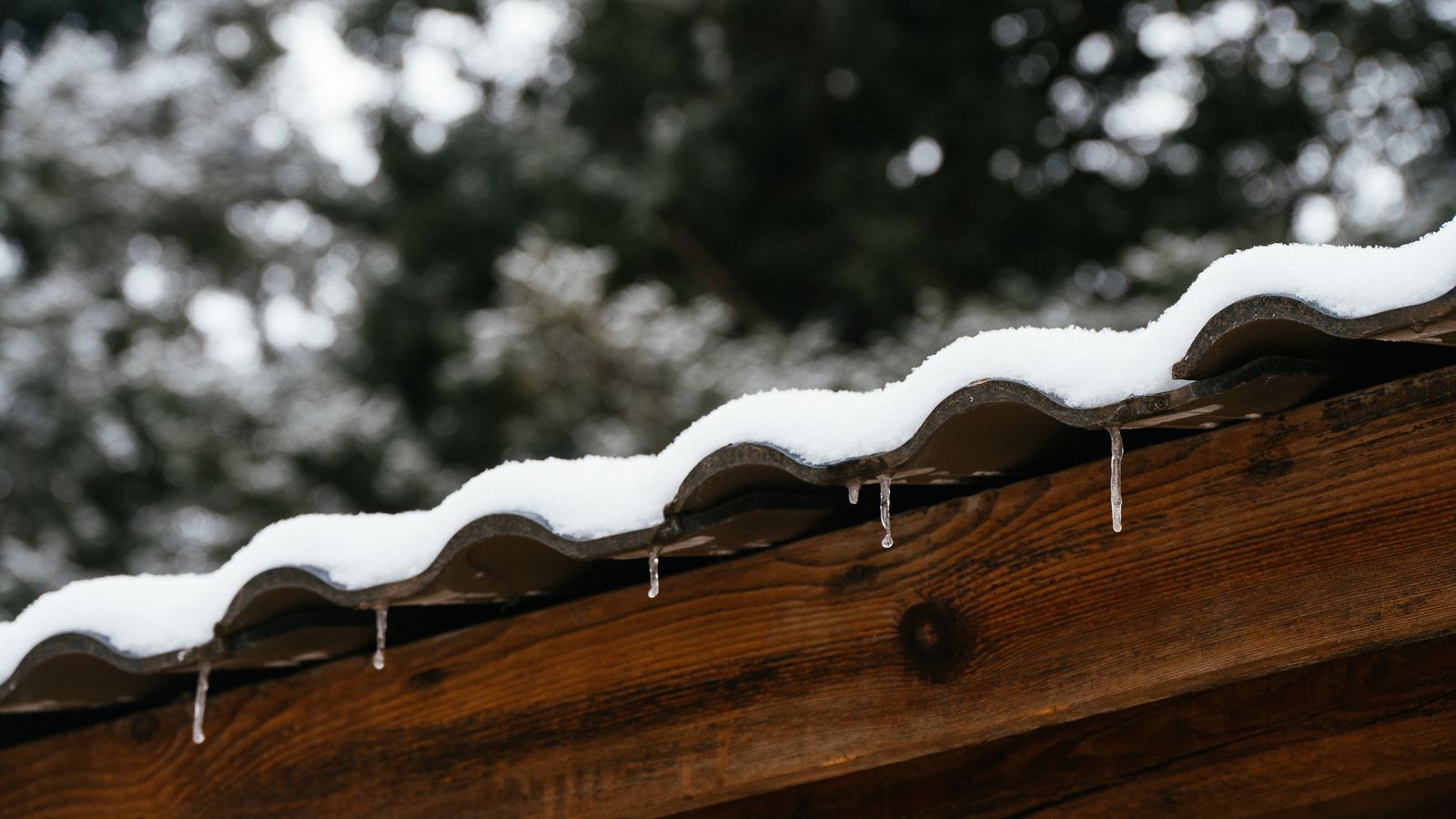
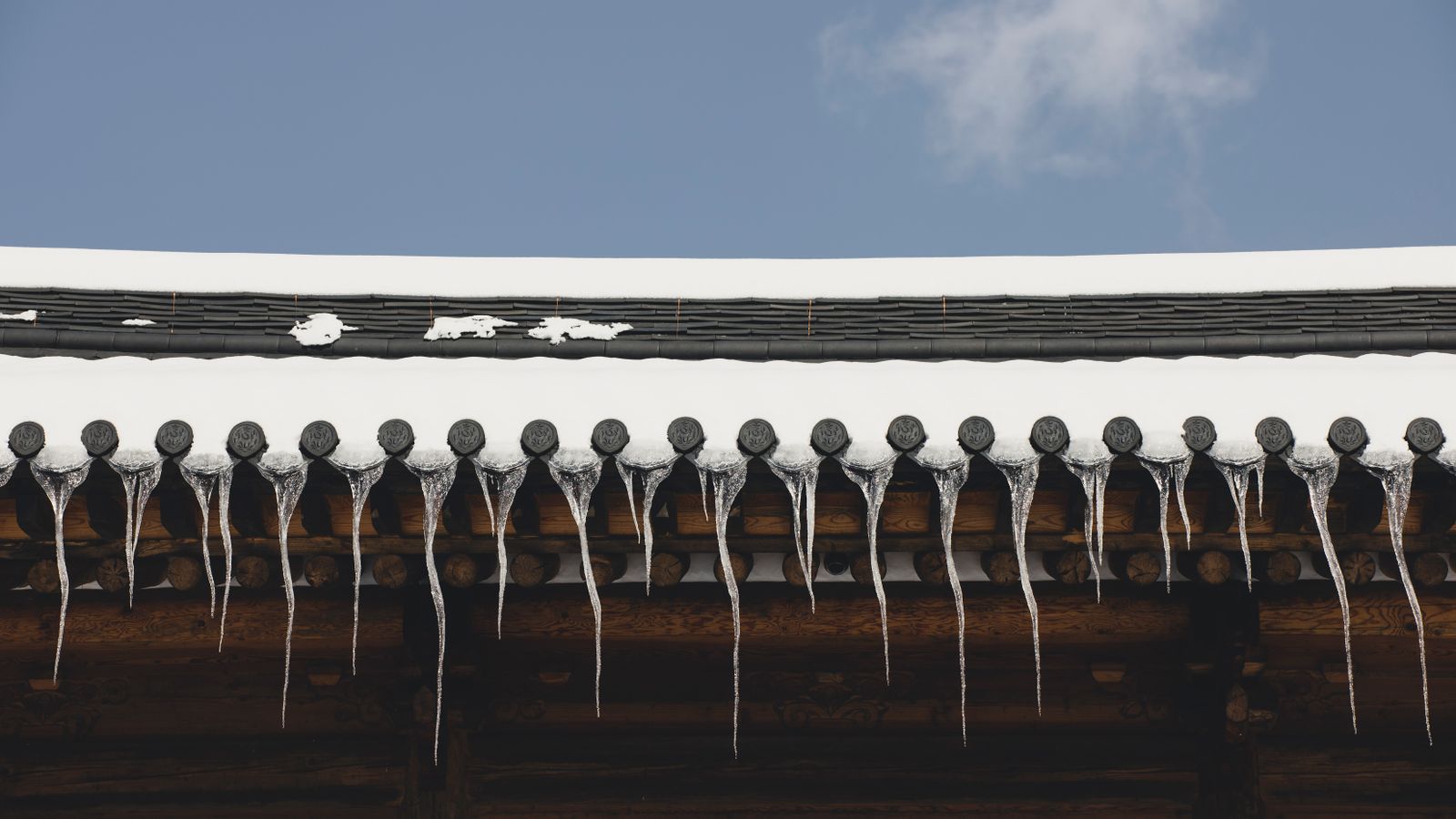
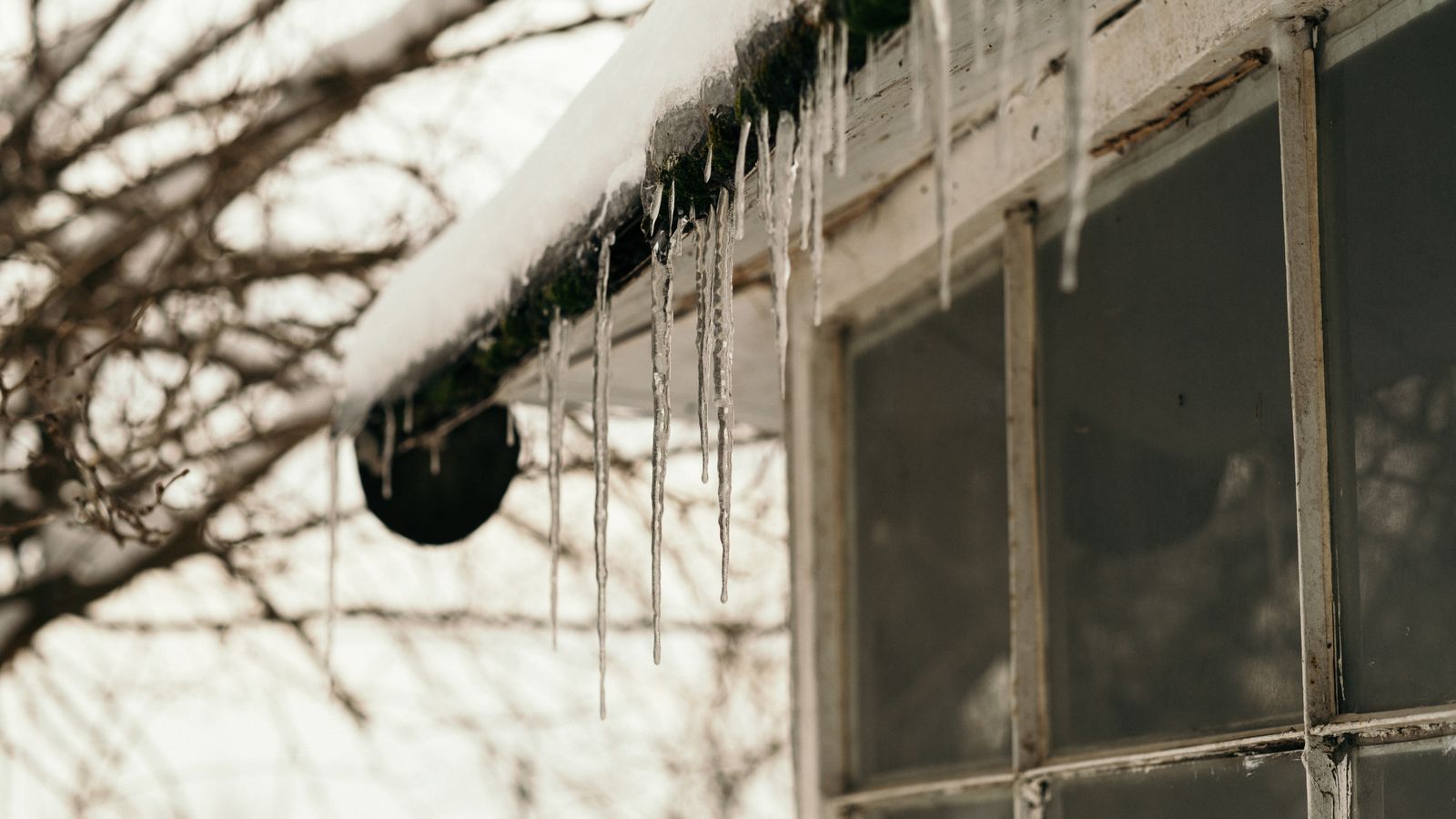
Natural Resources Canada notes that “Ice damming usually occurs when there is a significant amount of snow on the roof.”
The mechanism is heat. Warm air escaping into the attic melts snow higher up, and the meltwater refreezes at the cold overhang.
Consequently ice dams point at air leakage rather than insufficient depth. Adding insulation without sealing often moves the problem rather than ending it.
Condensation inside is the indoor version of the same story. Our guide to window condensation in winter covers how indoor humidity behaves.
What attic insulation means around Big Bay Point
Big Bay Point reaches out into Lake Simcoe, and the exposure there is real. Wind drives air leakage harder than it does on a sheltered street.
Many of the properties also started life as cottages. In practice that means shallow roofs, low eaves and attics that were never built for a Canadian winter of continuous occupancy.
Low eaves make the baffle question urgent. There is little room at the edge, so insulation blocks the soffit vents easily.
Besides, a house that is now airtight needs planned ventilation. Our guide to a heat recovery ventilator explains how that is usually handled.
We serve Innisfil and the wider Simcoe County area, and lakefront conversions are familiar work.
Where heating equipment fits in
Finally, the connection to the furnace. Improving the envelope changes what the equipment should be.
A better sealed, better insulated house needs less heat. Therefore the furnace sized for the old house becomes oversized for the new one.
That matters, because an oversized furnace short cycles and heats unevenly. Our guide to what furnace size you need covers why.
So the sensible order is attic insulation first, equipment second. Insulating after you replace the furnace means paying for capacity you then design away.
If a single room is the complaint rather than the whole house, start there instead. Our guide to one room that is always cold works through those causes.
Sealing comes before insulating, because air leakage carries moisture into the insulation you just paid for. Our guide to draft proofing covers where that air actually moves in winter.
Talk to Aire One Barrie
We size equipment to the house you actually have, including one you have just improved. We serve Innisfil and the rest of Simcoe County from our Barrie shop.
- 24/7 emergency service, including weekends and holidays
- Heat loss calculated before any furnace is quoted
- Ventilation advice for tightened, older houses
- Bonded, factory trained and licensed technicians
Frequently asked questions
How much attic insulation should I have?
The federal recommended range for a roof or ceiling runs from RSI 7.1 (R-40) in the mildest zone to RSI 10.6 (R-60) in the coldest, with RSI 8.8 (R-50) between them. An energy evaluation confirms which level applies to your house.
Do I need to air seal before adding attic insulation?
Yes. Natural Resources Canada calls air sealing essential, because moist indoor air leaking into a cold attic causes frost and moisture damage. Existing moisture problems should be identified and corrected before any insulation goes in.
Why do I get ice dams?
Warm air escaping into the attic melts snow on the upper roof, and that water refreezes at the cold overhang. It points at air leakage more than at insulation depth, which is why sealing usually matters more than topping up.
Will insulation block my soffit vents?
It can, especially at low eaves. The guidance is to fit baffles between each rafter space so the ventilation path stays open, and it suggests that about half the attic vent openings should be continuous soffit vents.
Can I insulate over pot lights?
Not unless they are installed in approved covers. Natural Resources Canada warns that recessed light fixtures can become a fire hazard when covered with insulation.
Sources
- Natural Resources Canada, Keeping the Heat In, Chapter 5: Roofs and attics — air sealing the attic as essential, correcting moisture problems before insulating, sealing the attic hatch, the 1 to 300 vent ratio, continuous soffit vents, baffles between rafter spaces, recessed lights and approved covers, chimney clearance, and ice damming.
- Natural Resources Canada, Keeping the Heat In, Chapter 2: How your house works — the recommended minimum insulation table for roofs and ceilings by zone, and the correction to the belief that most heat is lost through the ceiling.
- Natural Resources Canada, Keeping the Heat In, Chapter 3: Materials — insulating values per inch for blown cellulose, mineral fibre, glass fibre and closed-cell spray foam, and the rule that batts should neither be compressed nor leave gaps.