
It is rarely the furnace. It is the room.
When one room is always cold and the rest of the house is fine, four things are usually stacked against it. Two of them, however, you can fix this afternoon.


 Licensed technicians
Quick answer
When one room is always cold, start with the free checks: open every register, pull furniture off the floor vents, and fit a clean filter. Then look at the door, because air has to leave the room as well as enter it. What is left is usually position and duct design, and those are balancing work rather than a repair.
Key takeaways
- A room with no way for air to get back out will not heat properly, however much you send in.
- Natural Resources Canada suggests adding returns, especially in bedrooms, where airflow is poor.
- A corner room with two outside walls and two windows loses far more heat than an interior room.
- Your thermostat measures one room, so every other room is an assumption.
- Closing vents elsewhere to force air into the cold room usually makes the whole system worse.
Why one room is always cold: four things stacked together
A cold room is rarely one problem. Instead, it is usually a few small disadvantages landing on the same space.
That room sits at the end of the longest duct run, so it gets the least air. There is more outside wall and more glass than the rooms around it. Its door spends the night shut, so the air that does arrive has nowhere to go. And the thermostat is in the hallway or the living room, measuring somewhere else entirely.
None of those is a fault. Together, however, they are why one room is always cold while the rest of the house sits at the number on the dial.
The free checks, first
Two of these cost nothing and take ten minutes, so do them before anything else.
Open every register and clear them. Then walk the whole house, not just the cold room. Also lift the rugs off floor vents and pull the sofa back from the wall. After all, a register blowing into the back of a bookcase is doing nothing for anyone.
Fit a clean filter. A clogged filter starves the whole system, and the room at the end of the run feels it first. Natural Resources Canada warns that if you reduce airflow too much, "you could raise the air temperature inside the furnace plenum too much," which brings the burners off early.
Do not close vents in other rooms. This is the instinct everyone has, but it backfires. Closing registers raises pressure in the ducts. As a result, it pushes more air out through leaks and starves the furnace of the airflow it needs.
Air has to get back out
Almost nobody checks this one, even though it explains more cold bedrooms than anything else on the list.
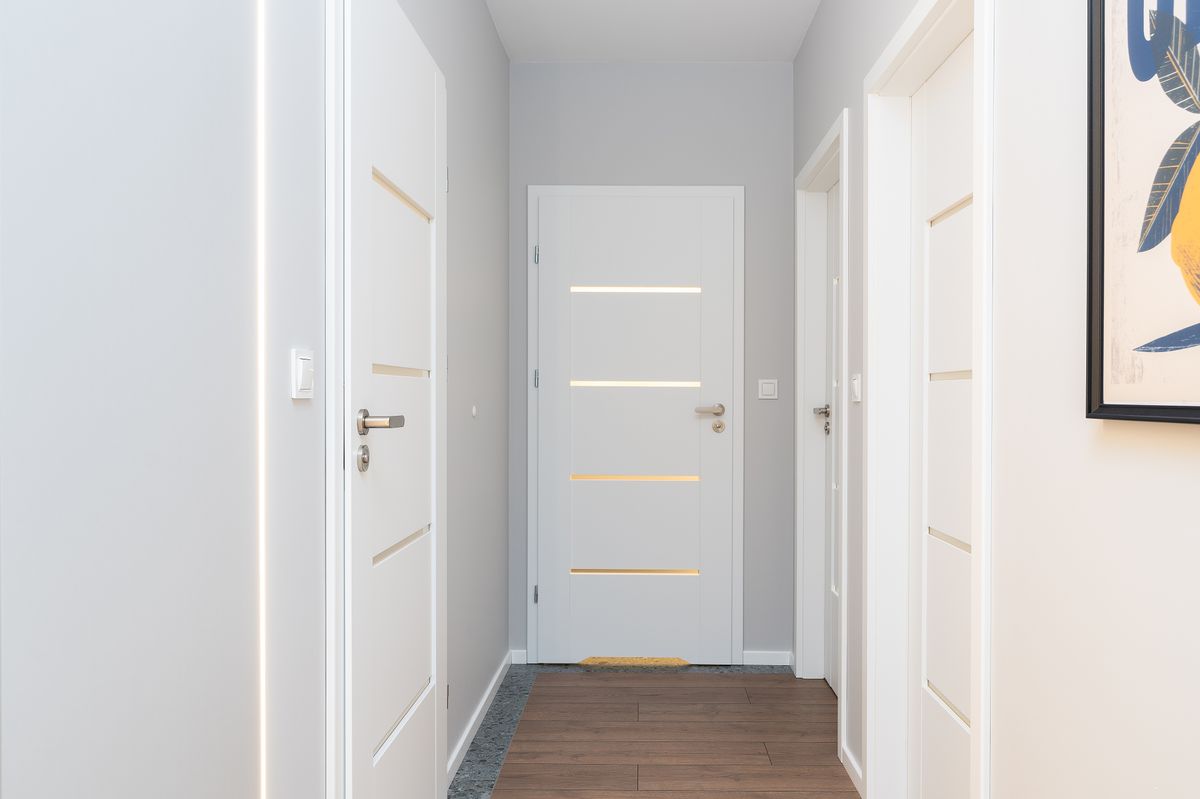
First, your furnace pushes air into a room through the supply register. That same volume of air has to leave again and find its way back to the furnace, or flow simply stops. In most houses the return path is the hallway, through the open doorway.
So when you shut the door, the path closes. Pressure builds in the room, the incoming air slows to a trickle, and the room stays cold all night even though the register is open.
In fact, Natural Resources Canada identifies this directly. Where returns are poorly designed, "not enough air flows through the furnace," the department says. The department's suggested remedy is therefore adding returns, "especially in bedrooms."
Two fixes work. An undercut at the bottom of the door, a gap of roughly 20 mm, gives the air somewhere to go. However, a proper return duct in the room is the permanent answer.
Not every room starts from the same place
Position decides how much heat a room loses before anyone turns anything on. It is also the reason one room is always cold in houses where nothing is broken.
For example, a corner bedroom with two exterior walls and two windows is exposed on two sides. In contrast, the room beside it, with one exterior wall and the house wrapped around the rest, loses a fraction of that. Add a bonus room over an unheated garage, with cold air beneath the floor as well, and the gap widens again.
Even so, the duct serving that corner room was very often sized the same as the duct serving the sheltered one. That is the mismatch, and no amount of adjusting the thermostat fixes it, because the thermostat is measuring a different room.
Balancing, and the limits of it
Where one room is always cold and the ducts are sound, balancing is the fix. It means adjusting the dampers in the duct branches, so each room gets a share that matches what it loses. In other words, more to the corner bedroom and less to the room that overheats.
It is real work with a real result, and it is the right first step before anyone talks about new equipment. It also has a ceiling. Sometimes the branch serving the far room is simply too small. Opening its damper all the way still will not deliver enough air. The honest answer then is that the duct needs changing.
That is a question of design rather than of service. For that reason, it belongs with furnace installation and duct work, not with a repair call.
The continuous fan setting
There is one more lever, and it is worth understanding properly because it cuts both ways.
Running the blower continuously keeps air moving between rooms even when the burners are off. Natural Resources Canada also notes that a two-speed fan "will provide continuous air circulation and more even temperatures throughout the house," and suggests a programmed fan mode where heating is uneven.
However, the cost is twofold. First, your electricity bill rises if the fan motor is not an efficient one. Second, between heating cycles the air from the vents feels cool, because it is. If that surprises you, we also wrote about exactly that in our guide to a furnace blowing cold air. In short, even temperatures and warm-feeling vents are a genuine trade-off, not a contradiction.
What we see around Minesing
Many Springwater properties sit on large, open lots with nothing to break the wind. That matters more than people expect. The same room in the same house loses noticeably more heat when the wall behind it takes wind straight across open ground. Likewise, the lake-effect squalls that drop a lot of snow on Springwater fast arrive on that same wind.
Out toward the edges of the Minesing Wetlands and along Highway 26, the pattern we see most is an older house that has grown. For example, an addition, a finished basement, a converted room over a garage, each one tied into ductwork that was laid out for the original floor plan.
Those houses almost always balance better than their owners expect. Where one room is always cold in a Minesing home, it is rarely beyond help. Instead, the airflow simply has not been measured yet.
Working through it in order
| Step | What to do | Cost |
|---|---|---|
| 1 | Open every register in the house and clear furniture off them | Free |
| 2 | Fit a clean filter | Price of a filter |
| 3 | Leave the cold room's door open for a night and compare | Free |
| 4 | Undercut the door if that test makes a difference | Small |
| 5 | Try the continuous fan setting for a week | Some electricity |
| 6 | Have the dampers balanced across the branches | Service visit |
| 7 | Add a return, or resize the branch duct | Duct work |
Work down the list rather than jumping to the bottom. When one room is always cold, the answer usually sits somewhere in the first four steps.
Safety first
Registers, filters, doors and the thermostat are all yours. However, everything inside the furnace cabinet is not.
Natural Resources Canada is specific that opening basement return ductwork or removing a furnace access panel to improve airflow is dangerous, because the fan can draw combustion gases back into the house. Therefore, leave the cabinet shut and let a licensed technician open it.
Talk to Aire One Barrie
Worked through the free checks and that room is still cold? Balancing is a measured job, and we cover Minesing, Snow Valley and the surrounding countryside from our Barrie shop.
- Airflow measured room by room, not guessed
- Upfront pricing before the work starts
- Bonded, factory trained and licensed technicians
Frequently asked questions
Why is one room always cold when the rest of the house is fine?
Usually several small disadvantages at once. The room sits at the end of the longest duct run, has more outside wall and glass than its neighbours, and its closed door leaves the incoming air nowhere to go. Meanwhile, your thermostat is measuring a different room entirely.
Does closing vents in other rooms push more heat to the cold one?
No, and it usually makes things worse. Closing registers raises duct pressure, forces more air out through leaks, and reduces the airflow the furnace needs. Open every register and have the system balanced instead.
Why does a closed door make a bedroom colder?
Air pushed into a room has to leave again or flow stops. With the door shut and no return duct, pressure builds and the supply slows to a trickle. An undercut at the bottom of the door, or a return in the room, restores the path.
Will running the fan continuously help?
Often yes. Natural Resources Canada notes that continuous circulation gives more even temperatures through the house. However, the trade-off is a higher electricity cost if the motor is not efficient, and vents that feel cool between heating cycles.
Is duct balancing worth doing?
It is the right step before considering new equipment, because it costs far less and often solves the problem. Its limit, however, is duct size. If the branch feeding the room is too small, balancing alone cannot deliver enough air.
Sources
- Natural Resources Canada, Heating with Gas — poorly designed returns and airflow through the furnace, adding returns in bedrooms, continuous fan circulation for even temperatures, plenum temperature when airflow drops, and the warning against opening return ductwork or furnace panels.
- Aire One Barrie, Furnace, AC and heat pump service in Minesing — open Springwater lots with nothing to break the wind, and lake-effect squalls over Springwater.
- Aire One Barrie, Furnace installation — sizing, ducts and balancing.
The diagrams on this page are illustrations drawn for this article, not photographs of a specific installation.