
First question: is it an air conditioner, or a heat pump?
Whether you cover your air conditioner for winter depends entirely on that answer. One sits idle until spring. The other runs through January and must never be wrapped up.


 Licensed technicians
Quick answer
Never cover a heat pump. It runs all winter, and newer models keep operating down to somewhere between −15°C and −25°C. If you cover your air conditioner because it sits idle until spring, that is optional rather than necessary, and your own manufacturer's manual is the authority on it. What every outdoor unit needs is clear space and a clean coil.
Key takeaways
- Identify the equipment first. A heat pump and an air conditioner look almost identical outdoors.
- A heat pump sheds frost by melting it off the outdoor coil, so it needs airflow and drainage all winter.
- Natural Resources Canada warns that unnecessary defrost cycles reduce seasonal performance.
- Snow drifts are the real hazard here. Units set too low disappear in a Kempenfelt Bay squall.
- Follow the manual that came with your unit before any advice you read online, including this.
Which one is in your side yard?
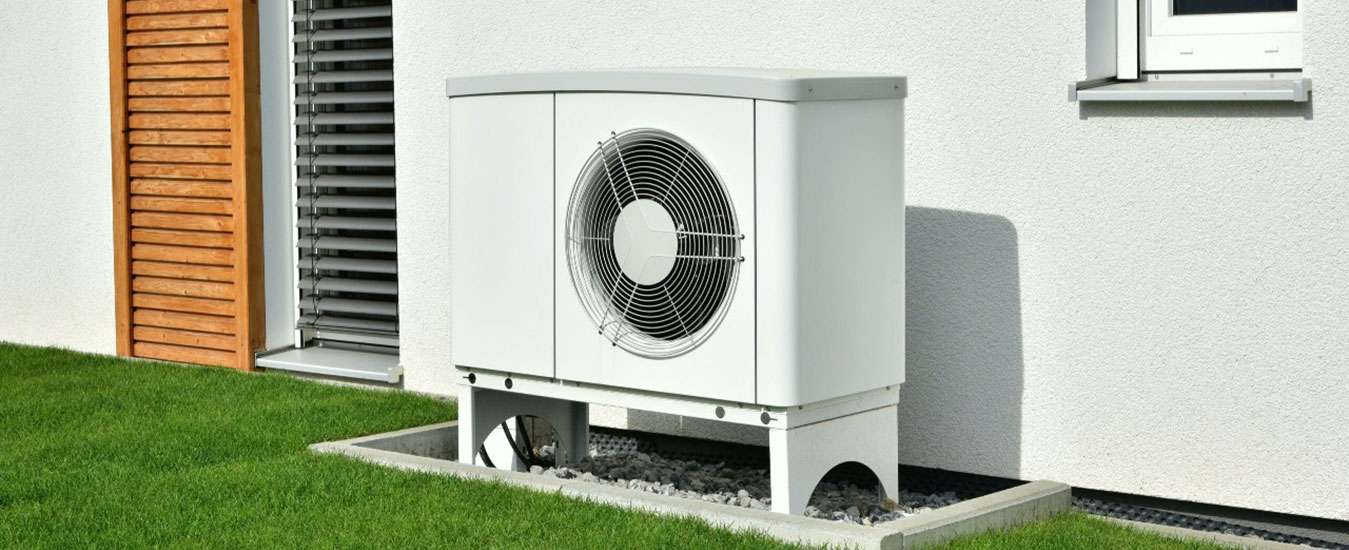
Start here, because everything else depends on it. From the outside, a heat pump and an air conditioner are nearly the same object: a metal cabinet, a fan facing up or out, refrigerant lines running to the house.
Three things tell them apart. A heat pump runs in winter, so if the fan turns on a cold day, it is a heat pump. A heat pump's outdoor unit usually sits on a raised stand or taller feet rather than flat on a pad. And the thermostat offers a heat setting that does not fire the furnace.
If you are unsure, check the model number on the data plate or ask whoever installed it. Getting this wrong is the one mistake in this article that can actually damage equipment.
Why you never cover a heat pump
A heat pump heats your home by pulling warmth out of the outdoor air, which means the outdoor coil has to breathe. Wrap it and you have blocked the source of the heat.
Frost is part of normal operation. Natural Resources Canada explains why. "Moisture in the air passing over the outside coil will condense and freeze on it." That buildup, the department says, "decreases the efficiency of the coil by reducing its ability to transfer heat to the refrigerant." The unit answers by running a defrost cycle to melt it off.
That melting has to drain somewhere. A cover traps the meltwater against the cabinet, where it refreezes. The department also notes that "unnecessary defrost cycles reduce the seasonal performance of the heat pump." Anything that makes the unit work harder to stay clear costs you efficiency all season.
And these units are not winding down in November. Newer models have a minimum operating temperature that "can range from between −15°C to −25°C." Yours is very likely still working in February. We cover what happens during those cycles in more detail in our guide to the heat pump defrost cycle.
So should you cover your air conditioner?
If the unit genuinely is an air conditioner, it will sit unused from autumn until spring, and the question becomes reasonable rather than dangerous.
Here is the honest answer. A condenser is built to live outdoors in all weather, so a cover is not something the equipment requires. People use one for two reasons: to keep falling debris out of the cabinet, and to stop leaves and seeds settling on the coil.
The trade-off is moisture. A cover that wraps the whole cabinet slows drying after a thaw, and a dry sheltered box is attractive to mice looking for somewhere to spend the winter. That is why a top-only cover, which shields the fan opening while leaving the sides open to the air, is the common compromise.
We will not tell you a manufacturer's position they have not published. Check the manual that came with your unit or the maker's website. If the manual says something about covers, that wins over anything you read in a blog post, this one included. If it says nothing, a top cover or none at all are both defensible.
What actually matters in a Shanty Bay winter
Whether you cover your air conditioner gets all the attention. Snow does the damage.
The north shore of Kempenfelt Bay takes wind straight off the frozen bay, and Oro-Medonte sits in the snowbelt. We regularly find outdoor units buried by drifting snow because they sit too low to begin with. For a heat pump that is a real problem, because a buried unit cannot move air or drain meltwater. For an idle air conditioner it matters less, though the weight of a packed drift is not kind to a fan grille.
The fix is height and clearance, not fabric. If your unit disappears every February, raising it on a proper stand solves the problem permanently in a way no cover can.
The other local one is the coil itself. Homes near the shore collect cottonwood and willow fluff, and we see condenser coils clogged with it. That is a spring and summer problem rather than a winter one, but it is the reason the coil gets checked at the annual visit.
If the house sits empty
Plenty of places around Shanty Bay are converted cottages or second homes that go quiet for stretches of the winter. The outdoor unit is not the thing to worry about on those properties.
A furnace or heat pump that fails while nobody is there can mean frozen pipes, and that costs far more than any condenser. A thermostat with a low-temperature alert is the cheap insurance, and it matters more than anything you do or do not drape over the unit outside.
Many older lake homes here have no ductwork at all, which is why heat pumps have become popular on converted cottages along this stretch. If yours is one of them, the rule at the top of this page applies: it runs all winter, so leave it uncovered.
The short checklist
| Task | Heat pump | Air conditioner |
|---|---|---|
| Full wrap-around cover | Never | Optional, check the manual |
| Top-only cover | No | Reasonable compromise |
| Clear snow away from the sides | Yes, through the winter | Worth doing after big drifts |
| Keep the top clear of stacked items | Yes | Yes |
| Raise the unit if it drifts over | Yes | Helpful |
| Annual service by a contractor | Yes | Yes |
| Switch off the outdoor disconnect | No, it needs power | Leave this to the technician |
Safety first
Clearing snow away from the sides of a unit with your hands or a broom is fine. Leave the electrical disconnect alone. That box beside the unit carries line voltage, and it is a technician's job, not a seasonal chore.
Do not chip or pry ice off a coil either. The fins bend easily and the refrigerant lines sit right behind them. If a heat pump is iced over and not clearing itself, that is a service call.
What the annual visit is for
Natural Resources Canada puts this plainly: "You should have a qualified contractor do annual maintenance on your unit to ensure everything is in good working order."
On an outdoor unit that means the coil gets cleaned, the electrical connections get checked, refrigerant charge gets verified and the mounting gets looked at. A unit that drifts over every winter is something a technician will flag, because the fix is a taller stand rather than an annual shovelling routine.
You can see what we include on the air conditioner maintenance page, and we serve the village and the lakeshore from Barrie year-round. Our Shanty Bay page has the local detail.
Talk to Aire One Barrie
Not sure whether the unit outside is an air conditioner or a heat pump? We can tell you in a minute, and sort out the mounting if it vanishes every February.
- Coil cleaning, electrical check and charge verification
- Upfront pricing before the work starts
- Bonded, factory trained and licensed technicians
Frequently asked questions
Should you cover your air conditioner in winter?
For an air conditioner that sits idle until spring, a cover is optional rather than necessary, because the cabinet is built for outdoor use. Check the manual that came with your unit first. For a heat pump the answer is a flat no.
Why can you not cover a heat pump?
A heat pump takes warmth from the outdoor air, so the coil has to stay open to it. It also melts frost off that coil during defrost cycles, and the meltwater needs to drain away. A cover blocks the airflow and traps the water.
How do I tell a heat pump from an air conditioner?
Watch it on a cold day. A heat pump runs in winter, an air conditioner does not. Heat pumps also tend to sit raised on a stand rather than flat on a pad. The model number on the data plate settles it.
Does snow damage an outdoor unit?
Drifting snow is the bigger risk in the Shanty Bay snowbelt, especially for units mounted too low. A buried heat pump cannot move air or drain meltwater. Clear the sides with a broom and raise the unit if it drifts over every year.
Should I turn off the outdoor disconnect for winter?
Not on a heat pump, which needs power all season. On an air conditioner, leave the disconnect to your technician during the annual visit. That box carries line voltage and is not a homeowner task.
Sources
- Natural Resources Canada, Heating and cooling with a heat pump — frost on the outdoor coil, defrost cycles and seasonal performance, minimum operating temperatures, and annual maintenance by a qualified contractor.
- Aire One Barrie, Furnace, AC and heat pump service in Shanty Bay — drifting snow burying low-mounted units, and coils clogged with shoreline cottonwood fluff.
- Aire One Barrie, Air conditioner maintenance — what the annual visit covers.
No manufacturer position on covers is quoted here because none was published that we could verify. Your unit's own manual is the authority.