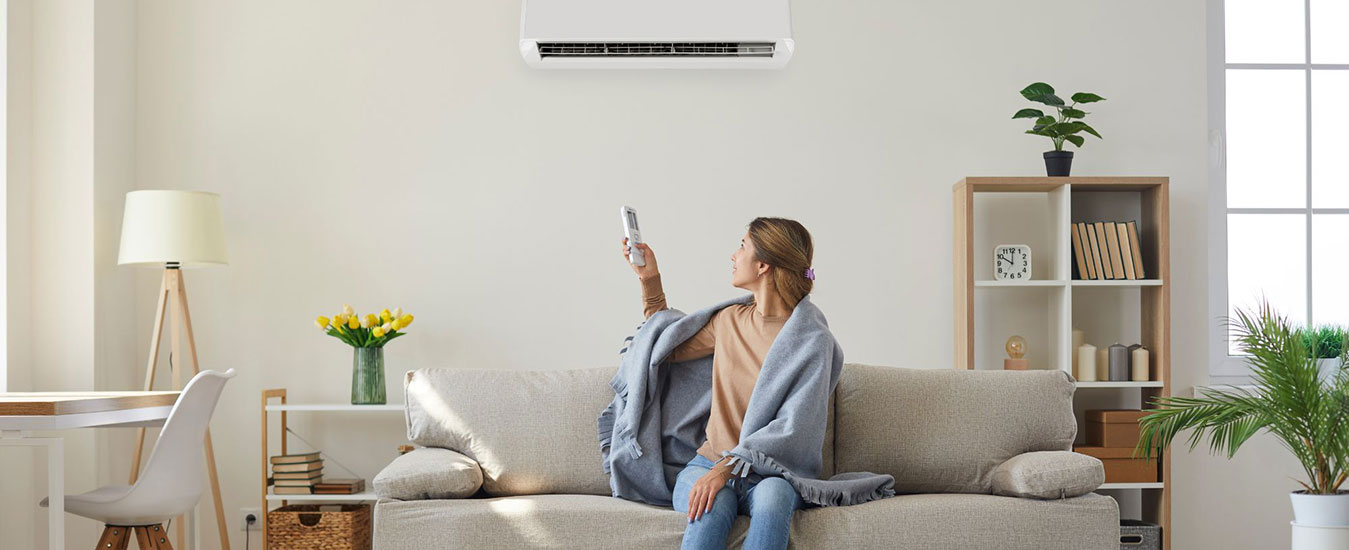
 Indoor head
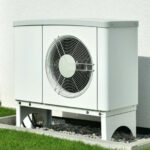
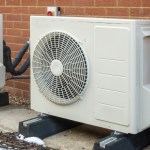
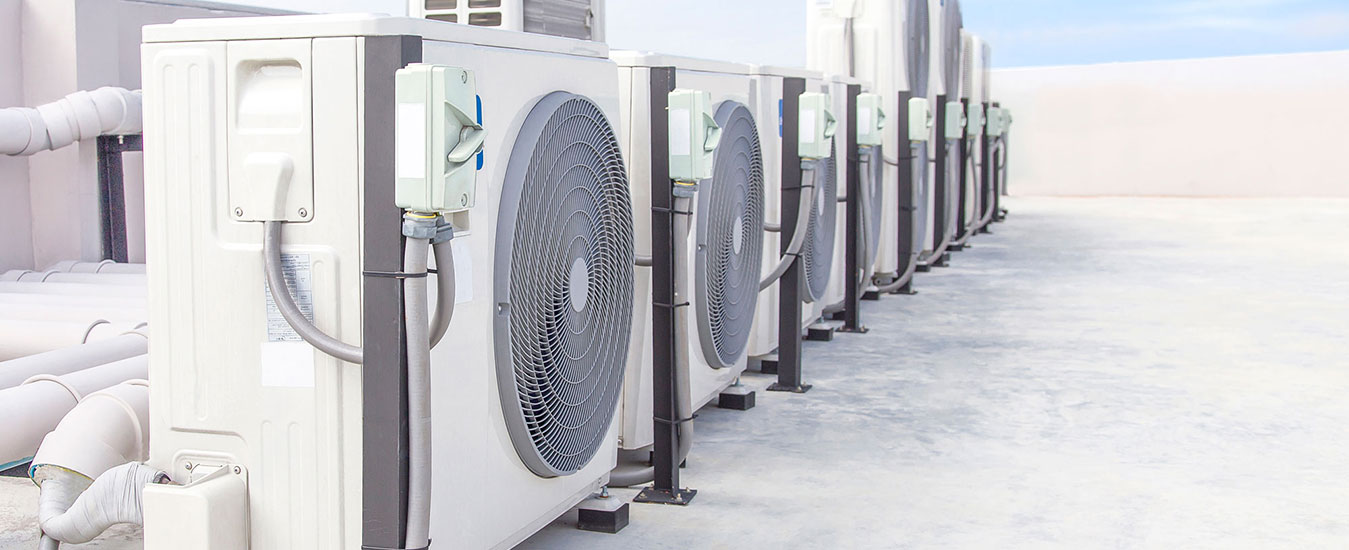 Outdoor units
Your furnace cannot heat a room it was never ducted to reach.
Ductless mini split heating puts a head on the wall of that room instead. Here is how it works, what it costs you in efficiency, and the one number that decides it in a Simcoe County winter.


 Licensed technicians
Quick answer
Ductless mini split heating uses an outdoor unit linked to one or more indoor heads mounted inside the rooms themselves. It needs no ducts. Natural Resources Canada rates heat pumps at efficiencies well over 100%, while furnaces stay below it. The catch is cold weather, so the balance point decides whether you still need backup heat.
Key takeaways
- One outdoor unit can serve two to eight separate rooms or zones, each with its own control.
- Heat pumps run at efficiencies well over 100%. Furnaces and boilers, Natural Resources Canada says, "still remain below 100%."
- Efficiency drops as it gets colder. At −8°C, COP can fall anywhere from 1.1 to 3.7.
- Newer units keep running down to somewhere between −15°C and −25°C, depending on the model.
- Size each head to the room's heat loss, not its floor area. Oversizing a multi-zone system wastes the efficiency you paid for.
What is ductless mini split heating?
A mini split has two halves. An outdoor unit sits against the house, and a refrigerant line runs through a small wall opening to an indoor head inside the room. That head blows warm air straight into the space.
Natural Resources Canada describes the basic layout simply. "Mini-Split: A single indoor unit is located inside the home, served by a single outdoor unit." Add more heads and it becomes a multi-split, where "multiple indoor units are located in the home, and are served by a single outdoor unit."
The important word is ductless. Nothing goes through the furnace, the plenum or the duct runs. The indoor units, in the department's phrasing, "heat or cool the air in that space directly."
Why it suits a house the ducts never reached
Designers built most ducted systems around the house as it stood when the furnace went in. Anything added later competes for the same air.
That shows up in predictable places. A second storey in a century home with no supply runs upstairs. A finished attic at the far end of a duct that was never sized for it. An addition built over a crawl space. A garage workshop that was never on the house system at all.
Extending ductwork into those spaces means opening walls and ceilings, and it still draws from a furnace sized for the original floor plan. Ductless mini split heating sidesteps both problems by giving the room its own source of heat.

One outdoor unit, two to eight zones
A multi-zone system is where this gets interesting for a whole house. Natural Resources Canada's sizing guide puts the range plainly: a single outdoor unit can "heat / cool two to eight separate rooms or zones in a home."
Each zone runs on its own. The guide defines the two arrangements clearly. A single-zone system "uses one indoor air handling unit to heat/cool one room or zone." A multi-zone system "uses multiple indoor air handling units to heat/cool multiple rooms or zones."
Per-room control matters more than people expect. A spare bedroom nobody uses can idle. A home office can run warmer through the working day. With a ducted furnace, every room on that trunk gets the same call for heat.
How efficient is it, really?
This is where a heat pump separates itself from anything that burns fuel. A furnace converts fuel to heat, and some always escapes. Natural Resources Canada notes that furnace and boiler efficiencies "have continually improved" but "still remain below 100%."
A heat pump does not make heat. It moves heat that already exists in the outdoor air, which is why the department credits heat pumps with "typical efficiencies well over 100%."
The measure is COP, the ratio of heat delivered to electricity drawn. At 8°C outdoors, air-source COP "typically ranges from between 2.0 and 5.4." Over a full season, Canadian units post an HSPF between 7.1 and 13.2 in Region V.
The number that matters in a Simcoe County winter
Efficiency is not fixed. "As the outdoor air temperature drops, COPs are lower," Natural Resources Canada states. By −8°C, the range has slid to "1.1 to 3.7."
Two thresholds decide what happens next. The thermal balance point is "the temperature below which the heat pump does not have enough capacity to meet the heating needs." The cut-off temperature is "the minimum operating temperature for the heat pump." For newer models, it says, "this can range from between −15°C to −25°C."
So the department is direct about planning for it: "it is important to consider a supplemental heating source for air-source heat pump operations." Backup also carries the room while the unit runs its defrost cycle.
A cold-climate model narrows the gap. The sizing guide defines one as a unit that "maintains capacity and COP even at cold ambient temperatures," and the performance list it points to publishes heating data down to −15°C. Ask for that data on the specific model quoted to you.
Where the indoor head goes
Placement is not decoration. It sets how evenly the room heats.
Wall-mounted heads are the common choice, "installed on the wall, typically a few inches down from the ceiling." Warm air leaves high and falls as it cools, which suits a bedroom or an open living space.
Ceiling cassettes work differently. The guide notes that "the ideal location for in-ceiling units are hallways and landings," where a single head can feed several doorways off one space. That matters in a two-storey heritage home with bedrooms opening onto a landing.
Sizing: the mistake that costs you the efficiency
A ductless head matches the space it serves, not the house. The guide is specific that "sizing will be based on the thermal loads of the target area within the house."
Heat loss, not floor area, drives that number. A 200-square-foot sunroom with glass on three sides loses far more heat than a 200-square-foot interior bedroom. Sizing both the same way leaves one cold and the other oversized.
Oversizing is the expensive error on multi-zone systems. "Careful sizing and controls are especially important with ductless multi-zone systems in order to maintain high efficiency," the guide warns. Variable-capacity units can turn down 3:1 or more, which helps, but only within a sensible range.
What we see in Cookstown
Cookstown is a crossroads village where Highway 27 and Highway 89 meet, and the housing is a real mix. The brick homes along and around Queen Street date back generations. Plenty of them have no ductwork upstairs at all, which is exactly the case a ductless split system was built for.
Out toward the Essa and Bradford town lines, farm properties often run on propane. On those places the arithmetic shifts, because a heat pump delivers more than a unit of heat per unit of energy while a propane furnace cannot. Rooms heated by electric baseboard see the same shift.
Newer streets on the edges of the village already have modern high-efficiency equipment. There the question is usually narrower: one head for a bonus room over the garage, or for a basement apartment that needs its own thermostat.
Is ductless right for this space?
| Space | Why the ducts fall short | What usually fits |
|---|---|---|
| Second storey of a heritage home | No supply runs upstairs | One head per bedroom, or a ceiling unit on the landing |
| Finished attic or bonus room | Long duct run with weak airflow at the end | Single-zone head |
| Addition over a crawl space | Furnace sized for the original house | Single-zone head |
| Garage or workshop | Never connected to the house system | Cold-climate single-zone head |
| Basement apartment | Shares ducts, no separate control | Own head and own thermostat |
| Sunroom or three-season room | Glass area drives heat loss well past the duct capacity | Head sized to the room's heat loss |
Safety first
A mini split is not a plug-in appliance. Installing one means running refrigerant lines, cutting through the exterior wall and adding a dedicated electrical circuit.
Refrigerant handling and the electrical connection both belong to licensed technicians. A poor line set or a loose flare leaks refrigerant slowly, and the system quietly loses heating capacity over a season or two.
How to decide
Start with the room, not the catalogue. Write down which spaces are uncomfortable and what heats them now.
Then ask three questions of any quote. What is the heat loss of each room it will serve? What is this model's rated capacity at −15°C, not just at 8°C? And what carries the room below the balance point?
A quote that answers all three is a design. One that only lists a model number and a price is a guess.
Talk to Aire One Barrie
Thinking about ductless mini split heating for a room your furnace never reached? We size each head to the room and give you the cold-weather numbers before you commit.
- Room-by-room heat loss, not a rule of thumb
- Upfront pricing before the work starts
- 24/7 emergency service, including weekends and holidays
Frequently asked questions
Does a ductless mini split actually heat, or only cool?
It heats. A mini split is an air-source heat pump, so it moves heat indoors in winter and outdoors in summer. Natural Resources Canada credits heat pumps with typical efficiencies well over 100%, while furnaces and boilers stay below that mark.
How many rooms can one outdoor unit heat?
Between two and eight. Natural Resources Canada's sizing guide says a single outdoor unit can heat or cool two to eight separate rooms or zones in a home. Each indoor head runs on its own control, so unused rooms can idle.
Will ductless mini split heating work through a Simcoe County winter?
Newer units keep operating down to between −15°C and −25°C, depending on the model. Capacity and efficiency both fall as it gets colder, so Natural Resources Canada advises planning a supplemental heat source alongside an air-source heat pump.
Do I still need my furnace if I add ductless heads?
Usually yes, in this climate. The furnace or another backup covers the coldest stretches. Those fall below the balance point, the temperature where the heat pump can no longer carry the full heating load alone.
Can I put a ductless head in a garage or workshop?
Yes, and it is one of the clearest cases for one, because a garage rarely connects to the house system. Size it to the heat loss of the space, including the garage door, and choose a cold-climate model if you want it usable in January.
Sources
- Natural Resources Canada, Heating and cooling with a heat pump — mini-split and multi-split definitions, COP ranges, cut-off temperatures and supplemental heat.
- Natural Resources Canada, Air-Source Heat Pump Sizing and Selection Guide — single-zone and multi-zone definitions, the two-to-eight zone range, head placement and sizing to target-area loads.
- Aire One Barrie, Ductless split systems — installation, repair and maintenance across Barrie and Simcoe County.
- Aire One Barrie, Furnace, AC and heat pump service in Cookstown — local housing mix and service coverage.