The cheapest heating upgrade is the one you can feel.
A tube of caulking costs less than a service call. The part nobody mentions is what happens to your furnace once the house stops leaking.


 Licensed technicians
Quick answer
Draft proofing closes the gaps where outside air pushes into the house and heated air escapes. Natural Resources Canada puts air leakage at roughly a quarter of a home’s heat loss, so the payback is real. However, the same federal guidance warns that tightening the envelope leaves less air for combustion appliances, so the furnace and water heater need checking afterwards.
Key takeaways
- Firstly, air moves low to high in winter, so leaks are not where you feel them.
- Caulking suits fixed gaps, weatherstripping suits anything that moves.
- A tightened house raises indoor humidity, which shows up on windows.
- Combustion appliances need air, and sealing takes some of it away.
- Above all, never test for leaks with fuel-fired appliances running.
Why draft proofing pays back so quickly
First, the scale. Air leakage is not a rounding error in a Canadian house.
Natural Resources Canada states the general case plainly: “typically about 25 percent of heat loss can be due to excess air infiltration (leakage).”
In practice that is a quarter of your gas bill passing through gaps. The materials to close most of them cost very little.
Consequently the return beats almost any equipment upgrade per dollar spent. Therefore it belongs first in the queue, not last.
Besides the money, comfort changes immediately. A room stops feeling cold at ankle height once the floor perimeter is sealed.
Where the air actually moves
Secondly, direction. This is the part that surprises people.
The federal guide describes the mechanism directly. “In winter, the house tends to operate like a chimney due to stack effect, where air enters the house at lower levels and exits at the upper levels and ceiling.”
So cold air is drawn in low, around the basement header, the sill plate and the bottoms of doors. Meanwhile warm air escapes high, through ceiling penetrations and the attic hatch.
Therefore the draught you feel at the patio door is a symptom, not the source. The gap letting air out upstairs is pulling it in down here.
In other words, sealing the top of the house often fixes the cold floor below it.
Caulking or weatherstripping
Thirdly, materials. The choice comes down to one question: does the part move?
Fixed gaps take caulking. Natural Resources Canada advises you to “Seal windows that are not needed for ventilation or as a possible emergency escape route” and to use caulking there “rather than weatherstripping.”
Anything that opens takes weatherstripping instead. That covers door thresholds, door frames, operating window sashes and the attic hatch.
The guide is specific about the hatch. It says to “Weatherstrip along the edges of the casing or the access panel itself.”
One material rule matters near heat. The same guidance says to “Use noncombustible caulking around heat sources,” naming chimneys, light fixtures and fan motors.
| Location | What to use |
|---|---|
| Basement header and sill plate | Caulking or foam |
| Window sash and casing | Weatherstripping |
| Window that never opens | Caulking |
| Door threshold and frame | Weatherstripping |
| Attic hatch | Weatherstripping on casing or panel |
| Around a chimney or flue | Noncombustible caulking only |
Finding the leaks without guessing
Next, detection. You can feel the big ones, but the costly ones hide.
The federal guide suggests a simple smoke source. It recommends holding “two or three” incense sticks together, because one alone gives too little smoke to read.
Move it slowly along the suspect line and watch which way the smoke bends. Air pulling in and air pushing out both show clearly.
However, one warning comes before any of that. If the test involves depressurizing the house, the guide says to “turn off any fuel-fired space and water heaters to prevent backdrafting.”
That is not a formality. Pulling the house negative while a burner runs can drag exhaust back down the flue.
The part that belongs to us
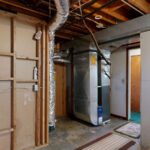
Meanwhile, here is where draft proofing stops being a hardware store job. A tighter house changes how your appliances breathe.
Natural Resources Canada says it without hedging: as the envelope tightens, “less air is available for combustion appliances.”
The consequence is stated just as plainly. “If there is not enough air, the chimney or flue could spill dangerous gases into the house.”
Therefore the guide treats ventilation as part of the same job, calling for “attention to controllable whole-house ventilation and combustion-air supply.”
So after a serious sealing project, the furnace and water heater want a combustion check. Our guide to what to do if you smell gas covers the emergency end of that.
Carbon monoxide has no smell, which is exactly why working alarms matter more in a tight house than a leaky one.
The humidity side effect
Then there is moisture. Sealing a house traps what used to drift away.
The federal guidance notes the result directly: “As the envelope is tightened, household humidity levels rise.”
Consequently windows start streaming in January where they never did before. That is the house telling you the air has nowhere to go.
Our guide to window condensation in winter works through what to do about it. Similarly, our notes on a heat recovery ventilator cover the planned answer.
In short, ventilation is not the opposite of draft proofing. It is the second half of it.
What draft proofing means around Allandale
Allandale is one of the older parts of Barrie, and the housing shows it. Wartime and post war stock sits alongside newer infill.
Older houses leak in predictable places. Rubble or block foundations, original window casings and uninsulated headers all turn up repeatedly.
In practice those houses also run older heating equipment, often naturally aspirated and sharing a chimney. Consequently the combustion air question matters more here than in a 2015 subdivision.
Besides, the gain is larger here. A leaky house gets more from draft proofing than a tight one does.
We serve Allandale, the rest of Barrie and the wider Simcoe County area from our Burton Avenue shop.
The order that works
Finally, sequence. Draft proofing in the wrong order wastes money twice.
Seal first, because every later step is sized against the house you end up with. Then insulate, since insulation slows heat but does not stop air.
Our guide to attic insulation covers why that order matters up top. Likewise, sealing leaky ducts handles the air you already paid to heat.
Equipment comes last. A sealed, insulated house needs less furnace, and our guide to what furnace size you need explains why that matters.
If none of this has been looked at, an annual maintenance visit is a reasonable starting point.
Talk to Aire One Barrie
We check combustion and venting after envelope work, and we size equipment to the house you end up with. We serve Barrie and the rest of Simcoe County.
- 24/7 emergency service, including weekends and holidays
- Combustion and venting checked after sealing work
- Ventilation advice for tightened older houses
- Bonded, factory trained and licensed technicians
Frequently asked questions
Is draft proofing actually worth doing?
Natural Resources Canada puts air leakage at roughly 25 percent of a home’s heat loss, and the materials cost very little. Per dollar spent it usually beats an equipment upgrade, which is why it belongs early in the queue.
Why is my floor cold when the draught is at the window?
In winter a house behaves like a chimney. Air enters at lower levels and leaves at the upper levels, so a gap in the ceiling or attic hatch pulls cold air in downstairs. Sealing the top often fixes the bottom.
Caulking or weatherstripping?
Caulking for gaps that do not move, weatherstripping for anything that opens. The federal guidance also says to use noncombustible caulking near heat sources such as chimneys and light fixtures.
Can sealing a house be dangerous?
It can affect combustion appliances. The federal guide warns that less air is available for them once the envelope is tightened, and that a flue could spill dangerous gases into the house if there is not enough. A combustion check after major sealing work is sensible.
Why did my windows start fogging after I sealed up?
Because household humidity rises as the envelope tightens. The moisture that used to drift out through gaps now stays inside, and cold glass is where it shows first. That usually points at ventilation rather than at the sealing work.
Sources
- Natural Resources Canada, Keeping the Heat In, Chapter 4: Comprehensive air leakage control — the winter stack effect, caulking fixed windows rather than weatherstripping them, weatherstripping the attic hatch, noncombustible caulking near heat sources, using two or three incense sticks to find leaks, turning off fuel-fired appliances before depressurizing, less air for combustion appliances in a tightened house, flue spillage risk, and ventilation as part of air leakage control.
- Natural Resources Canada, Keeping the Heat In, Chapter 2: How your house works — air leakage accounting for roughly 25 percent of heat loss.