Two settings. Only one is an emergency.
Auxiliary heat helps your heat pump. The emergency heat setting replaces it. Choosing the wrong one for a cold week can double what you pay to stay warm.


 Licensed technicians
Quick answer
Leave emergency heat alone unless the heat pump has actually failed. Carrier describes auxiliary heat as “a secondary heating source that complements your main system.” By contrast, “emergency heat is activated when the heat pump fails or can’t effectively heat your home.” Therefore one works with the heat pump, and the other works instead of it.
Key takeaways
- Auxiliary heat is automatic. Carrier: it “generally activates when outdoor temperatures fall below a certain threshold.”
- The EM HEAT setting is a manual choice. Carrier says it “should be reserved for severe weather conditions or when your heat pump malfunctions.”
- Both cost more to run. Carrier notes auxiliary heat “uses more electricity than standard heat pump operation.”
- Frequent auxiliary heat “might indicate issues with your main system,” so it is a signal worth reading.
- Natural Resources Canada: if the outdoor unit “is covered in ice or snow, it must be removed in order to work properly.”
What the two settings actually do
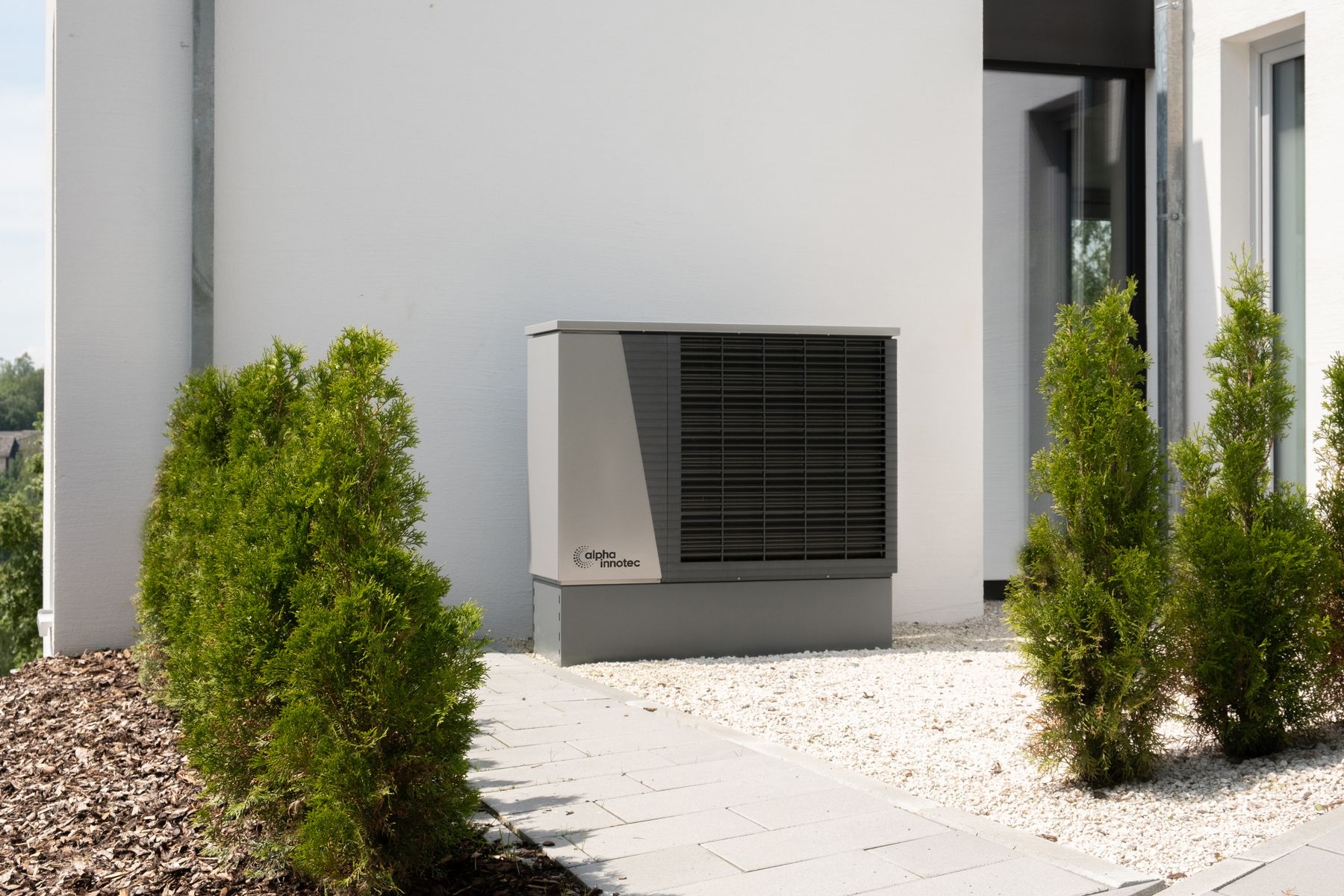
First, the heat pump itself. Natural Resources Canada describes it simply: the unit “uses electricity to extract heat from the outside air and transfer it into your home.”
That works well across most of a Simcoe County winter. However, the coldest days need help.
Auxiliary heat is that help. Carrier calls it “a secondary heating source that complements your main system.” It switches itself on and off without you.
The EM HEAT setting is different. It takes the heat pump out of the picture and runs the backup alone.
In other words, auxiliary heat is a team. The other is a substitution.

Why the EM HEAT setting costs so much
Secondly, the money. A heat pump moves heat, which is cheap. Backup heat makes heat, which is not.
Carrier puts the auxiliary case plainly: it “uses more electricity than standard heat pump operation.”
The EM HEAT setting goes further still, because it switches the efficient part of the system off entirely. Carrier notes that it “significantly increases heating costs due to its reliance on electricity.”
Consequently, a household can flip the switch in December and forget it. The January hydro bill then arrives as a shock.
Above all, remember that cold weather alone is not a reason to use it. The heat pump and auxiliary heat already handle cold weather together.
When you should use it
There is a real use for the setting, and it is narrow.
Carrier’s guidance is that emergency heat “should be reserved for severe weather conditions or when your heat pump malfunctions.”
So use it when the outdoor unit has clearly stopped, or when it makes a noise it should not. Use it too when a technician tells you to while you wait for a visit.
Then switch it back. Meanwhile, book the service call rather than living on the backup.
| Auxiliary heat | Emergency heat | |
|---|---|---|
| Who turns it on | The thermostat, automatically | You, by hand |
| Is the heat pump running | Yes, together with the backup | No, it is bypassed |
| When it is right | Cold snaps, defrost cycles, fast recovery | Heat pump failed or severe conditions |
| Running cost | Higher than the heat pump alone | Highest of the three |
| What it tells you | Frequent use can mean a system problem | You already suspect a fault |
Reading your auxiliary heat light
Many thermostats show AUX when the backup is running. Accordingly, that light is useful information rather than a warning.
A short burst on a frigid morning is normal. So is a burst after the unit finishes a defrost cycle.
By contrast, AUX showing for hours in ordinary winter weather is worth investigating. Carrier makes the same point. Frequent auxiliary heat “might indicate issues with your main system.”
Similarly, a deep overnight setback calls the backup every morning. The house simply has further to climb. Our guide to winter thermostat settings covers how deep a setback makes sense.

What this means around Wasaga Beach
Wasaga Beach gets lake-effect snow off Georgian Bay, and it arrives fast. Consequently the outdoor unit here needs checking more often than it would inland.
Natural Resources Canada is direct about that. If the unit “is covered in ice or snow, it must be removed in order to work properly.”
The pattern we see is a buried outdoor unit and a house that will not warm up. The homeowner then reaches for the EM HEAT button. In practice, clearing the snow solves it.
Furthermore, a lot of Wasaga Beach properties are seasonal or rented. A unit nobody checks for a fortnight can disappear under one storm.
Before you reach for the switch
Firstly, go outside and look at the unit. Clear snow and ice away from it, gently, and give the system an hour.
Secondly, check the filter indoors. Restricted airflow makes the backup run far more than it should.
Thirdly, look at your thermostat schedule. A large setback and an early wake-up time will call the backup every morning.
Finally, look for a unit that is silent, iced solid or running oddly. That is when emergency heat earns its name. Use it, and call.
Talk to Aire One Barrie
If your heat pump is leaning on the backup all winter, something is usually wrong. We serve Wasaga Beach and the rest of Simcoe County from our Barrie shop.
- 24/7 emergency service, including weekends and holidays
- Balance point and backup staging checked, not guessed
- Heat pump installation and service by Carrier trained technicians
- Bonded, factory trained and licensed technicians
Frequently asked questions
What is the difference between emergency heat and auxiliary heat?
Auxiliary heat runs alongside the heat pump and switches on automatically. Carrier describes emergency heat as something activated when the heat pump fails or cannot effectively heat your home. It bypasses the heat pump entirely.
Should I use emergency heat when it gets very cold?
Not on cold weather alone. Carrier limits the setting to severe conditions, or to a heat pump that malfunctions. The heat pump and auxiliary heat already work together in the cold.
Does emergency heat cost more to run?
Yes, and noticeably. Carrier notes that auxiliary heat uses more electricity than standard heat pump operation. Emergency heat significantly increases heating costs, because it relies entirely on electricity.
My AUX light is on a lot. Is that a problem?
Occasional use in very cold weather or after a defrost cycle is normal. Carrier notes that frequent auxiliary heat use might indicate issues with your main system. Hours of it in ordinary winter weather is worth a service call.
Does snow on the outdoor unit matter?
Yes. Natural Resources Canada says to clear ice or snow off the unit so it can work properly. Clearing it often fixes a heat pump that seems to have given up.
Sources
- Carrier Canada, What is auxiliary heat? — the definitions of auxiliary and emergency heat, when each applies, and their running costs.
- Natural Resources Canada, Air-source heat pumps — how a heat pump extracts heat from outside air, and clearing ice or snow from the unit.