The wire that decides whether your upgrade works.
A smart thermostat needs power all the time, not only when it calls for heat. That is the whole job of the common wire, and plenty of older houses do not have one.


 Licensed technicians
Quick answer
The thermostat C wire, or common wire, completes the 24 volt circuit so the thermostat has power all the time rather than only while the furnace runs. Carrier notes that most smart thermostats need a common wire for continuous power delivery. Therefore if your wall has only four wires, the upgrade needs a plan before anything is unscrewed.
Key takeaways
- Firstly, the C wire carries no signal, it completes the circuit.
- Older mercury and dial thermostats never needed one.
- Four wires at the wall usually means R, W, Y and G, with no C.
- A spare unused wire in the cable is the cleanest fix.
- Above all, cut power at the breaker before touching anything.
What the thermostat C wire actually does
First, the electrical picture. A thermostat is a switch sitting in a low voltage circuit.
Power comes from a transformer inside the furnace. Manufacturer documentation describes the supply terminal plainly: “R – 24 VAC power from the transformer in your gas furnace.”
The thermostat closes a path from R to W when it wants heat. Consequently the furnace runs, and when the path opens again the furnace stops.
However, that arrangement only powers the thermostat while it is calling. A simple mechanical thermostat did not care, because it needed no power of its own.
By contrast, a smart thermostat does care. It runs a screen, a radio and a processor around the clock. Therefore it needs a return path that stays connected.
That return path is the C wire. Carrier states the requirement directly: “most modern intelligent thermostats require continuous 24-volt power, making the C-wire or a reliable workaround essential.”
Reading the terminals
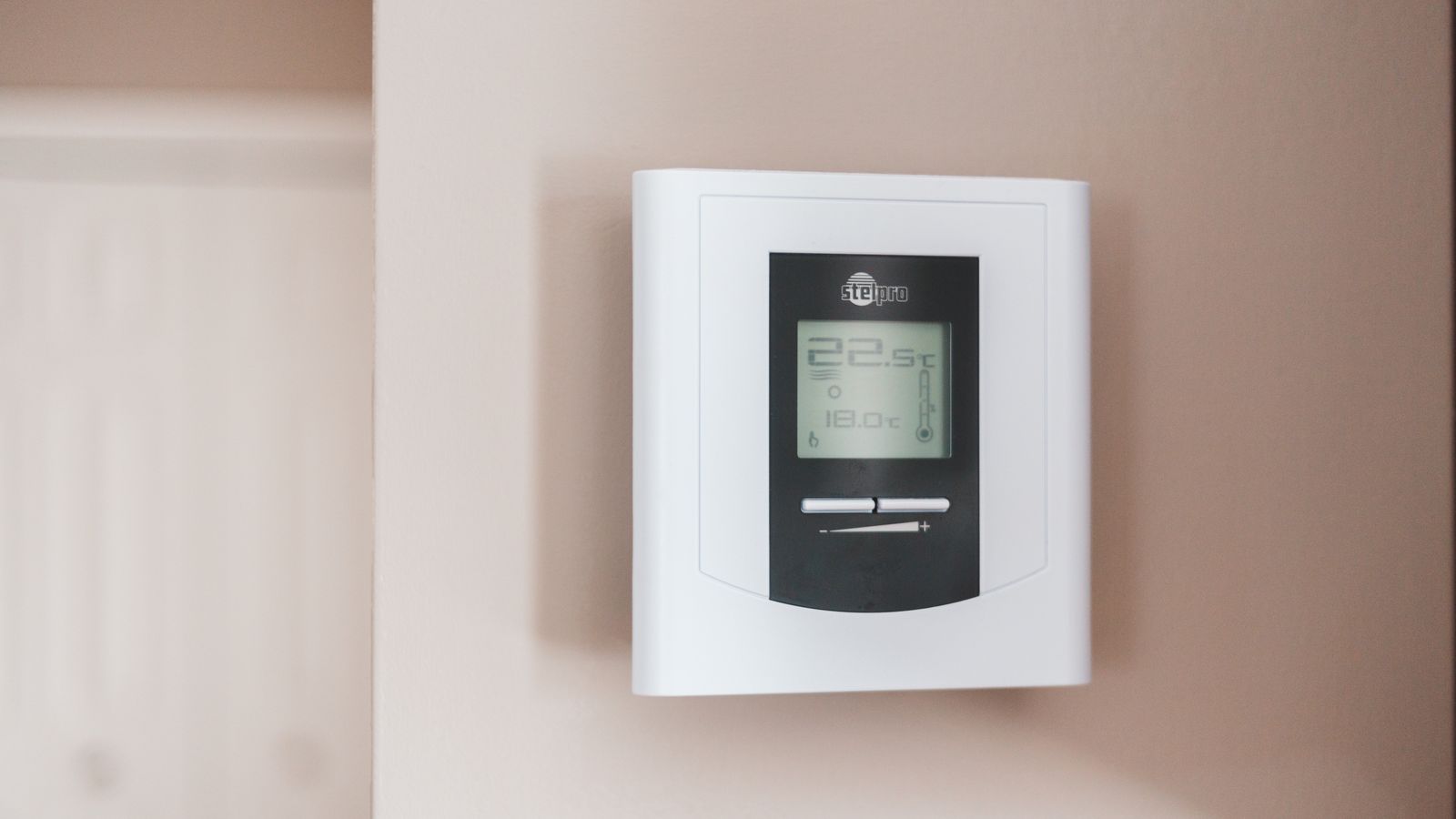
Secondly, identification. The letters matter and the colours often lie.
Firstly, wire colour is a convention rather than a rule. In practice an electrician in 1988 used whatever was in the truck, so always read the terminal letter instead.
In practice, five letters cover most forced air systems here. Anything beyond them usually means staging or a heat pump.
Then count the wires actually landed on terminals, not the wires in the cable. A cable with five conductors where only four are connected is good news, and we will come back to that.
| Terminal | What it carries |
|---|---|
| R or Rh | 24 volt power from the furnace transformer |
| W | Call for heat |
| Y | Call for cooling |
| G | Fan |
| C | Common, the return path that completes the circuit |
If there is no thermostat C wire
Thirdly, the options. A missing common wire is a very ordinary problem, not a dead end.
Firstly, start with the cable itself. Manufacturer guidance points out that “There may be one wire already available that was not used by your old thermostat.”
That spare conductor is the clean answer. You land it on C at the thermostat, then on the matching terminal at the furnace board. In short, that is the proper fix.
Next option, the fan wire. The same guidance notes that “In some cases, you can use a G wire or fan wire as your C wire.”
Admittedly that trade costs you independent fan control, which matters if you run continuous circulation. Our guide to a furnace that runs constantly explains why that setting exists.
Finally, an adapter. Carrier notes that “If your system lacks a C-wire, modern thermostat installation kits often include a power extender kit (PEK),” which runs the existing conductors differently so no new cable is needed.
Finally, running a new cable is the last option, and on a two storey house it is the most disruptive one.
Doing it safely
Next, the precautions. Twenty four volts will not hurt you, but the furnace it comes from is not twenty four volts inside.
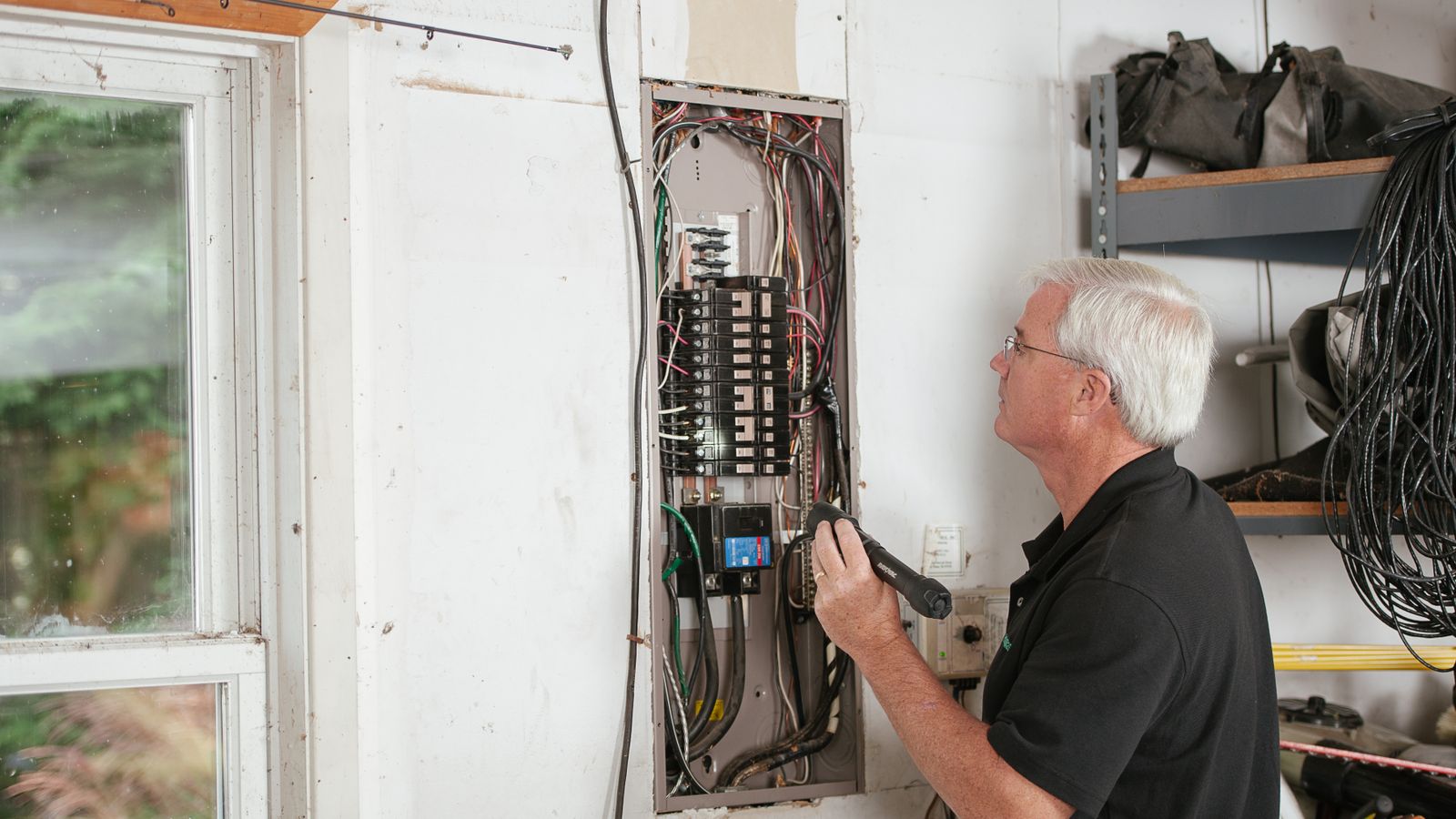
Cut the power first. Carrier describes “locating your home’s breaker box and switching off the power to the HVAC system to prevent electrical hazards.”
Then confirm it is off rather than assuming. The same guidance has you verifying “the power is off using a voltage tester” before removing anything.
Photograph the wiring before you disconnect it. Carrier is explicit: “Before disconnecting any wires, it is highly recommended to take a clear photograph of the existing wiring configuration.”
Moreover, label each conductor as it comes off. A photo helps, but a tag on the wire helps more when two of them are the same colour.
Above all, never let a loose conductor fall back into the wall. Retrieving it means opening drywall.
When it stops being a DIY job
However, some systems make this more than a wiring swap. Compatibility is the usual sticking point.
Carrier names the cases outright: “smart thermostats, heat pumps, and multi-stage HVAC systems may require professional installation to ensure proper operation.”
For example, heat pumps are the clearest case. They add reversing valve and auxiliary heat terminals, and wiring those by guesswork produces expensive mistakes.
Staged equipment is similar. A two stage furnace has a second heat terminal. Consequently a thermostat configured for single stage never uses the other half.
Besides the wiring, there is the paperwork. Carrier notes that professional installation “guarantees code compliance, preserves equipment warranties.”
Our notes on the Carrier furnace series cover which equipment is staged and which is not.
What the thermostat C wire means around Ardagh
Ardagh sits on the west side of Barrie, and the housing runs from eighties subdivisions through to recent builds.
That span is exactly why this question comes up here. Houses from the late eighties and nineties frequently have four conductor cable with nothing spare.
By contrast, newer builds differ. Five conductor cable became normal, so the common wire is often sitting in the wall already, simply unused.
In practice the first step costs nothing. Take the cover off, count what is landed, and look for a spare conductor tucked behind the plate.
We serve Ardagh, the rest of Barrie and the wider Simcoe County area from our Burton Avenue shop.
Getting value from the thermostat afterwards
Finally, the point of the exercise. The wiring is a means, not the goal.
A thermostat earns its money through setbacks. Our guide to winter thermostat settings covers the temperatures worth programming.
Besides, placement matters as much as programming. A thermostat in direct sun or above a lamp reads the room wrongly, and the equipment then behaves wrongly too.
Similarly, a thermostat cannot fix a sizing problem. Our guide to furnace short cycling explains the fault people most often blame on the thermostat.
If the furnace itself is misbehaving, start there instead. Our furnace repair page covers that side.
Talk to Aire One Barrie
We wire thermostats to the equipment you actually have, including staged furnaces and heat pumps. Then we run the system through every mode before we leave. We serve Barrie and the rest of Simcoe County.
- 24/7 emergency service, including weekends and holidays
- Common wire run or adapted without opening drywall where possible
- Staged and heat pump wiring set up correctly
- Bonded, factory trained and licensed technicians
Frequently asked questions
What does the thermostat C wire do?
It completes the 24 volt circuit so the thermostat has power continuously rather than only while it is calling for heat. Carrier notes that most smart thermostats need that continuous power, which is why the common wire matters on an upgrade.
How do I know whether I have one?
Take the thermostat cover off and read the terminal letters rather than the wire colours. If a conductor is landed on C you have one, and a spare unused conductor tucked behind the plate can often become one.
Can I use the G wire instead?
Sometimes. Manufacturer guidance says the G or fan wire can be used as a common wire in some cases, but you give up independent fan control, which matters if you run the blower continuously.
What if there is no spare wire at all?
Many smart thermostat kits include a power extender, which Carrier describes as a way to work without a dedicated common wire. Running new cable is the other option, and it is the most disruptive one in a two storey house.
Do I need a technician for this?
Not always, but Carrier names smart thermostats, heat pumps and multi-stage systems as cases that may need professional installation. It also notes that professional installation preserves equipment warranties, which is worth weighing on newer equipment.
Sources
- Carrier, Thermostat Installation Guide — most smart thermostats requiring a common wire for continuous power, continuous 24 volt power as essential, power extender kits where no common wire exists, photographing the wiring before disconnecting, switching off power at the breaker and verifying with a voltage tester, and smart thermostats, heat pumps and multi-stage systems as cases for professional installation.
- Copeland Sensi Support, What is a C wire or common wire? — the R terminal carrying 24 VAC from the furnace transformer, the common wire supplying continuous power, an unused conductor already in the cable, and using a G or fan wire as a common wire in some cases.