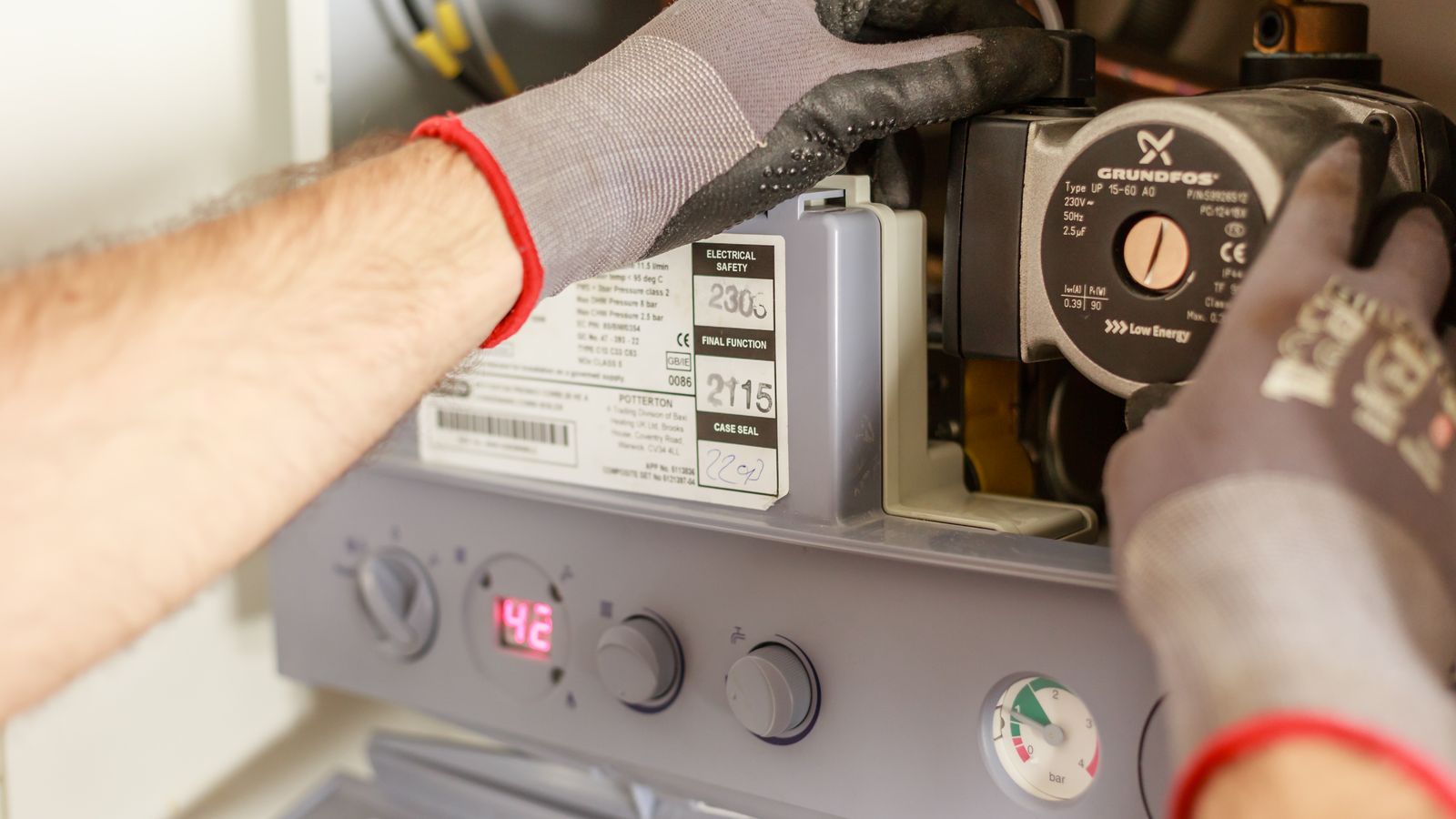
A pilot that will not stay lit is telling you something.
Relighting is often allowed. Repeatedly relighting is not a repair, and the part behind it is a safety device doing exactly its job.


 Licensed technicians
Quick answer
A furnace pilot light is a small standing flame that proves gas can be burned safely before the main burner opens. A thermocouple sits in that flame and generates a tiny voltage. When the flame goes out, the voltage falls, and the gas valve closes within ninety seconds. Therefore a pilot that will not hold is usually a weak thermocouple, a misaimed flame or a dirty pilot assembly.
Key takeaways
- Firstly, the pilot is a safety interlock, not just an igniter.
- Enbridge Gas says to follow the manufacturer’s relighting instructions.
- A thermocouple that drops below 10 mV under load needs replacing.
- Only a narrow part of the probe should sit in the flame.
- Above all, gas smell means leave first and call from outside.
How a furnace pilot light actually works
First, the principle. The system exists to answer one question before gas flows: is there a flame here?
Trade training describes the circuit directly. “Combustion safety circuits incorporating standing pilots use a thermocouple or thermopile to detect the presence of a pilot flame.”
In practice, heat on the probe produces a small current. That current then holds open an electromagnet inside the gas valve.
Consequently the valve stays open only while the flame is proven. “As long as the pilot is lit, the thermocouple supplies enough voltage to energize the safety shut-off valve.”
When the flame fails, the probe cools and the magnet releases. Moreover the standard is specific about speed: “This drop out of the coil should take place within 90 seconds from flame failure.”
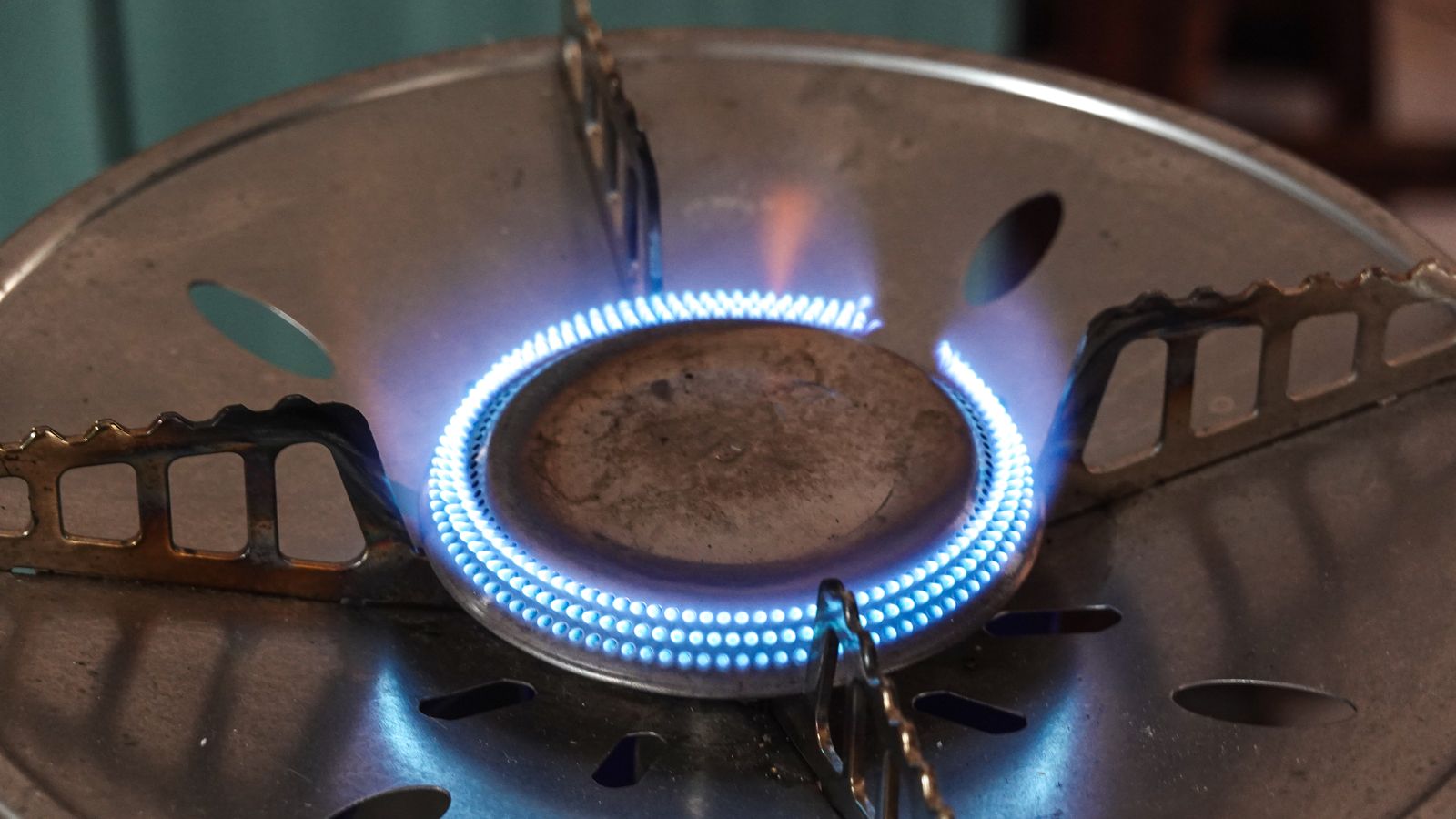
Why a furnace pilot light goes out
Secondly, the causes. Training material lists them in a short, practical set.
An “incorrectly positioned or adjusted pilot flame” comes first. The flame must wrap the probe at the right point, and an aim that has drifted will not do it.
Next, a “loose thermocouple connection to the gas valve.” That one is mechanical and it does happen.
Then the probe itself, listed as a “defective thermocouple.” These wear out, and they are consumable parts.
Finally the valve end, a “defective pilotstat coil.” At that point the fault has moved into the gas control.
Besides those four, dirt plays a role. Enbridge Gas advises homeowners to “Clean spills so they don’t clog pilot lights and outlets.”
The numbers a technician checks
Thirdly, the measurements. They make the diagnosis quick and unambiguous.
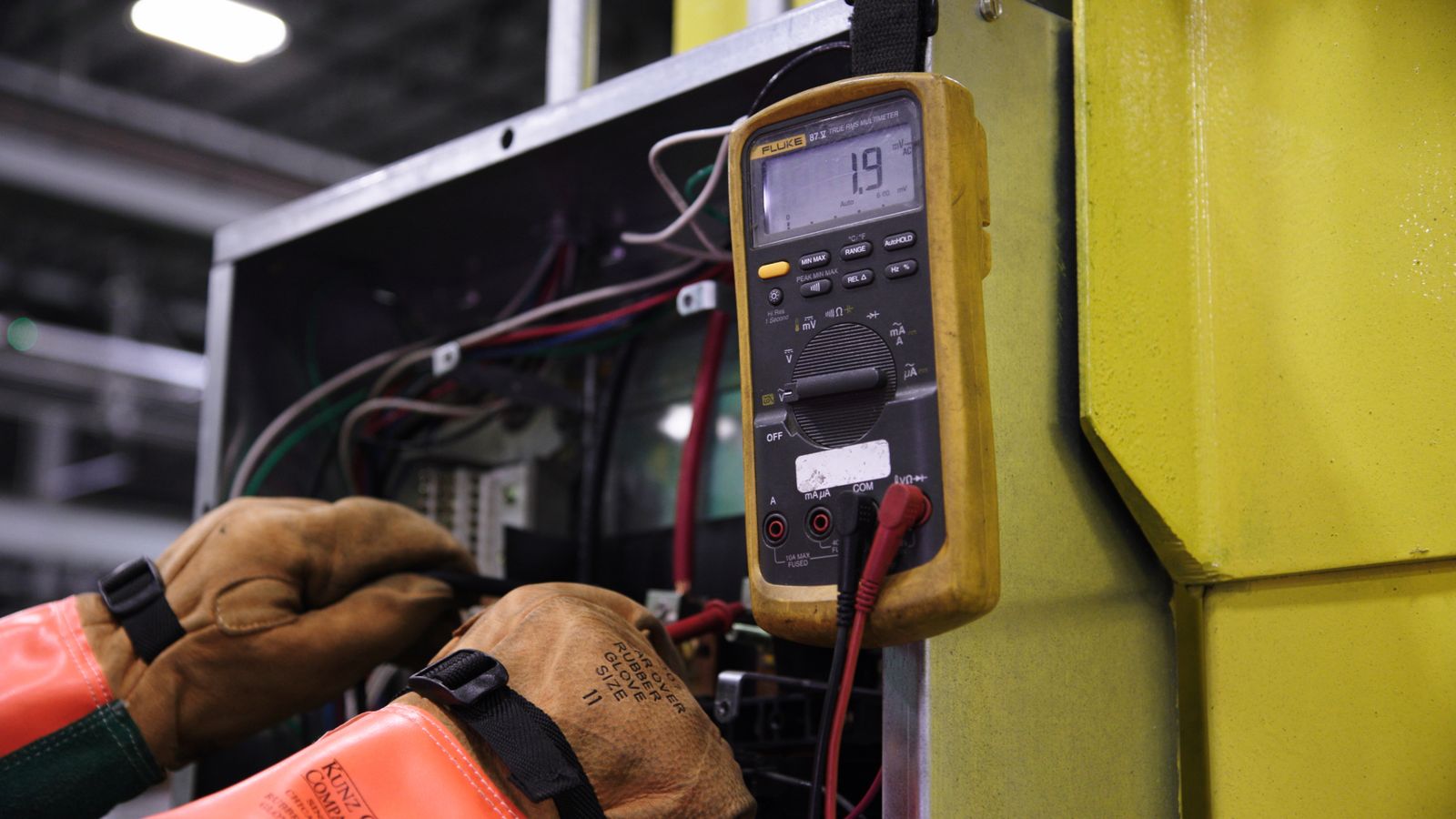
An unloaded probe should read around 30 mV. “A thermocouple should produce approximately 30 mV of potential energy when it is not under load.”
Under load the figure roughly halves. “The meter should read about 15 mV if both the thermocouple and Pilotstat are in good condition.”
Below that figure, the part is finished. “If the closed-circuit voltage should drop to below 10 mV, replace the thermocouple.”
Flame placement matters as much as the reading. “It is important that only 3/8 to 1/2 in (10 mm to 13 mm) of the hot junction is heated by the pilot flame.”
| Reading or check | What it means |
|---|---|
| About 30 mV open circuit | Probe is generating normally |
| About 15 mV under load | Probe and gas control both healthy |
| Below 10 mV closed circuit | Replace the thermocouple |
| 10 mm to 13 mm of probe in flame | Correct pilot aim |
| Coil drops out within 90 seconds | Safety shutoff working |
What you may do yourself, and where it stops
However, the line here is clearer than most. Relighting is a homeowner task when the manufacturer says so.
Enbridge Gas puts it simply: “If the pilot light or flame goes out, follow the manufacturer’s instructions for relighting.”
Usually those instructions live on a label inside the furnace door. In other words, the sequence is model specific and the label is the authority.
Beyond relighting, the work belongs to a licensed technician. The utility is explicit that “Enbridge Gas does not sell or repair furnaces, boilers or fireplaces.”
Likewise it directs homeowners to “Schedule a yearly furnace inspection with a TSSA-registered HVAC contractor.” Ontario puts fuel appliances in those hands alone.
So one relight after a draft is reasonable. Three relights in a week is a fault report, and continuing to relight it only delays the repair.
When to stop and leave the house
Next, the part that overrides everything else on this page. Gas odour is not a troubleshooting step.
So if you smell gas, leave first. Our guide on what to do if you smell gas sets out the order.
A methane alarm carries the same instruction. Enbridge Gas says to “leave the area, do not use any electronics or create a spark. Get to a safe distance outside and phone 911.”
Flame colour is a separate warning. A burner that burns yellow rather than blue signals poor combustion. In short, our guide to a yellow furnace flame explains why that matters.
Meanwhile, carbon monoxide has no smell at all. Therefore working alarms on every storey do a job your senses cannot.
Pilot or electronic ignition
Meanwhile, many houses no longer have a pilot at all. The standing flame disappeared from new equipment years ago.
Newer furnaces use an igniter and a flame sensor instead. That sensor does the same proving job by a different method.
Consequently the symptom looks different. An electronic unit lights, runs a few seconds, then shuts down and tries again.
Our guide to a furnace flame sensor covers that pattern in detail. Similarly, it is often a cleaning rather than a replacement.
If you are unsure which you have, open the burner door and look. A small flame burning continuously means a pilot, while a dark burner compartment means electronic ignition.
What a furnace pilot light means around Crown Hill
Crown Hill sits on the north edge of Barrie, and much of the housing stock there predates the move to electronic ignition.
In practice that means standing pilots are still common here. Furnaces of that generation are usually well past twenty years old.
Age changes the arithmetic. A thermocouple is an inexpensive part. However, a repeatedly failing pilot on an elderly furnace is often the first of several bills.
Our guide to how long a furnace lasts covers when repair stops making sense. Above all, a cracked heat exchanger ends that argument on its own.
We serve Crown Hill, the rest of Barrie and the wider Simcoe County area from our Burton Avenue shop.
A gas fireplace has the same standing pilot arrangement on older units. Our guide to gas fireplace maintenance covers relighting it and the rest of the annual service.
Talk to Aire One Barrie
We measure the thermocouple rather than guess at it, and we tell you plainly when an old furnace is not worth another part. We serve Barrie and the rest of Simcoe County.
- 24/7 emergency service, including weekends and holidays
- Thermocouple and gas control tested with a meter
- Honest advice on repair against replacement
- Bonded, factory trained and licensed technicians
Frequently asked questions
Can I relight a furnace pilot light myself?
Enbridge Gas advises following the manufacturer’s instructions for relighting, and those instructions are printed on a label inside the furnace. If the pilot will not stay lit after one attempt, stop and book a licensed technician instead.
Why does my furnace pilot light keep going out?
Training material lists four usual causes. Firstly a pilot flame positioned or adjusted incorrectly. Secondly a loose thermocouple connection at the gas valve. Then a defective thermocouple, and finally a defective pilotstat coil. Besides those, dirt around the assembly plays a part.
How long should the gas take to shut off when the flame fails?
The safety coil should release within ninety seconds of flame failure. That shutoff is the whole point of the arrangement. Therefore a slow dropout is a serious fault.
Is a thermocouple expensive to replace?
The part itself is inexpensive. However, the better question is whether the furnace is worth more repairs. Equipment of that generation is usually well past twenty years old.
My furnace has no pilot flame at all. What does it use?
Newer furnaces use an electronic igniter with a flame sensor instead. Consequently the failure looks different. The burner lights, then shuts down after a few seconds.
Sources
- Enbridge Gas, Appliance safety — following the manufacturer’s relighting instructions, yearly furnace inspection by a TSSA-registered HVAC contractor, keeping spills from clogging pilot lights, the utility not repairing furnaces, and the methane alarm procedure.
- BCcampus Open Textbook, Plumbing: Describe Pilot and Thermocouple Systems — how the standing pilot safety circuit works, the 90 second coil dropout, open circuit and closed circuit millivolt figures, the 10 mV replacement threshold, correct hot junction placement, and the list of reasons a pilot will not stay lit.