Age is the weakest signal.
How long does a furnace last? There is no official number, and the honest answer is that condition and efficiency decide it. Here is the arithmetic that tells you when replacing finally beats repairing.


 Licensed technicians
Quick answer
Nobody publishes an official lifespan, so stop counting birthdays. Natural Resources Canada frames the decision around efficiency instead, and its own worked example uses a twenty year old furnace. If yours is in that range, the question changes. In short, it is no longer how long it lasts, but what the efficiency gap costs you each winter.
Key takeaways
- There is no government figure for how long a furnace lasts. Condition beats age.
- Natural Resources Canada says condensing furnaces reach “AFUE ratings of between 90 and 98 percent.”
- Swapping a 20 year old 78 percent furnace for a 95 percent unit cuts annual energy costs by 18 percent.
- Going from a 60 percent furnace to 95 percent cuts fuel use by 38 percent.
- Above all, a cracked heat exchanger ends the debate immediately, whatever the age.
How long does a furnace last, really
First, the uncomfortable truth. No Canadian authority publishes a service life you can hold anyone to.
Natural Resources Canada comes closest, and only in passing. It warns against fitting an efficient retrofit motor “if your furnace is nearing the end of its service life.” However, it never says when that is.
However, the same guide gives away the working assumption. Its replacement example is built around “a 20-year-old furnace that has an AFUE of 78 percent.”
So twenty years is the point where the conversation usually starts. It is a prompt to do the math, not a death sentence.
What your furnace is actually costing you
Secondly, work out the efficiency gap, because that is where the real money sits.
AFUE is the share of fuel that becomes heat in your house. Natural Resources Canada rates a naturally aspirated furnace with a chimney at about 60 percent. By comparison, a power vented mid efficiency unit sits at 78 to 84 percent.
By contrast, today’s equipment is in another class. The guide states that “condensing gas furnaces are the most energy-efficient furnaces available, with AFUE ratings of between 90 and 98 percent.”
Therefore the gap is not small. Replacing a 60 percent furnace with a 95 percent model cuts fuel use by 38 percent. Likewise, swapping that 20 year old 78 percent unit cuts annual energy costs by 18 percent.
In practice, a Midhurst winter runs the furnace hard. As a result, an 18 percent cut shows up on every bill from November to March.
| Roughly when it was made | Typical AFUE | What that means now |
|---|---|---|
| Around 1970, chimney vented | About 60% | Four dollars in ten go up the chimney |
| Around 1985, mid efficiency | 78 to 84% | The 18% saving example applies |
| Recent condensing furnace | 90 to 98% | Little left to gain on efficiency |
| New, bought after July 3, 2019 | 95% minimum | Set by Canada’s efficiency regulations |
The signals that actually decide it
Thirdly, forget the calendar and read the furnace. Some signals end the argument on their own.
A cracked heat exchanger is one of them. That is a combustion safety fault, not a repair you weigh against a replacement. For example, our notes on what the burner flame colour tells you cover the warning signs.
Similarly, a repair that costs a large share of a new furnace rarely makes sense on an old cabinet. Besides, parts for discontinued models get slower and dearer every year.
Meanwhile, some symptoms are cheap to fix at any age. A furnace that short cycles or shows early warning signs often needs a part, not a funeral.
A cheap part is often the whole story. Our guide to a furnace flame sensor in Alcona covers one of the most common of them.
Before you say yes to a quote
Next, two rules that save people from an expensive mistake.
Insist the new furnace is sized properly. Natural Resources Canada is blunt here. “The furnace size should be determined by using a heat loss calculation,” and a calculation based only on floor area “is not adequate in most cases.”
Knowing the sequence helps as well. Our walkthrough of furnace installation day in Moonstone covers what happens from arrival to the first heat cycle.
Furthermore, shop the job. The same guide tells homeowners to get written quotes from several contractors before deciding.
Of course, insulation and draftproofing come first where they are weak. Fix those first. Then “you may be able to reduce the size of furnace required,” which lowers the price of the replacement.
What this means around Midhurst
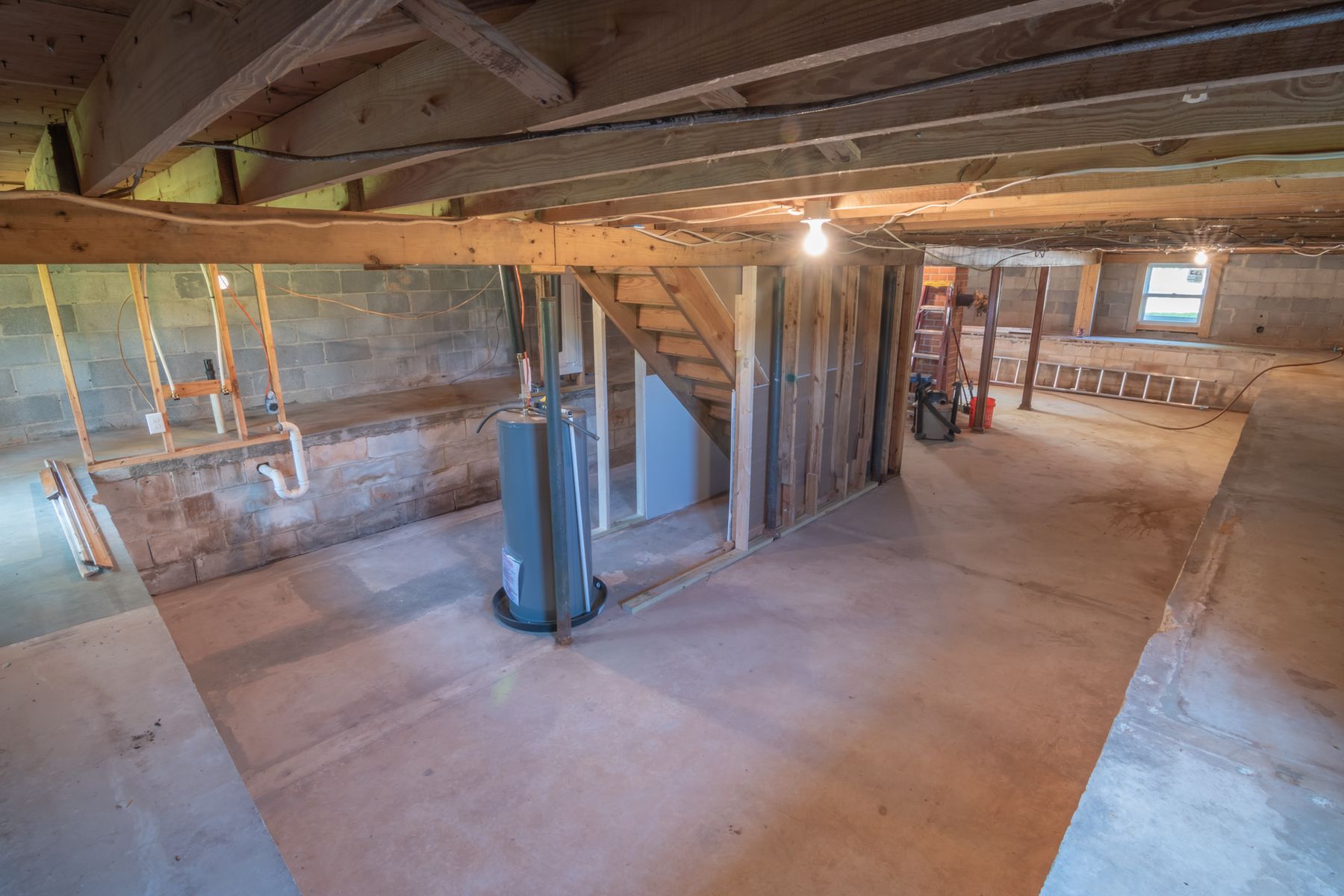
Midhurst has a lot of houses built through the seventies and eighties. That puts plenty of furnaces squarely in the 78 to 84 percent band.
Consequently the 18 percent example is not theoretical here. It describes a large share of the basements we walk into every November.
Likewise, the newer builds around Snow Valley usually have condensing equipment already. For those homes the efficiency argument is spent, and the decision comes down purely to condition.
Admittedly nobody wants to replace a furnace that still lights. The point is to decide in October, not during the first cold snap.
A five minute check you can do today
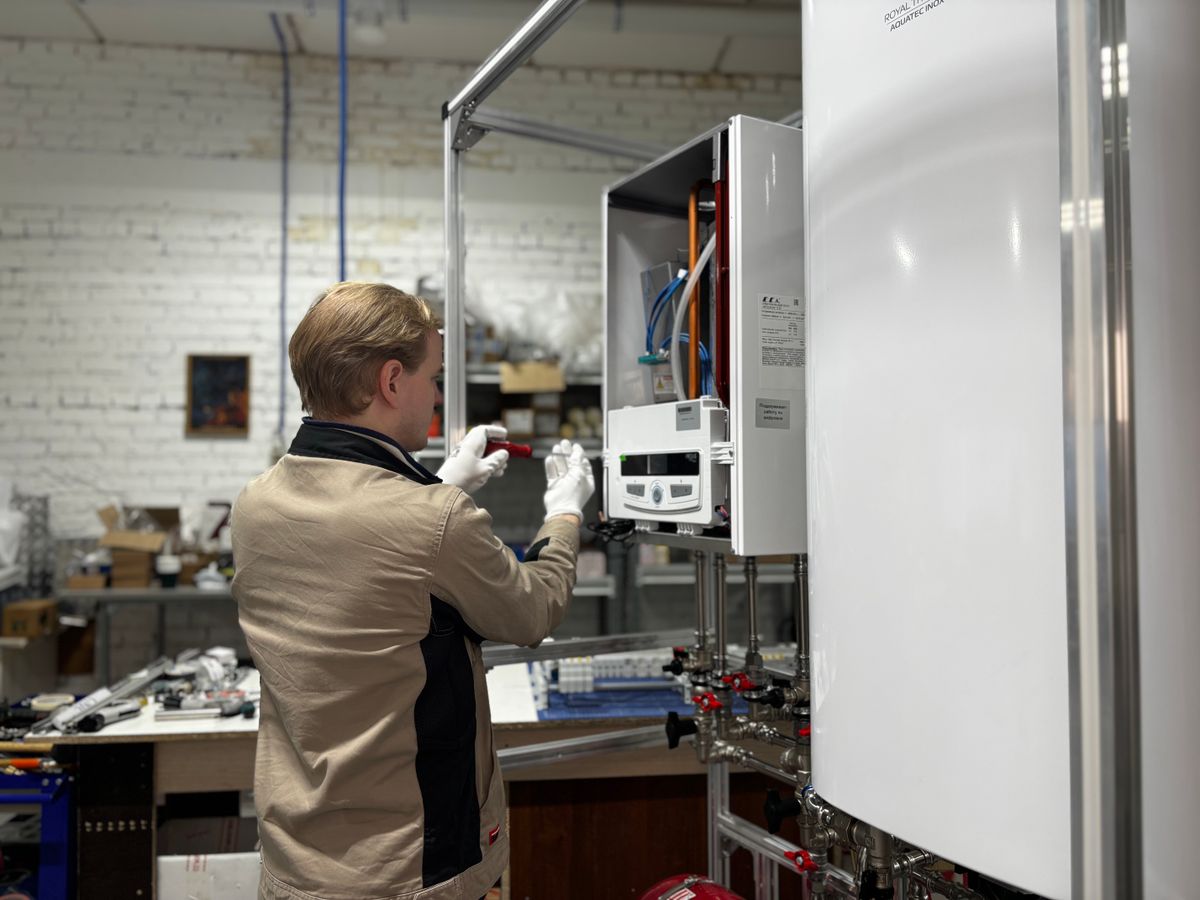
Firstly, open the furnace door and find the rating plate. In most cases it carries the model, the serial number and the AFUE.
Secondly, look at how it vents. A metal pipe into a brick chimney means an older design. By contrast, white plastic pipe through the wall means a condensing furnace.
Thirdly, count the repairs from the last three winters. In other words, two or more on an older cabinet is a pattern, not bad luck.
Finally, compare that against your gas bills. If the furnace is old, chimney vented and climbing in cost, the replacement case is already made.
A failed blower on an older unit is often what forces this decision. Our guide to the furnace blower motor covers what the part does and when replacing the furnace makes more sense.
Talk to Aire One Barrie
We can tell you what your furnace is still worth. Then, if it is time to replace it, we run a proper heat loss calculation. We serve Midhurst and the rest of Simcoe County from our Barrie shop.
- 24/7 emergency service, including weekends and holidays
- Heat exchanger and combustion safety inspection
- Heat loss calculation, not a floor area guess
- Bonded, factory trained and licensed technicians
Frequently asked questions
How long does a furnace last in Ontario?
No Canadian authority publishes an official figure. Natural Resources Canada builds its replacement example around a 20 year old furnace. Therefore treat that age as the point to start weighing the decision, not a hard expiry date.
Is it worth repairing a 20 year old furnace?
It depends on the fault and the efficiency gap. A small part on a unit that still runs well can be worth it. A major repair on a 78 percent furnace is harder to justify. After all, a 95 percent replacement cuts annual energy costs by 18 percent.
How do I find out how old my furnace is?
Open the front panel and read the rating plate. It carries the model and serial number, and the serial usually encodes the manufacture date. In addition, the plate often lists the AFUE.
Does a new furnace have to be high efficiency in Canada?
Yes, in effect. Standard gas furnaces made on or after July 3, 2019 must meet a 95 percent AFUE minimum under Canada’s regulations. A narrow replacement category for non-condensing units sits at 80 percent.
What should I insist on before buying a replacement?
A heat loss calculation rather than a floor area estimate, and written quotes from more than one contractor. Natural Resources Canada recommends both, and notes that improving insulation first can reduce the size of furnace you need.
Sources
- Natural Resources Canada, Heating with Gas — AFUE by furnace vintage, the 38 percent and 18 percent replacement examples, service life wording, heat loss calculation and quotes.
- Natural Resources Canada, Gas furnaces regulations — the 95 percent AFUE minimum for furnaces manufactured on or after July 3, 2019.