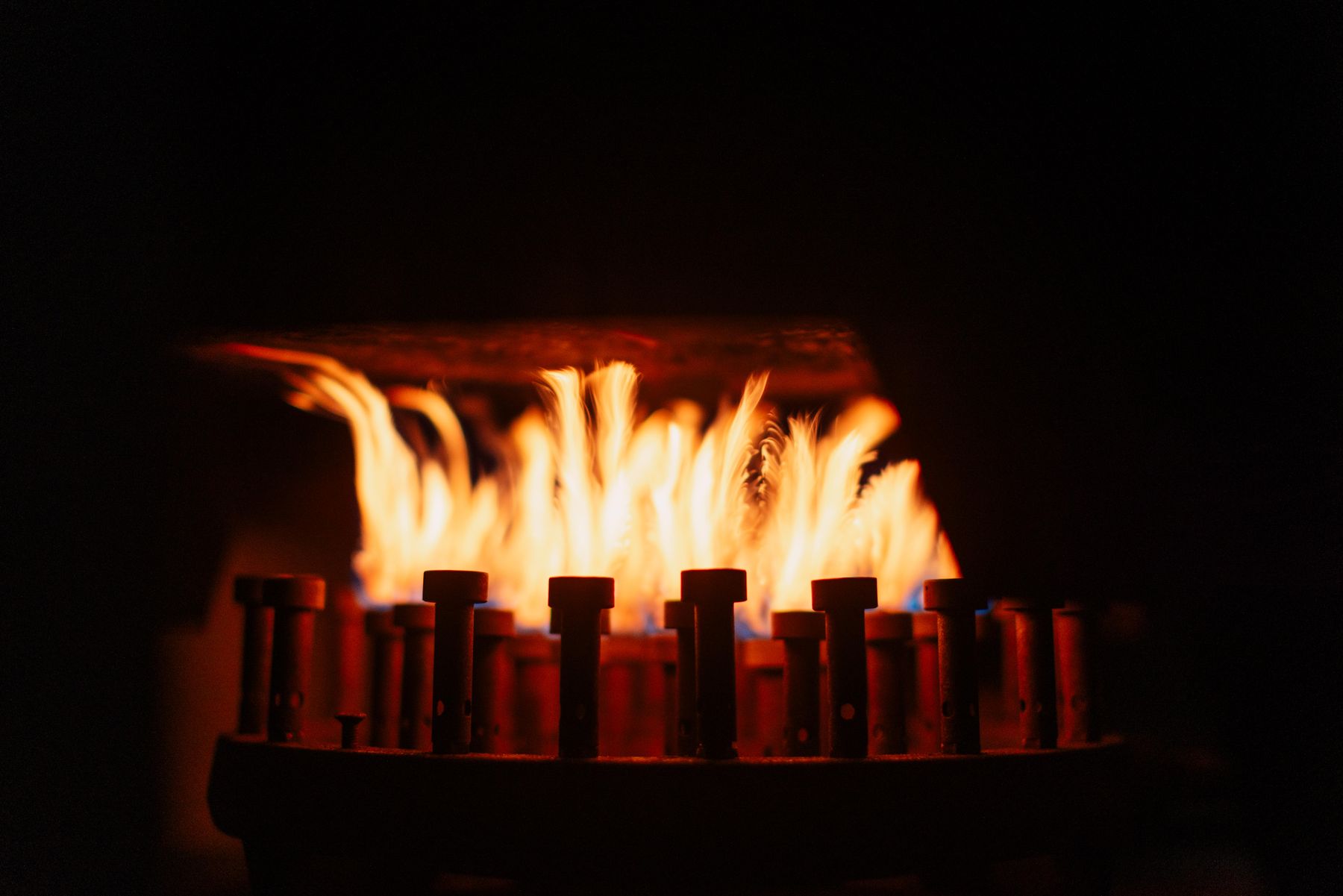
Blue is right. Yellow is a message.
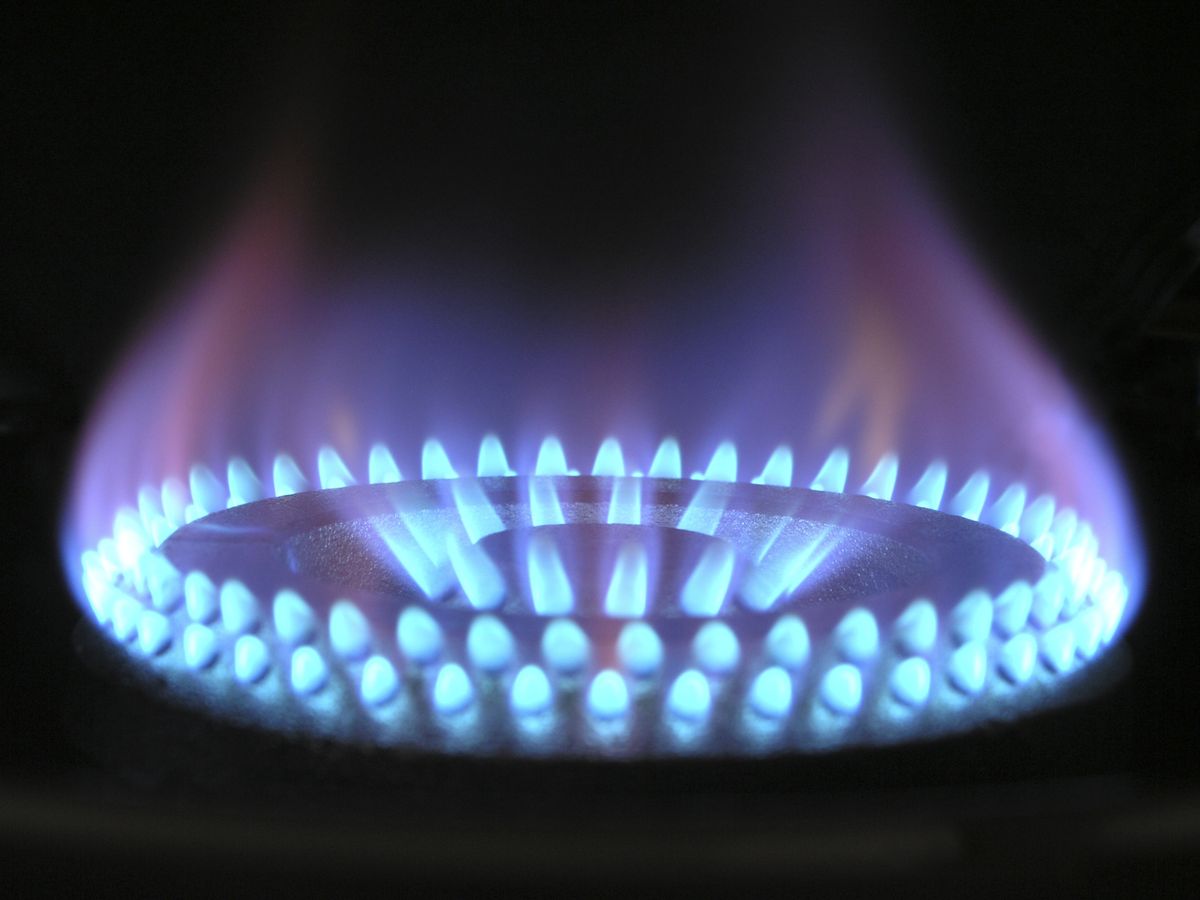
A yellow furnace flame is not a cosmetic fault. The Canadian Gas Association says a burner flame should be blue, and that a yellow one can be a sign of carbon monoxide.


 Licensed technicians
Quick answer
A yellow furnace flame means the gas is not burning cleanly. The Canadian Gas Association is direct about it: the flame “should be blue – a yellow burner flame can be a sign of carbon monoxide.” Therefore the advice is also direct. Turn the appliance off and call a registered contractor. Do not wait to see whether it settles.
Key takeaways
- Canadian Gas Association: a yellow flame “suggests incomplete combustion may be taking place.”
- Ontario: “CO is produced when fuels — such as propane, gasoline, natural gas, heating oil or wood — do not burn completely.”
- So the colour is not cosmetic. It is the visible side of the same process that makes carbon monoxide.
- If an alarm sounds, Health Canada says “Leave your home immediately and move to fresh air.”
- Above all, do not try to adjust a burner yourself. That work belongs to a licensed technician.
Why blue and not yellow
First, the simple version. Gas needs the right amount of air to burn completely.
Get that mixture right and combustion runs clean, hot and blue. Starve it of air and combustion is incomplete. The flame then slows, cools and turns yellow.
The Canadian Gas Association links the two plainly. A yellow flame “can be a sign of carbon monoxide since it suggests incomplete combustion may be taking place.”
A yellow flame and a gas odour are separate problems with separate responses. If you can smell fuel near the furnace, start with what to do if you smell gas instead of troubleshooting the burner.
Ontario’s own guidance explains what incomplete combustion produces. “CO is produced when fuels — such as propane, gasoline, natural gas, heating oil or wood — do not burn completely.”
In other words, the colour you can see and the gas you cannot are two halves of the same event.
What a yellow furnace flame usually comes from
Secondly, the causes. Most of them come down to air, or to something in the way.
Dust and lint on the burners is the common one, especially in a home with pets or an open basement. Similarly, rust and scale can block the small ports the gas comes through.
Next, airflow. A restricted return or a blocked vent changes the balance of air the burner gets.
Then there is the venting itself. Health Canada asks homeowners to examine appliances for “blocked vents” and “corroded or disconnected venting pipes.” Those are exactly the faults that disturb combustion.
Finally, and least often, the burner or heat exchanger itself is damaged. That is the one nobody should diagnose from across the room.
What to do right now
The Canadian Gas Association’s instruction is short. If you see a yellow flame, turn the appliance off and contact a Registered Fuels Contractor.
Meanwhile, a sounding carbon monoxide alarm changes everything. Health Canada’s steps are: “Leave your home immediately and move to fresh air.” Then, “Do not try to locate the source of carbon monoxide.” Once outside, “call 9-1-1, your local fire department or emergency services.”
Return only after the problem “has been fixed by a professional.”
Our guide to the carbon monoxide alarm rules covers where Ontario law requires those alarms.
Looking without opening anything
Many furnaces have a small sight glass or a gap where the burners are visible. Consequently you can often check the colour without removing a single panel.
Do that, and nothing more. Do not remove the burner compartment cover, and do not run the furnace with a panel off.
By contrast, your kitchen stove is fair game. It burns the same gas, and the flame should look the same clean blue.
Admittedly a stove flame flickers orange sometimes, usually from dust or a boil-over. A furnace burner that stays yellow is a different matter. It runs for long stretches inside a closed cabinet.
Reading the other signs with it
A yellow furnace flame rarely arrives alone. Furthermore, the signs that come with it help narrow the cause.
| What else you notice | What it points at |
|---|---|
| Soot or dark staining near the furnace | Long-running incomplete combustion |
| A sharp or acrid smell when it runs | Combustion problem, not just dust |
| Flame lifting off the burner or roaring | Gas pressure or air supply |
| Flame flickering and lazy | Dirty burners or restricted airflow |
| Furnace shutting itself down | A safety doing its job, so leave it off |
If the smell is what brought you here, our guide to a furnace that smells like burning sorts the harmless smells from the urgent ones.
What this means around Orillia
Orillia has a lot of older housing stock, and with it a lot of furnaces that have been in place for a long time.
Consequently a yellow furnace flame here is usually a cleanliness problem rather than a broken appliance. Years of lint off a laundry area in the same room will do it.
The other pattern is seasonal properties around Lake Couchiching. A furnace that sits unused for months collects more dust than one that runs all year.
Likewise, finishing a basement around the furnace can leave the combustion air supply short. That is a design issue, and it shows up at the burner.
What happens on the service call
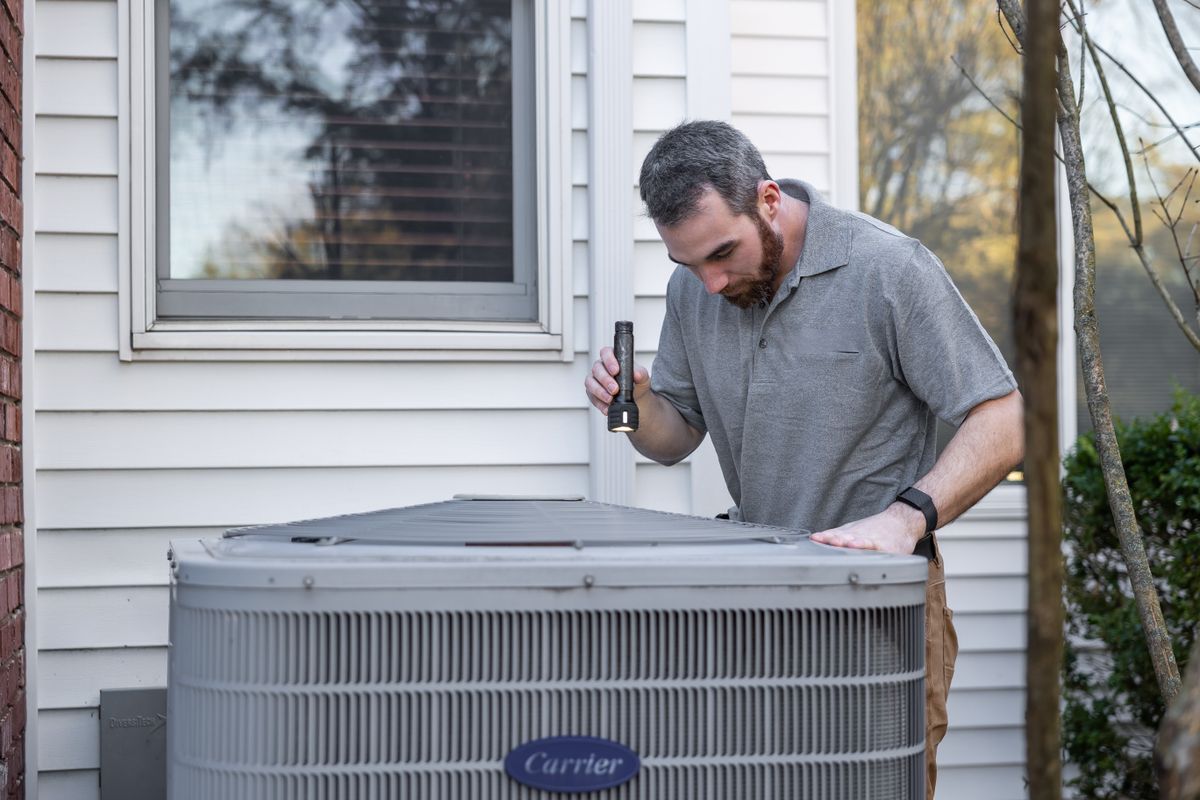
Firstly, a technician will look at the flame and the burner compartment properly, with the right light and the panel removed safely.
Secondly, the burners come out and get cleaned. On many older furnaces that alone restores a clean blue flame.
Thirdly, the venting gets checked end to end, because a restriction anywhere changes combustion everywhere.
Finally, combustion itself is measured rather than guessed. That is the only way to tell a dirty burner from a cracked heat exchanger.
Talk to Aire One Barrie
If your burner flame is yellow, turn the furnace off and call us. We serve Orillia, Lake Couchiching and the rest of Simcoe County from our Barrie shop.
- 24/7 emergency service, including weekends and holidays
- Burners cleaned and combustion measured, not estimated
- Venting checked end to end as part of furnace repair
- Bonded, factory trained and licensed technicians
Frequently asked questions
What does a yellow furnace flame mean?
It means the gas is not burning completely. The Canadian Gas Association says a burner flame should be blue. A yellow burner flame can be a sign of carbon monoxide, because it suggests incomplete combustion.
Is a yellow furnace flame dangerous?
Treat it as a safety issue rather than a performance one. Ontario notes that carbon monoxide is produced when fuels do not burn completely. That is exactly what a yellow flame suggests.
What should I do if I see one?
The Canadian Gas Association says to turn the appliance off and contact a Registered Fuels Contractor. Do not try to adjust the burner or run the furnace with a panel removed.
What if my carbon monoxide alarm goes off?
Health Canada’s instruction is to leave your home immediately and move to fresh air. Do not look for the source. Call 9-1-1 or the fire department once outside, and return only after a professional has fixed the problem.
Can a dirty burner really change the flame colour?
Yes, and it is the most common cause we find. Dust, lint and scale block the small ports the gas comes through. That starves the flame of air and turns it yellow.
Sources
- Canadian Gas Association, Safety at home — the flame should be blue, a yellow flame and incomplete combustion, and contacting a Registered Fuels Contractor.
- Government of Ontario, Carbon monoxide safety — carbon monoxide produced when fuels do not burn completely.
- Health Canada, Carbon monoxide: preventing exposure — appliance checks, and what to do when an alarm sounds.