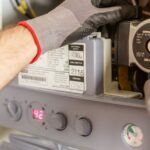
A tight house cannot breathe by itself.
Natural Resources Canada calls a heat recovery ventilator the most effective way to ventilate a tightly built home. Here is what it does, what it is not, and whether your house needs one.


 Licensed technicians
Quick answer
A heat recovery ventilator pushes stale indoor air out and pulls fresh outdoor air in, and it warms the incoming air using the heat from the air it is throwing away. Natural Resources Canada describes it as a unit that “ensures that fresh air gets in to your home while keeping in the heat.” Newer, tighter houses need one because they no longer leak enough air to ventilate themselves.
That is a different job from cleaning the ductwork. Our guide to duct cleaning covers when the work is genuinely warranted.
Key takeaways
- Natural Resources Canada: modern homes “became less able to ‘breathe’ on their own and need fresh air.”
- An HRV uses “heat from the air being removed from your home” to temper the fresh air coming in.
- An ERV goes further and transfers “heat AND moisture,” which matters if your house runs dry or damp.
- ENERGY STAR in Canada requires at least 65% sensible recovery at 0°C, and 60% at −25°C.
- This is not a furnace, not an air conditioner and not an air cleaner. It moves air.
What a heat recovery ventilator actually does
First, picture two ducts running side by side through one box.
One carries stale, warm air out of the house. The other carries cold, fresh air in. Inside the box they pass through a core, close together but never mixing. The outgoing air hands over most of its heat on the way.
Natural Resources Canada puts it in one sentence. A heat recovery ventilator, “also known as an air exchanger, ensures that fresh air gets in to your home while keeping in the heat.”
As a result, the house gets changed air without the heating bill of opening a window in February. That is the entire idea.
Why newer houses need one and older ones often do not
Of course, older houses ventilate themselves by accident. Air leaks in around windows, through the attic hatch, past the sill plate, and out again somewhere else.
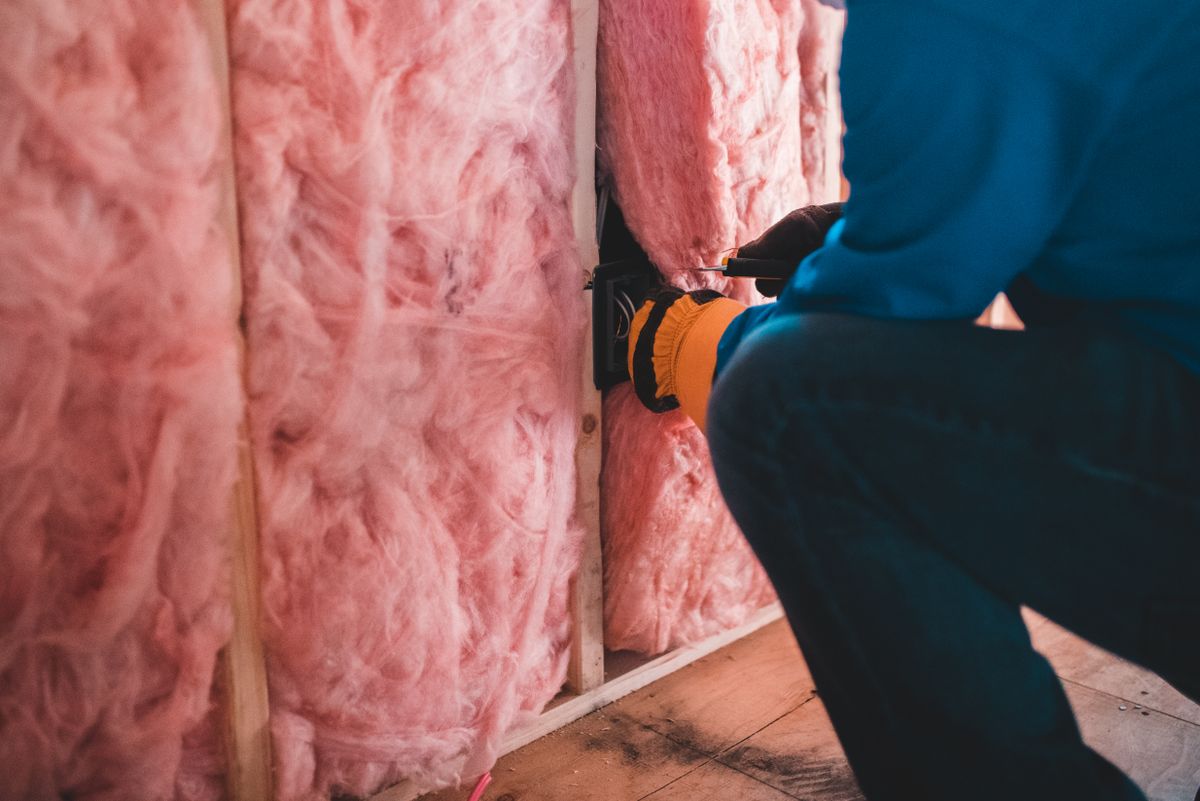
Tightening the envelope is what removes that accidental airflow. Our guide to attic insulation in Big Bay Point covers the sealing side of it.
Building standards changed that on purpose. Natural Resources Canada describes the shift plainly: as envelopes got tighter, homes “became less able to ‘breathe’ on their own and need fresh air.”
That change was good for your heating bill. It also traps what the household makes. Moisture from showers and cooking, and the stale air of a night’s sleep, now have nowhere to go.
So the rule of thumb is simple. A draughty century home in Innisfil loses heat rather than air quality. A house built in the last twenty years often has the opposite problem.
HRV or ERV, and how to tell which you want
In fact, they look the same and they are installed the same way. The core is the difference.
Natural Resources Canada draws the line clearly. An HRV uses “heat from the air being removed from your home” to warm the fresh air coming in. An ERV goes further, because ERVs “transfer heat AND moisture.”
That second sentence is the whole decision. Does your house run dry in January, with static and cracked woodwork? An ERV holds some of that moisture back instead of throwing it outside.
Does it run damp instead, with streaming windows and a wet basement? An HRV is the better match, because you want the moisture gone. Our guide to window condensation in winter covers how to tell which side you are on.
Neither one is a dehumidifier and neither one is a humidifier. They shift the balance. They do not control it.
The numbers worth asking about
Above all, efficiency is not a vague claim here. There is a published Canadian standard, and it is measured in the cold.
For ENERGY STAR certification in Canada, a unit in the heating zone must reach a sensible recovery efficiency of at least 65% at 0°C. It must still manage at least 60% at −25°C.
For example, that second figure is the one that matters in Simcoe County. Plenty of equipment performs on a mild day. The question is what a heat recovery ventilator does during a cold snap. That is exactly when you least want to throw heated air outside.
There is a size limit as well. An ENERGY STAR certified model must “have a capacity of no greater than 500 CFM,” which comfortably covers a house.
When you compare quotes, ask for the SRE at −25°C rather than the headline number. Two units with the same mild-weather rating can behave very differently in January.
What this means around Innisfil
Innisfil has grown quickly, and that shows up in the housing stock. Whole streets near Alcona and the lakeshore are modern builds, sealed properly and ventilated mechanically by design.
In those houses the ventilator is not optional equipment. It is the thing doing the job that leaks used to do by accident.
The pattern we see is a unit installed with the house and never serviced. Eventually somebody switches it off, because it makes noise or feels draughty. The house then has the airtightness of a new build and the ventilation of nothing at all.
Older cottages converted to year-round homes sit at the other end. They often leak enough that ventilation is not the first problem, though sealing them up without adding ventilation creates one.
Signs the one you already have is not working
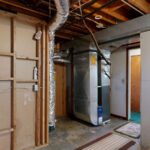
In practice, most houses that need a ventilator already have one. It is in the basement or the mechanical room, a boxy unit with two insulated ducts going outside.
| What you notice | What it often means |
|---|---|
| Windows stream with water all winter | Ventilation is not running, or not long enough |
| Bedrooms feel stuffy by morning | Too little fresh air reaching the rooms that need it |
| The unit is noisy, so somebody unplugged it | A balance, mounting or filter problem, not a reason to stop |
| Cold draught near a vent on windy days | Airflow out of balance, or a damper not closing |
| Filters grey and furred over | Overdue service, and the recovery core is likely dirty too |
None of these mean the unit is finished. They usually mean it has never been balanced or cleaned, which is ordinary service work.
What it will not do
A ventilator is often sold as an air quality product, so it is worth being clear about the limits.
A heat recovery ventilator does not heat the house. It recovers heat that was leaving anyway, which is a different thing.
Similarly, it does not filter the air the way an air cleaner does. Its filters protect the unit more than they clean your air.
It does not fix a moisture source. If a basement is wet, ventilation moves the symptom around while the cause stays put.
What it does do, well, is replace the air in a house that can no longer replace it by itself.
Where one room fogs up rather than the whole house, start with extraction. Our guide to the bathroom exhaust fan covers the thirty minute rule and where the duct must terminate.
Talk to Aire One Barrie
If your house is newer and the air feels stale, or the unit in the basement has not run in years, we can check it. We serve Innisfil and the rest of Simcoe County from our Barrie shop.
- Ventilator sales and installation, balanced and commissioned properly
- Existing units cleaned, cored and rebalanced
- Upfront pricing before the work starts
- Bonded, factory trained and licensed technicians
Frequently asked questions
What does a heat recovery ventilator do?
It exhausts stale indoor air and brings in fresh outdoor air. The heat from the outgoing air warms the incoming air. Natural Resources Canada describes it as making sure fresh air gets into your home while keeping in the heat.
Does my house need one?
Tightly built homes usually do, because they no longer leak enough air to ventilate themselves. Natural Resources Canada notes that as building envelopes became tighter, homes became less able to breathe on their own and need fresh air.
What is the difference between an HRV and an ERV?
An HRV transfers heat only. An ERV transfers heat and moisture, which helps if your home runs too dry in winter. Choose an HRV where you want moisture removed, and an ERV where you want some of it kept.
How efficient should one be in a cold climate?
For ENERGY STAR certification in Canada’s heating zone, a unit must reach at least 65% sensible recovery efficiency at 0 degrees Celsius. It must still reach 60% at minus 25 degrees Celsius. Ask for the colder figure when comparing quotes.
Can I just turn it off to save money?
Turning it off removes the only planned ventilation a tight house has. That is how stale air and winter condensation problems start. If it is noisy or draughty, that is a balancing or service issue worth fixing instead.
Sources
- Natural Resources Canada, What’s a heat/energy recovery ventilator and why do I need one? — what the unit does, tighter homes needing fresh air, and the HRV versus ERV difference.
- Natural Resources Canada, ENERGY STAR technical specifications for HRVs and ERVs — the 65% at 0°C and 60% at −25°C requirements and the 500 CFM limit.