The small part that decides whether the burners light.
A furnace igniter glows hot enough to light gas thousands of times a winter. Eventually it cracks. Here is how to recognise the signs, and why the fix belongs to a technician.


 Licensed technicians
Quick answer
A furnace igniter lights the gas at the burners each time the furnace calls for heat. Carrier puts it simply: “Without a functioning ignitor, the burners cannot light, and your furnace will not produce warmth.” The usual signs of failure are a furnace that will not light, a weak or missing glow, and repeated tries before it gives up. Replacing one is a job for a technician, because the part is fragile and sits beside the gas valve.
Key takeaways
- Firstly, no working igniter means no flame and no heat.
- Most modern furnaces use a hot surface igniter that glows like a filament.
- A dim glow or no glow is a classic warning sign.
- Skin oils on the element can shorten its life, so it should never be touched.
- Above all, the igniter sits in the gas path, so replacement belongs to a licensed technician.
What does a furnace igniter do?
It starts the flame. When the thermostat calls for heat, the furnace clears the burner area, heats the igniter and then opens the gas valve.
Carrier describes the stakes plainly: “Without a functioning ignitor, the burners cannot light, and your furnace will not produce warmth.”
In other words, the igniter is a small part with a large job. Every heating cycle depends on it.
Then the flame sensor takes over. It confirms that the burners have lit, and our guide to the furnace flame sensor covers that next step.
Hot surface or spark, which one do you have?
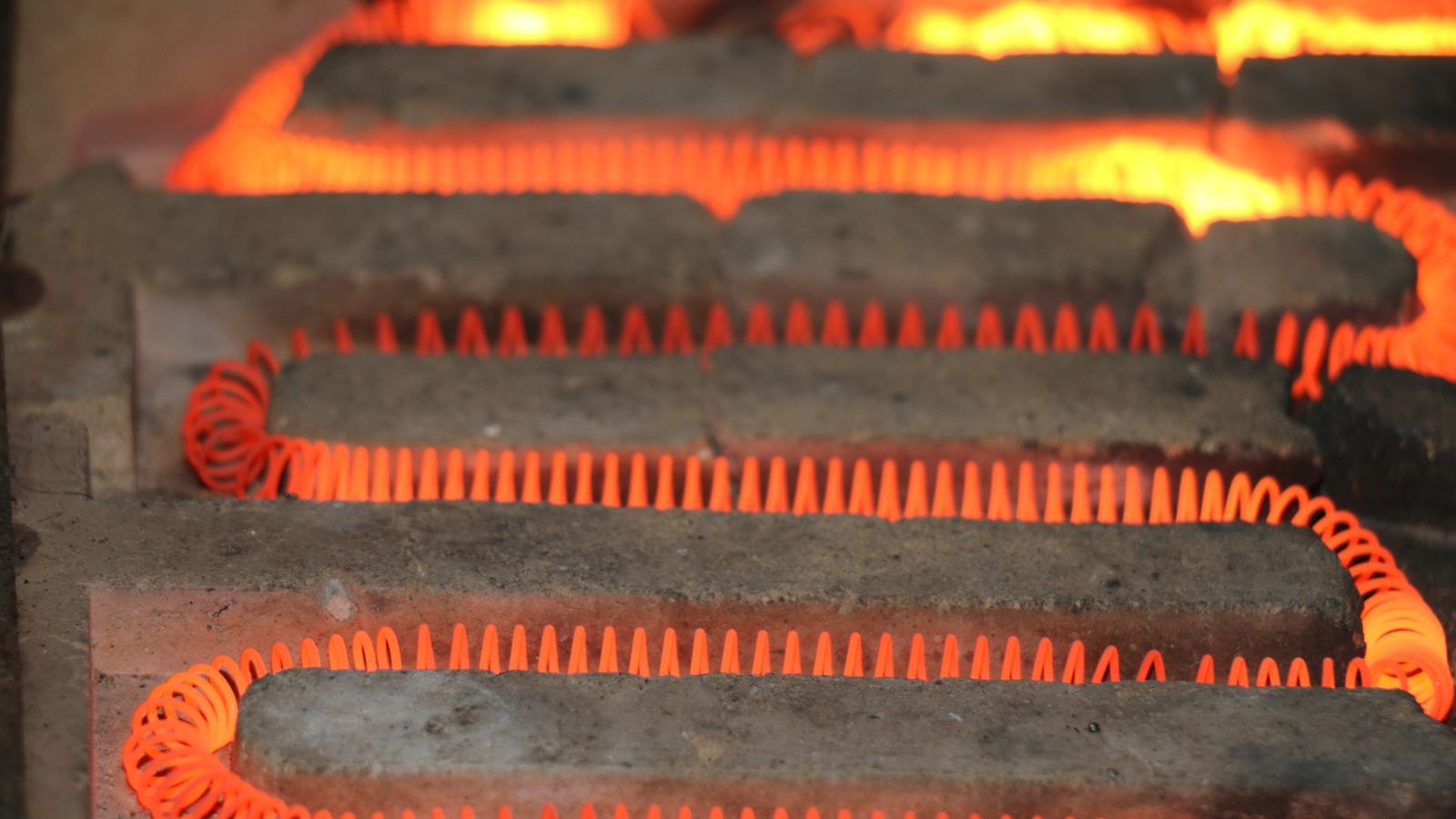
Most furnaces built in recent decades use one of two designs. Carrier explains that hot surface types “work like a lightbulb filament.”
By contrast, spark types “use a high-voltage electric spark to light the gas,” much like a barbecue lighter.
Meanwhile, older furnaces often used a standing pilot instead. Our guide to the furnace pilot light covers that older system.
Hot surface igniters are the type most homeowners will see. They glow bright orange when working, which is why the glow is such a useful clue.
In practice, the model label inside the door tells a technician which design you have. You do not need to open anything to find it.
| What you notice | What it can point to |
|---|---|
| Furnace will not light at all | Failed igniter, or a fault earlier in the sequence |
| No glow, or a dim glow | Worn or cracked hot surface igniter |
| Several tries, then it stops | Ignition failure, then a safety lockout |
| Blower runs, air stays cool | Burners never lit |
| Short runs that never reach the setting | Weak ignition or a flame sensing problem |
| Clicking without a flame | Spark ignition fault |
What are the signs of a failing furnace igniter?
The first sign is usually no heat. Carrier says “the most common sign is a furnace that fails to ignite or takes a long time to heat up.”
Next, look at the glow, if your furnace has a sight window. Carrier adds that “a dim or no glow coming from the ignitor is another indicator of a problem.”
Then there is the cycling. Carrier notes the pattern where the “furnace turns on and off frequently without reaching the set temperature.”
Meanwhile the blower can keep running even though no flame has lit. Carrier lists “the furnace blower runs, but the air isn’t warm” among the signs.
However, these symptoms overlap with other faults. A furnace that will not start can also be a switch, a breaker or a thermostat, which our guide to a furnace not turning on covers.
Why do furnace igniters fail?
Heat is the main reason. Carrier states that “ignitors are subjected to extreme temperatures and can weaken or crack with extended use.”
Moreover, the element is brittle. Carrier calls igniters “fragile” and says they degrade naturally over time.
Besides heat, handling is the other cause. Carrier warns that “oils (even from fingerprints) on the surface can create hot spots.” A hot spot is where a crack starts.
As for lifespan, there is no fixed number. Carrier says it “does not specify one universal replacement interval for all furnace ignitors.”
Besides wear, a furnace that short cycles lights far more often than it should. Our guide to furnace short cycling explains why that adds wear to every ignition part.
Can I replace a furnace igniter myself?
We advise against it. Carrier says “while possible, DIY replacement is risky.”
Firstly, there is the part itself. Carrier warns that igniters “are extremely fragile, and improper handling can break the new part immediately.”
Secondly, there is where it sits. Carrier recommends professional service “because of the potential for gas leaks, electrical hazards, and carbon monoxide exposure.”
Carrier’s own service guide is direct on the wider point: “Only trained and qualified personnel should install, repair, or service heating equipment.”
So the safe homeowner checks stop at the thermostat, the switch, the breaker and the filter. If you ever smell gas, our guide to what to do if you smell gas covers the steps.
What a furnace igniter problem means around Springwater
Firstly, the area. Springwater Township wraps around the northwest side of Barrie and takes in communities such as Elmvale, Midhurst, Minesing and Anten Mills.
In practice, that means long heating seasons and plenty of rural homes some distance from the nearest service van. A furnace that fails on a cold night can mean a long wait.
Consequently, the yearly visit matters more out here. A technician can test the igniter and catch a weak one before it fails. Our guide to the annual furnace inspection covers what that visit includes.
Besides natural gas, some properties outside the villages may run on propane. The igniter does the same job either way.
Meanwhile, homes across the township hold several generations of furnace. Igniter designs vary between them, so the right replacement depends on the exact model rather than a universal part.
What happens on the service call?
First, the technician confirms the fault. That means watching the ignition sequence and checking the furnace’s own fault record rather than guessing.
Next, the igniter is tested and inspected for cracks. A good technician also checks why it failed, because a short-cycling furnace will wear out a new one quickly.
Then the new part goes in without bare hands touching the element. Finally, the furnace runs through several full cycles to prove ignition is reliable.
In short, the goal is a furnace that lights every time, not one that lit once while the technician was watching.
If you need help now, our furnace repair team covers diagnosis and ignition parts across the county.
An ignition fault usually leaves a code behind. Our guide to furnace error codes explains how to read it.
Talk to Aire One Barrie
We test the whole ignition sequence rather than swapping parts and hoping. We serve Springwater and the rest of Simcoe County.
- 24/7 emergency service, including weekends and holidays
- Ignition, flame sensing and venting checked together
- Genuine parts matched to your furnace
- Bonded, factory trained and licensed technicians
Frequently asked questions
What does a furnace igniter do?
It lights the gas at the burners each time the furnace calls for heat. Carrier says that without a functioning igniter, the burners cannot light and the furnace will not produce warmth.
How do I know if my furnace igniter is bad?
Common signs are a furnace that will not light or takes a long time to heat, a dim or missing glow, and a furnace that turns on and off without reaching the set temperature. Other faults can cause the same symptoms, so a technician should confirm it.
How long does a furnace igniter last?
There is no fixed lifespan. Carrier does not specify one universal replacement interval, because igniters wear under extreme heat and can crack with extended use.
Can I touch a furnace igniter?
No. Carrier warns that oils, even from fingerprints, can create hot spots on the surface. Those hot spots shorten its life and can crack a new part.
Should I replace a furnace igniter myself?
We advise against it. Carrier calls DIY replacement risky because the part is fragile and the work involves gas, electrical and carbon monoxide hazards. Carrier’s service guide says only trained and qualified personnel should service heating equipment.
Sources
- Furnace Ignitor Guide, Carrier Canada: failure to ignite or slow heating as the most common sign, a dim or no glow as an indicator, and igniters weakening or cracking under extreme temperatures.
- What is a Furnace Ignitor?, Carrier: burners unable to light without a working igniter, hot surface and spark types, blower running without warm air, frequent cycling, fragility, fingerprint oils creating hot spots, no universal replacement interval, and the risks of DIY replacement.
- Two-Stage Induced-Combustion Furnace Troubleshooting Guide, Carrier: only trained and qualified personnel installing, repairing or servicing heating equipment.