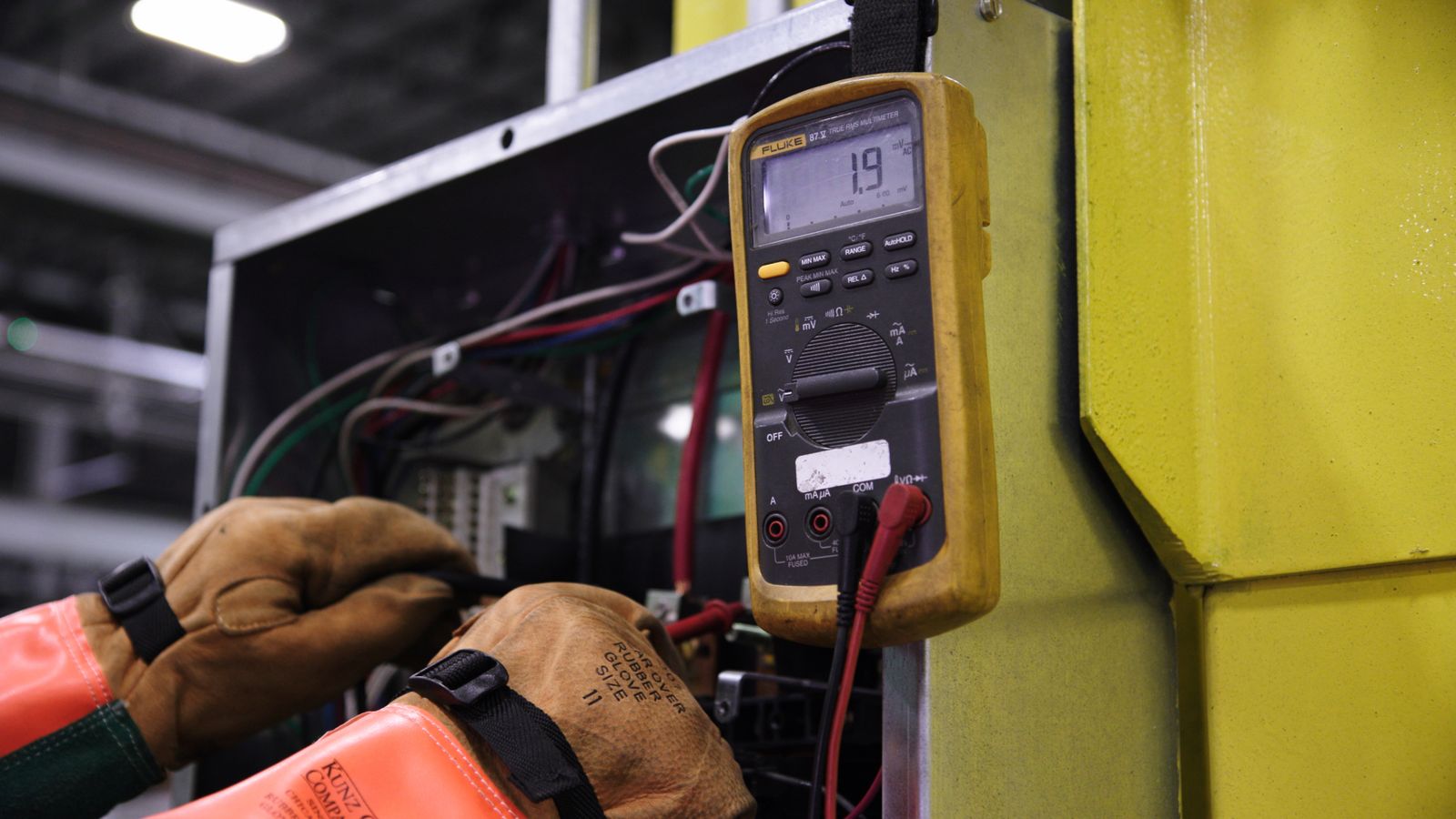
The small flashing light that already knows what went wrong.
Most modern furnaces record their own faults and flash them as a code. Reading that code takes a minute, and it can shorten a no-heat call considerably.


 Licensed technicians
Quick answer
Furnace error codes are fault messages that the control board flashes through a small status light. Carrier’s troubleshooting guide explains that “the status code is a 2 digit number with the first digit determined by the number of short flashes.” The meaning of each code is printed on a label inside the furnace door, and it differs from model to model. Therefore the most useful thing a homeowner can do is count the flashes, write them down and pass them to the technician.
Key takeaways
- Firstly, most modern furnaces flash their faults as a two digit code.
- Short flashes give the first digit and long flashes give the second.
- The code chart is on a label inside the furnace door, not online guesswork.
- Many lockouts reset on their own after a set time, but the fault remains.
- Above all, a code is a clue for the technician, not a licence to open the furnace.
What are furnace error codes?
They are the furnace reporting its own faults. A small light on the control board, usually visible through a window in the lower door, flashes in a pattern.
Carrier’s guide describes the format directly: “The status code is a 2 digit number with the first digit determined by the number of short flashes.”
The same sentence finishes the rule: “and the second digit by the number of long flashes.” So three short flashes followed by two long ones would read as code 32.
Admittedly, not every furnace has one. Older furnaces without an electronic control board will not flash codes at all, so the technician diagnoses them by testing each step.
In other words, a newer furnace has already done part of the diagnosis. The code points the technician toward the right part of the system before any panel comes off.
How do I read the flashing light?
Firstly, find the window. Most furnaces have a small sight glass in the lower front panel so you can see the board without removing anything.
Next, watch a full cycle of flashes. Count the short ones, then the long ones, and wait for the pattern to repeat so you can confirm it.
Then find the label. The code chart is usually printed on the inside of the furnace door, and it is specific to that furnace.
However, leave the panels in place while you count. Carrier’s guide notes that “the blower access panel must be installed for power to be conducted through the blower door interlock switch.” Take the panel off, and the light you were reading goes dark.
Finally, write the code down along with what the furnace was doing. That note is worth more to a technician than a guess.
| What to write down | Why it helps the technician |
|---|---|
| Number of short flashes | First digit of the code |
| Number of long flashes | Second digit of the code |
| Whether the pattern repeats | Confirms a stored fault, not a glitch |
| Model and serial number | Matches the right code chart and parts |
| What happened before it stopped | Separates ignition, venting and airflow faults |
| Weather at the time | Snow and wind point toward venting |
Why do furnace error codes differ between furnaces?
Each control board has its own list. Two Carrier troubleshooting guides for different furnace families carry different code lists.
Lockouts differ as well. One Carrier guide lists an “IGNITION LOCKOUT” that will “auto-reset after three hours,” while another describes a gas heating lockout that “will NOT auto-reset.”
Consequently, a code chart found online for a different model can send you in the wrong direction. The label inside your own door is the one that counts.
Moreover, some boards flash in other ways for electrical problems. Carrier’s guide lists one rapid flash pattern for “Line voltage (115 VAC) polarity reversed,” a wiring fault rather than a furnace part.

Can I see older furnace error codes?
Many furnaces keep a short fault history. Carrier’s guide explains that “the status codes will flash in the order of occurrence” when that history is recalled.
Recalling it has conditions, though. Carrier notes that “to retrieve previous codes, no thermostat inputs to the control must be present,” which usually means a technician does it during the visit.
In practice, that history is valuable. It shows whether a fault is new or has been building for weeks.
Therefore, mention any earlier resets when you book. A furnace that logged the same fault several times tells a very different story from one that failed once.
Besides the history, Carrier’s variable-speed guide simply tells technicians to “record fault codes listed in fault history” before clearing anything.
Why did the furnace stop and then start again?
Often it was a lockout. After repeated failed starts, the board stops trying for a while to protect the furnace.
Carrier’s variable-speed guide describes an ignition fault where the control “will try three more times before a lockout.” It lists an ignition lockout that “will auto-reset after three hours.”
So a furnace that comes back on its own has not fixed itself. The fault is still there, and it will usually return on the next cold night.
Meanwhile, a furnace that cycles on and off rapidly is a different pattern. Our guide to furnace short cycling covers that one.
What furnace error codes mean around Innisfil
Firstly, the area. Innisfil runs along the west shore of Lake Simcoe and takes in Alcona, Lefroy, Stroud and part of Cookstown.
In practice, lake wind and drifting snow can make venting faults more likely in winter. A code pointing at the pressure switch after a storm often means a buried vent rather than a failed part.
Flame sensing faults also show up as codes. Our guide to the furnace flame sensor covers that part.
We serve homes across the town. Our Innisfil heating and cooling page covers the services we offer there.
When should I stop and call?
Straight away if you smell gas. Leave the house first, and our guide to what to do if you smell gas covers the steps.
Secondly, call if the same code keeps returning. Resetting power repeatedly can hide a pattern the technician needs to see.
Then note anything unusual. A new noise, a smell of burning dust that lasts, or water around the base are all worth mentioning with the code.
Next, check the basics before you dial. Our guide to a furnace not turning on covers the thermostat, switch, breaker and filter.
Above all, leave the repair to a professional. Carrier’s guide states that “only trained and qualified personnel should install, repair, or service heating equipment.”
If the furnace is already down, our furnace repair team reads the code, the history and the system before touching any part.
Two codes come up often in winter. Our guide to the furnace pressure switch covers the venting side.
For ignition faults, our guide to the furnace igniter covers the part behind them.
Talk to Aire One Barrie
We read the fault history before replacing anything, so the repair matches the real cause. We serve Innisfil and the rest of Simcoe County.
- 24/7 emergency service, including weekends and holidays
- Fault codes and fault history read on every call
- Venting, ignition and airflow checked together
- Bonded, factory trained and licensed technicians
Frequently asked questions
What do furnace error codes mean?
They are fault messages the control board flashes through a status light. The meaning of each code is printed on a label inside the furnace door, and it differs between models.
How do I read a flashing furnace light?
Count the short flashes, then the long flashes. Carrier’s guide explains that the first digit comes from the short flashes. Watch the pattern repeat, then match it to the chart on the furnace door.
Why does my furnace work again after a few hours?
It may have been in lockout. One Carrier guide lists an ignition lockout that will auto-reset after three hours. The fault usually remains, so it is worth booking a check.
Can I use a code chart I found online?
Only if it matches your exact furnace. Different Carrier furnace families use different code tables, so the label inside your own door is the reliable one.
Should I reset the furnace when it shows a code?
One reset after checking the basics is reasonable. Repeated resets can hide a pattern, and if you smell gas, leave the house and call from outside instead.
Sources
- Two-Stage Induced-Combustion Furnace Troubleshooting Guide, Carrier: the two digit status code format, short flashes setting the first digit, retrieving previous codes, codes flashing in order of occurrence, the rapid flash for reversed line voltage polarity, a lockout that will not auto-reset, and only trained and qualified personnel servicing heating equipment.
- Variable-Speed Condensing Furnace Troubleshooting Guide, Carrier: recording fault codes from the fault history, the ignition proving fault retrying three more times before lockout, and the ignition lockout auto-resetting after three hours.