Find the source before you mop.
Where the water starts decides everything. A fitting is a repair. The tank itself is a replacement, and it rarely waits long once it begins.


 Licensed technicians
Quick answer
Trace the water upward to its highest wet point. A water heater leaking from a fitting, a valve or the relief line is often repairable. Water seeping from the bottom of the tank means the steel has corroded through, and no patch fixes that. Shut the water and the fuel or power, then call a licensed technician.
Key takeaways
- Dry everything, then watch where the first new drop appears.
- Top connections and valves usually mean a repair.
- A wet tank bottom usually means replacement.
- The relief valve is a safety device, so never cap or plug it.
- Above all, water quality drives how fast a tank corrodes.
Find where the water heater leaking actually starts
First, dry the whole area and lay down paper towel. Then wait, and watch.
Water travels. A drip from a fitting at the top runs down the shell and pools at the base, which looks exactly like a failed tank.
Therefore the highest wet point tells you more than the puddle does. Follow the trail up, not down.
Meanwhile, check the obvious neighbours. A laundry tub, a softener, a condensate line or a floor drain can all flood the same corner.
The five places a water heater leaking usually begins
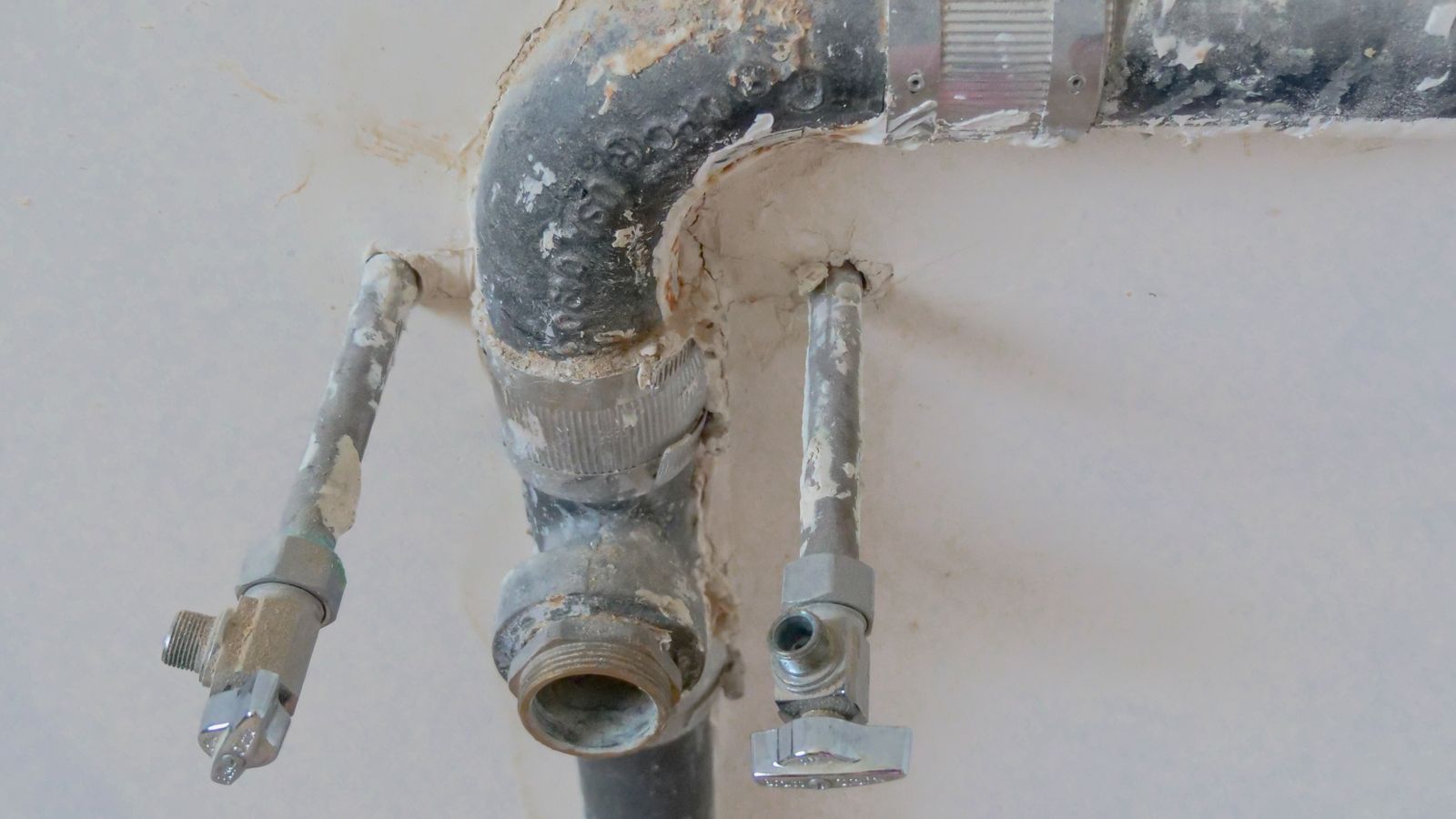
Secondly, learn the short list. Most leaks start in one of five places.
Inlet and outlet connections come first. These threaded joints loosen over years of heating and cooling.
Next, the drain valve near the floor. A worn washer here weeps slowly and often gets blamed on the tank.
Then the temperature and pressure relief valve. Natural Resources Canada notes that “new water heaters must have a temperature and pressure relief valve.”
Routine draining keeps that valve and the tank itself in better shape. Our guide to flushing a water heater in Gilford covers how often, and when not to.
Furthermore, that valve exists to protect you. It “allows water that is too hot or under too much pressure due to a faulty temperature control” to escape safely.
Finally, the tank itself. When the steel corrodes through, water appears at the bottom and nothing you tighten will stop it.
| Where it drips | What it usually means |
|---|---|
| Threaded pipe connections on top | A fitting to reseal or replace |
| Drain valve at the base | A worn valve, usually replaceable |
| Relief valve discharge pipe | Pressure or temperature fault, never cap it |
| Seam or weld on the shell | Corrosion, replacement territory |
| Steady seep under the tank | The tank has failed |
| Only during cold snaps | Possibly condensation, not a leak |
Why corrosion decides the outcome
Thirdly, the chemistry behind the verdict. A steel tank survives only because something else corrodes instead of it.
Natural Resources Canada explains the design. Storage tanks carry “a galvanic anode,” a rod “of magnesium or aluminium alloys that is inserted into the tank from the top.”
That rod dissolves on purpose. Once it disappears, the tank lining takes the attack directly.
Moreover the pace depends on your water. The federal guide states that “the rate at which the anode dissolves depends on the mineral content or hardness of the water.”
Consequently water quality outranks brand. As the same guide puts it, “water quality is the single most important factor affecting the life of the water heater.”
What to do in the first ten minutes
Firstly, close the cold water shut-off above the tank. That stops the supply feeding the leak.
Secondly, cut the energy. Switch the breaker off for an electric unit, or turn a gas control to the off position.
Thirdly, move anything valuable off the floor. Even a slow seep soaks drywall and stored boxes overnight.
Finally, photograph the wet area before you mop. Those photos help a technician and an insurer alike.
What not to do
Do not cap, plug or tighten the relief valve. It is a safety device, and blocking it removes the tank’s protection against pressure.
Likewise, do not insulate over the burner area or vents on a gas unit. Natural Resources Canada warns that insulation “could block the airflow to the burner and vent and create a serious safety hazard.”
In addition, leave venting alone. The federal guide says “an evaluation by qualified service personnel is required when adding, removing, or replacing” it.
Nor should you keep running a water heater leaking onto electrical equipment. Shut it down instead and wait for help.
What a water heater leaking means around Hawkestone
Hawkestone sits along the Lake Simcoe shore in Oro-Medonte, and many homes here draw well water.
Well supplies often run harder than municipal water. As a result, anodes here can disappear faster than a national average would suggest.
Seasonal and shoreline properties add a second pattern. A tank that sits unused for months still corrodes quietly inside.
Because of that, a leak discovered on a Friday arrival has usually been running for a while. Check the floor early in a visit rather than late.
Repair or replace
A water heater leaking at a fitting, a drain valve or a relief valve is ordinary repair work. The tank itself is not.
Once the shell weeps, replacement is the only honest answer. Patching rusted steel under constant pressure simply postpones a flood.
Natural Resources Canada recommends getting ahead of that moment. Replace the unit “close to the end of its life but before it fails.”
If yours has reached that point, our guide to choosing a water heater sets out the options. Where the old tank shared a chimney, read about the chimney liner question first.
Talk to Aire One Barrie
We diagnose the leak before we quote anything, and we tell you plainly when a repair makes more sense. We serve Oro-Medonte and the rest of Simcoe County from our Barrie shop.
- 24/7 emergency service, including weekends and holidays
- Repair quoted before replacement is suggested
- Tank and tankless replacements installed to code
- Bonded, factory trained and licensed technicians
Frequently asked questions
Is a water heater leaking an emergency?
Treat it as urgent. Close the cold water shut-off above the tank and cut the power or gas, then call a licensed technician. A slow seep from a tank can turn into a full failure without warning.
Can a leaking tank be repaired?
Only if the leak comes from a fitting, the drain valve or the relief valve. Once water seeps from the body of the tank, the steel has corroded through and replacement is the only safe option.
Why is water coming from the relief valve pipe?
That valve releases water when temperature or pressure climbs too high. Natural Resources Canada describes it as a safety device for water that is too hot or under too much pressure. Never cap or plug it, and have the cause checked.
Why did my tank fail so quickly?
Water quality is usually the reason. The sacrificial anode dissolves faster in harder water, and once it is gone the tank lining corrodes. Natural Resources Canada calls water quality the single most important factor in tank life.
Could the water be condensation instead?
Sometimes, especially on a new tank filled with very cold water or during a cold snap. Dry everything, then watch for the first new drop. Condensation forms broadly on the shell, while a leak returns to the same point.
Sources
- Natural Resources Canada, Water Heater Guide — the galvanic anode and corrosion, water hardness and anode life, water quality as the main factor in tank life, the temperature and pressure relief valve, insulation and airflow hazards, venting work by qualified personnel, and replacing before failure.